After sixteen years of exile from Syria, I decided in early May 2026 to visit.
I was going back to a country from which I had been deprived for years, just as my father and grandfather had been before me. In exile, belonging becomes a strange thing. It does not disappear entirely, but it changes shape. It is displaced, diluted, sometimes even buried under the weight of survival. For most of my formative years, my understanding of the world was shaped through a Lebanese lens. Lebanon gave me language, politics, anxieties, friendships, instincts, and wounds. Syria, meanwhile, became a place suspended somewhere between memory and impossibility.
I had forgotten Syria in the way one forgets something painful. Not because it no longer matters, but because remembering it every day becomes unbearable. Like many others, I lost hope across the years. I lost hope in politics, in justice, in institutions, and in the idea that history could move in any direction other than cruelty. Still, somewhere beneath all that fatigue, I held on to one stubborn belief: that one day, the Assad regime would fall.
Unbeknownst to me, that moment would come.
Crossing the Masnaa border for the first time in almost two decades felt surreal, like walking into a fever dream. I could not believe that I was only minutes away from seeing Damascus again. My Damascus. At the same time, I kept my expectations low. Years of agony, exile, war, humiliation, and disbelief at the scale of destruction had taught me not to romanticize return. I expected to find a defeated people. People shackled by bitterness and hate. People exhausted by the passage of time. A society broken beyond repair.
What I found instead was what the Lebanese often love to claim as their own: resilience.
In Damascus, I saw something I had not prepared myself for. I saw hope in people’s eyes. Not the naïve hope of slogans, nor the theatrical optimism of official speeches, but the quiet and stubborn hope of people who had survived too much to be impressed by despair. I saw people claim back the public spaces they had been long deprived of, people walking streets that had for years been off-limits for them. Just as the people of Lebanon claimed back their public spaces during the 17 October revolution, the Syrians had succeeded in making these spaces their own.
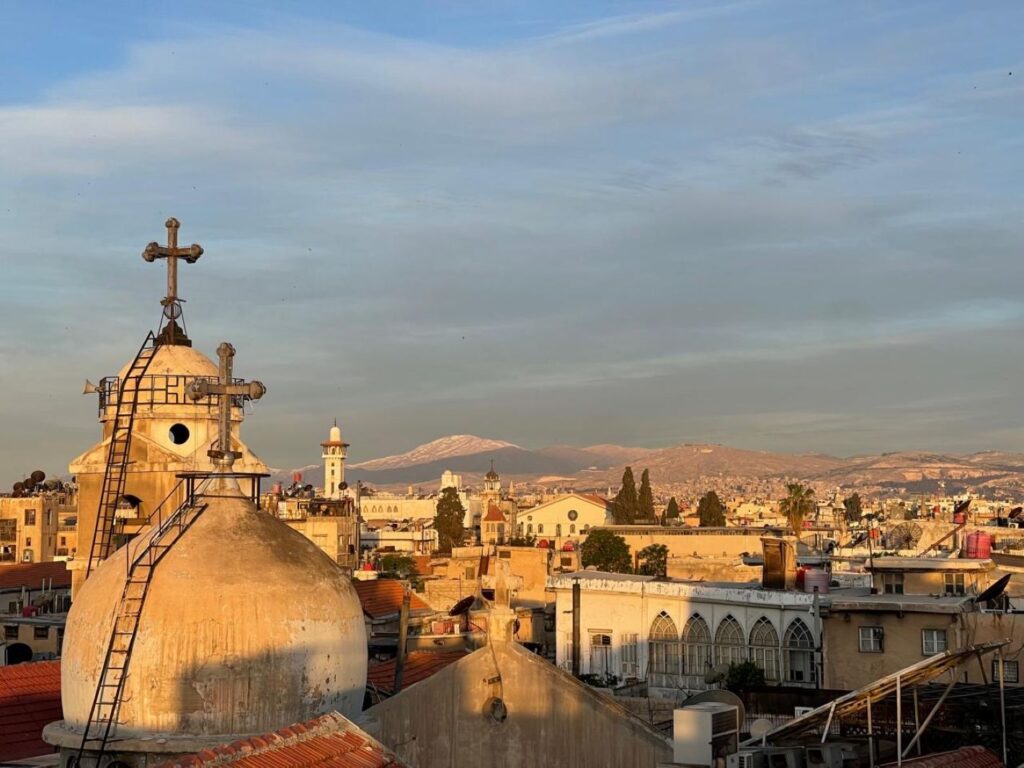
Aerial shot of Damascus. Taken by Charles al-Hayek. May 2026
During my four days there, I must have taken six different taxis. Almost every driver I met had lived abroad, had been displaced, or had tried to build a life elsewhere. Yet they had returned, or were trying to return, not because Syria had been fixed, but because something had shifted. The fear that had made return impossible had begun to loosen.
They spoke of destroyed homes, lost years, broken families, impossible prices, and the cruelty of starting again. They complained, of course. Syrians have earned the right to complain. But beneath the complaints was something else: a sense that the country was no longer sealed shut. A sense that the future, however fragile, had become imaginable again.
There is still an enormous amount to fix. No serious person can deny that. The institutions are exhausted. The economy is shattered. The currency has suffered years of collapse. The banking sector remains weak and isolated. Millions remain displaced, dispossessed, or uncertain about whether return is even possible. Hope alone does not rebuild a country.
But hope is not nothing. In a country where despair was once policy, hope is political.
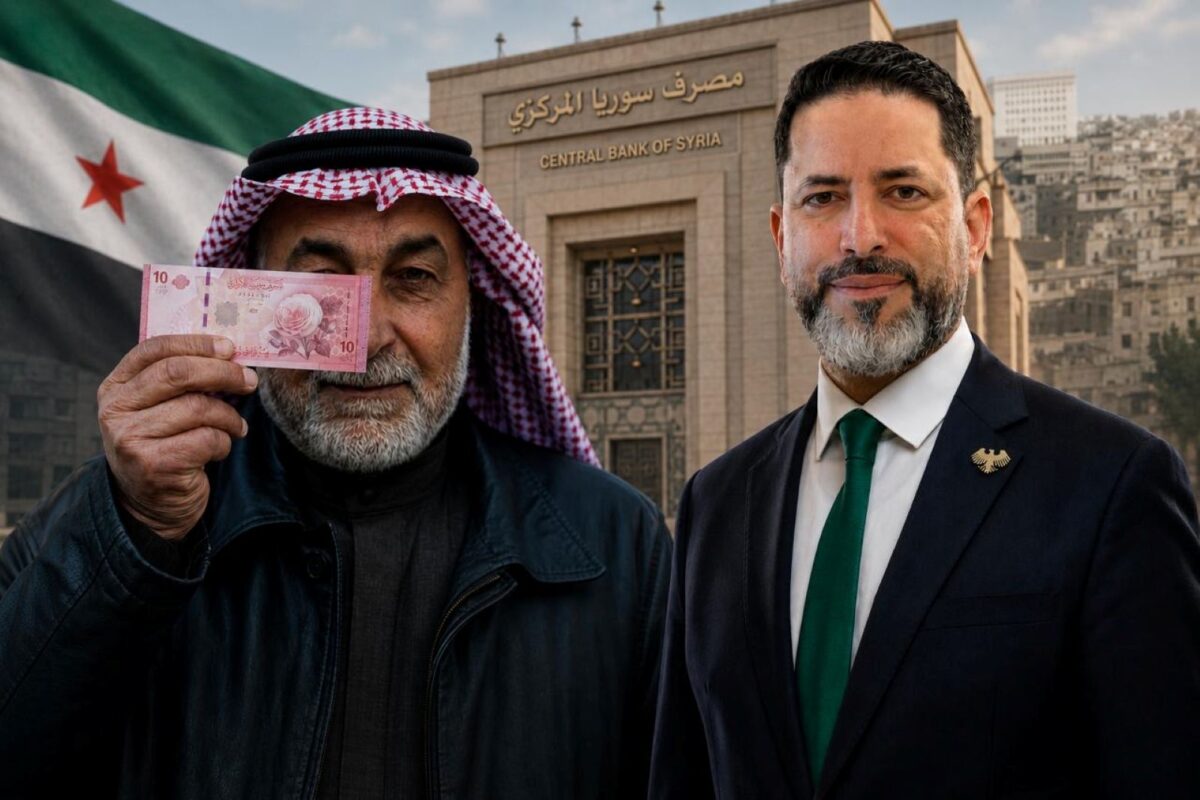
A few days ago, I read that Mohammad Safwat Raslan had been appointed governor of the Central Bank of Syria. At first glance, it may seem like another technocratic appointment in a country drowning in economic urgency. Syria needs monetary stability, banking reform, reconstruction financing, international credibility, and a restoration of public trust. These are enormous tasks, and no single appointment can resolve them.
But Raslan’s story carries a symbolism that should not be dismissed.
He is not another administrator. He is a Syrian who left, built a life abroad, excelled in exile, and returned. A refugee, like millions of Syrians, who sought safety and dignity elsewhere. A professional who passed through the world of European banking and financial services, working across credit, risk, compliance, governance, and institutional reform, before returning to Syria at a moment when the country is trying to reassemble itself.
His trajectory reads almost like a compressed map of the Syrian experience over the past two decades:
Aleppo, banking, war, exile, Germany, integration, expertise, and return.
Before leaving Syria, he had worked in the country’s banking sector, including in Aleppo, at a time when private banking was still relatively young and the Syrian economy, though tightly controlled, had not yet collapsed under the weight of war. In Germany, he entered a different financial world, one structured around rules, documentation, compliance, risk, and institutional credibility. More recently, he returned through the Syrian Development Fund, an institution tied to reconstruction, infrastructure, employment, essential services, and the difficult task of reconnecting Syrian recovery with external support.
This is not the usual biography of a central bank governor in the Arab world. Raslan does not appear as an old regime financial bureaucrat, nor as a distant economist parachuted into a collapsing institution. His profile is more practical than ideological, more managerial than rhetorical. He belongs to a generation of Syrians shaped by displacement, professional discipline, and the hard lessons of life outside the country.
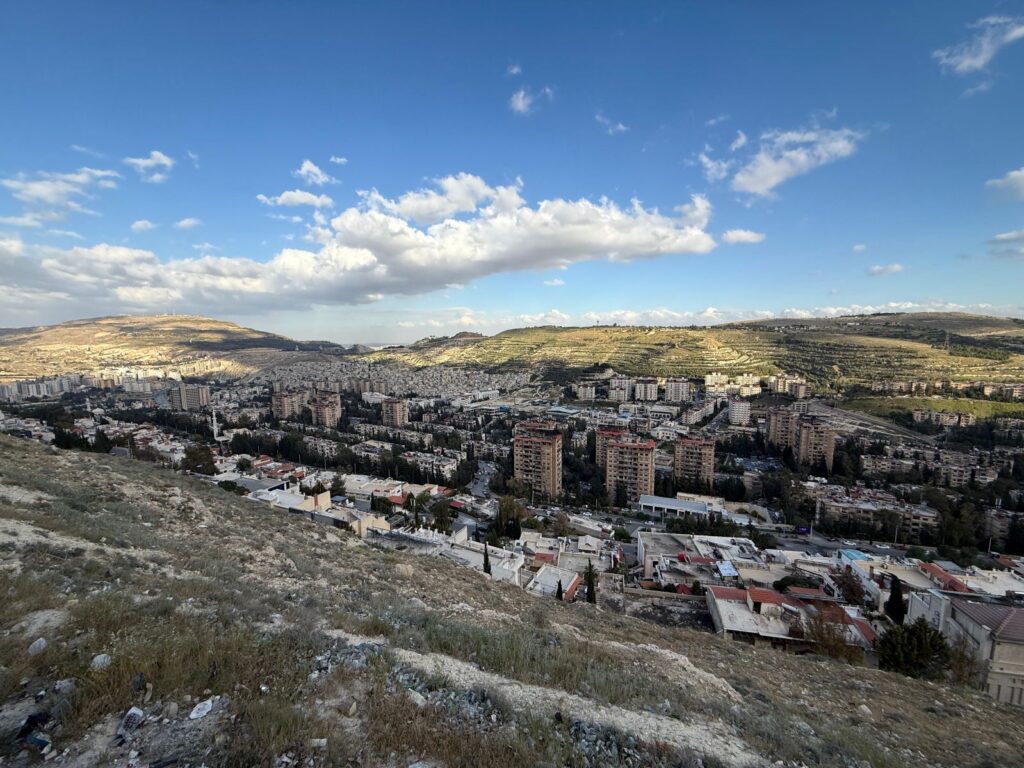
Dahiet Dummar, Damascus. Photo taken by author. May 2026
That matters. Syria does not only need money. It needs trust. It needs institutions that people can believe in again. It needs a banking system that can speak the language of compliance, transparency, reconstruction finance, and international credibility. It needs officials who understand not only the mechanics of credit, but also the psychology of collapse: why people hide their savings, why they avoid banks, why they distrust public promises, and why restoring confidence is much harder than issuing decrees.
The Central Bank of Syria is not merely a monetary institution. At this moment, it is one of the places where Syrians will measure whether the new Syria can behave differently from the old one. Can it protect public interest rather than serve power? Can it rebuild confidence rather than demand obedience? Can it open the country to the world without selling it cheaply? Can it make Syrians believe that the state is no longer something to fear, evade, or survive, but something that can function?
Raslan’s appointment will not, on its own, rescue the Syrian pound or repair the economy. No single appointment can do that. The challenges facing Syria are too deep for biography to become policy. But biography can still tell us something about the direction of travel. The new Syria, if it is to survive, cannot be built only by those who stayed, nor only by those who left. It will have to be built in the difficult space between both experiences.
Those who stayed carry the memory of endurance. Those who left carry the memory of comparison. They have seen other systems function, other institutions operate, other societies fail and recover in different ways. They know what dignity can look like in an administrative office, in a bank, in a public service, in a document that is processed without humiliation. If Syria can bring these experiences back without turning them into empty symbolism, then return can become more than nostalgia. It can become capacity.
This is why Raslan’s appointment struck me. Not because I know whether he will succeed. It is far too early to say. Central banking in Syria today is not a normal job. It is an almost impossible assignment, caught between monetary collapse, reconstruction needs, sanctions legacies, institutional weakness, and the expectations of a population that has already lost too much.
But there was something in the story that felt familiar after my trip to Damascus. The taxi drivers who came back. The families reopening shops. The young people speaking of plans without sounding delusional. Constant wedding convoys parading the streets. The returnees trying to make sense of a country that is theirs, even when it no longer resembles the one they left.
Raslan, in his own way, belongs to that same moment.
A refugee returning to govern the central bank of the country he once fled is not a small thing. It is a sign. Not proof of success, not a guarantee of reform, not a reason to suspend criticism. But a sign of life.
And after so many years in which Syria was treated as a graveyard of possibilities, even signs of life deserve to be taken seriously.
Nasser Hafez is a graduate student and researcher at the Department of History and Archaeology at the American University of Beirut, specializing in contemporary Lebanese History.