In times of war, heritage provides continuity. Memory, once preserved and transmitted, helps communities rebuild peace, feeding into the very dynamics of continuity that constitute history. Recovering this heritage demands an approach anchored in historical understanding, beginning with the search for primary sources.
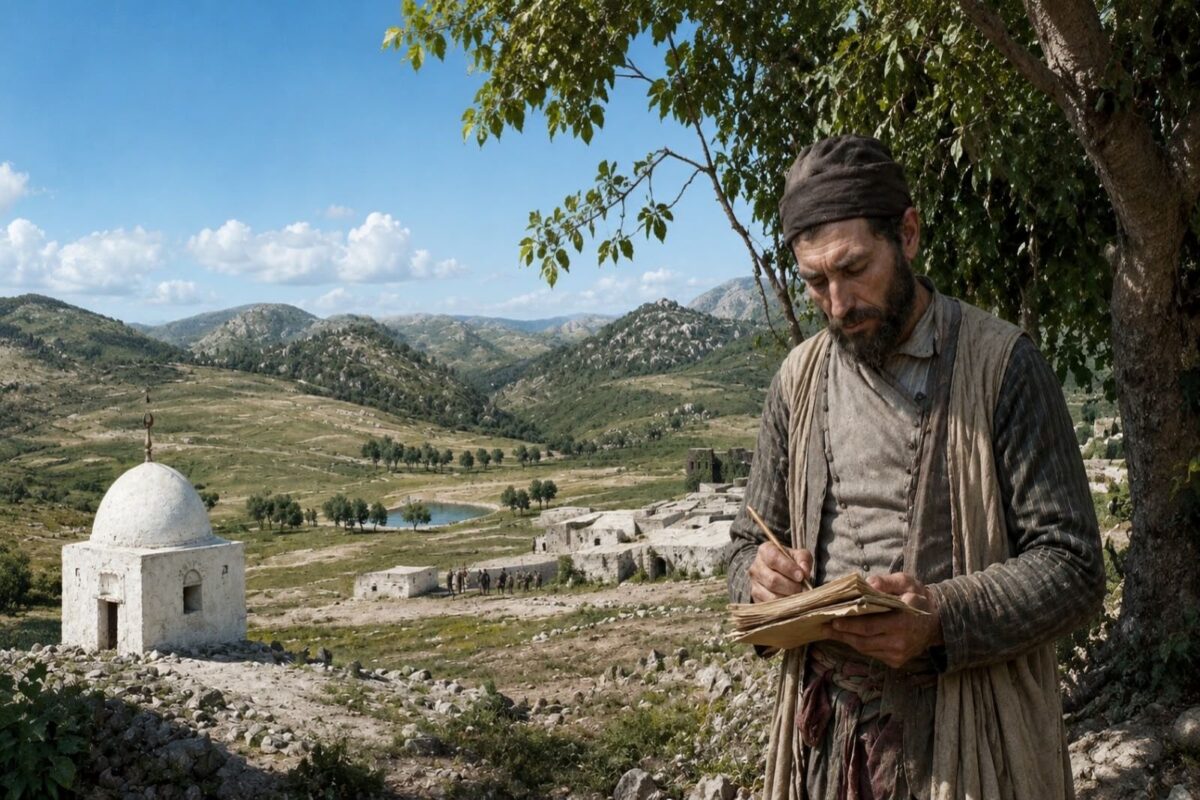
Among the most important of these, yet largely unknown to the public in Lebanon, is the chronicle of al-Rukayni. Its author, Haydar Rida al-Rukayni (1711–1783), a Twelver Shiite farmer from Jabal Amel, recorded the events of his lifetime from 1749 to 1783, a work later continued by his unnamed son until 1832. This text stands as the only Arabic-Islamic chronicle known to have been written by a farmer, offering a rare rural vantage point onto the socio-political, economic, and even environmental history of Jabal Amel. (1)
Much about its author remains uncertain. We do not know why Haydar Rida chose to record what he witnessed, nor where he learned to read and write. It is reasonable to assume that his education took place in one of the small rural schools of Jabal Amel, institutions that taught Jaafari jurisprudence and that, two centuries earlier, had produced the renowned ulema who converted Safavid Iran to Twelver Shiism.
The Rukaynis belonged to the Twelver Shiite community, known locally as the “Matawila.” This rural community inhabited the Jabal Amel area, administered at the time as part of the Ottoman Sidon Eyalet. Neither father nor son names their village, yet the events recorded take place overwhelmingly in Jabal Amel, with occasional excursions into developments in Sidon, Acre, Beirut, Damascus, or Mount Lebanon.
The manuscript was first brought to public attention in 1939 by Ahmad Arif al-Zayn, a Shiite reformist intellectual and founder of the monthly journal al-Irfan, who published it in its pages. Introducing the text, he wrote that they had found this manuscript, which recorded events both trivial and serious spanning nearly a century in Jabal Amel, and that it was transcribed exactly as it stood, without corrections to its Arabic or its spelling, noting that it belonged to Sheikh Hassan Haydar Rida al-Rukayni al-Amili, who had recorded common events from 1167 to 1347 AH. (2)
The chronicle’s value lies in several dimensions. On questions of identity, Haydar identifies his community as Matawila, the name given to the Twelver Shiites of the historical territories of present-day Lebanon. His sense of time draws on both the Hijri and Gregorian calendars, often combined within a single sentence:
“On Tuesday, the first of September, winter arrived, and the gutter began to flow. The Feast of the Cross began on Monday, the twenty-sixth day of Ramadan” (p. 92).
As a farmer, Haydar pays close attention to agriculture, regularly recording food prices and offering historians and ethnographers invaluable firsthand material on the culinary heritage and available products of late eighteenth- and early nineteenth-century Jabal Amel. Accounting for the events around the 1750s, he provides a striking density of detail:
“In it, a sack of lentils was sold for thirty-six piasters, a sack of wheat for twenty-seven piasters, and a sack of barley for eighteen piasters… This year, onions became very expensive, so much so that a ratl of onion sold for one zlot and two piasters… half an ounce for one piaster. A plowman’s wages for two seasons’ work, sowing and tilling, were eight piasters, corn was eighteen piasters, a mudd of rice sold for one piaster minus five silver coins, a measure of sesame for one zlot, and a quintal of figs for two hundred piasters. Also in this year, there were several earthquakes and a severe winter, which depleted people’s savings” (pp. 39–40).
This single passage opens onto a wider world. Wheat, lentils, and barley emerge as staples of the local diet, while the presence of corn confirms that this New World crop had already reached the Ottoman Levant through established trade networks. Rice appears as a costly import, sesame circulates as a traded commodity, and the spike in onion prices points to a disrupted harvest. The rising cost of plowing, set against a year marked by earthquakes and a harsh winter, traces a direct line between natural disaster and economic strain. Elsewhere, Haydar mentions olive oil, grapes, molasses, and hummus as staples of the local diet (pp. 50, 57).
Politically, the chronicle situated its readers within a period of considerable turmoil. Zahir al-Omar had emerged as the leading tribal leader in Galilee, monopolizing the cotton trade and establishing a de facto autonomous entity within the Ottoman Empire. (6) Within this context, the autonomous sheikhs of Jabal Amel came under the authority of Sheikh Nassif al-Nassar, (7) who allied with Zahir al-Omar, together forming a significant military force on the peripheries of the eyalet.
The exploits of Nassif al-Nassar are recorded with evident admiration throughout the Rukayni chronicle, framing him as a recurring source of friction with Ottoman central authority. The chronicle offers a view of “al-Dawla,” the Ottoman Empire, as seen from the level of the farmer, recording with celebration the joint occupation of Sidon, the eyalet’s capital, by the combined forces of Zahir al-Omar and his allies, alongside what Haydar recurrently describes as the “Horsemen of the Matawila,” the armed Twelver Shiites of Jabal Amel under the leadership of Sheikh Nassif. On the death of Sheikh Nassif al-Nassar, Haydar writes:
“On Monday, the fifth of Shawwal, a battle took place between Sheikh Nasif and the state of Ahmad Pasha al-Jazzar in the land of Yaroun. Sheikh Nasif was killed, and all the lands of the Matawila mourned him, as did all the Marjeyoun” (p. 98).
The chronicle also offers glimpses into the texture of rural religiosity. In one episode, Haydar recounts how the people of a village sought out a religious scholar to lead their Eid prayer:
“Among the misfortunes of time and the calamities of the age is that the people of a village sought a religious scholar to lead them in the Eid prayer. He came to them on the eve of Eid, and when the deepest dawn broke, the scholar stood and began to call the adhan. The village dogs and the shepherds’ dogs were astonished by his voice, for they had never heard the adhan in the village, neither in the past nor in the future. They all gathered around him, barking, and he was bewildered, for he was torn between defending himself and invalidating the adhan. They tore his clothes to pieces and beat him like a dying man. He cried out to the villagers for help, but they were oblivious…” (p. 11)
The anecdote captures a rural world where formal religious practice remained unfamiliar, with mosques confined largely to larger towns and organized religiosity existing more as an urban phenomenon than a rural one.
The chronicle continued after Haydar’s death, carried forward by his unnamed son. The narrative resumes in 1783:
“The Feast of the Cross began on Saturday, the tenth of Dhu al-Qi’dah. The saintly Sheikh Haydar passed away, may God sanctify his soul, on Saturday, the twenty-fourth of Dhu al-Qi’dah” (p. 112).
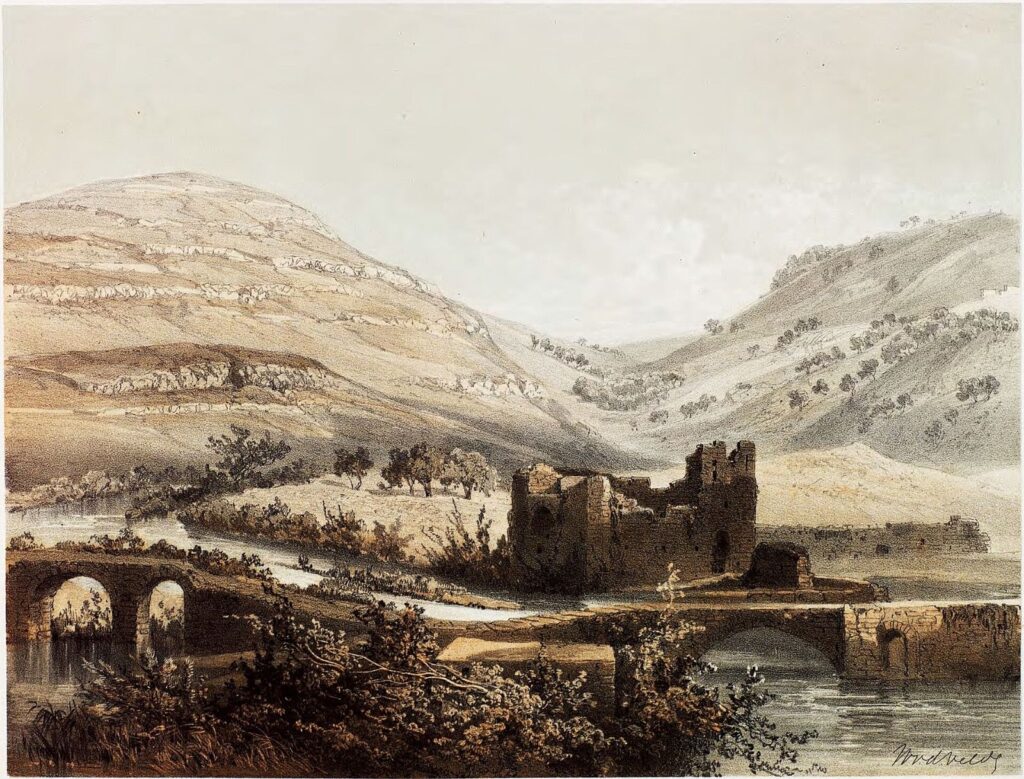
Djisr Kakaiyeh (bridge over the Litani), Charles William Meredith van de Velde, 1857
The son’s account also extends to the French invasion of Egypt and Syria under Napoleon, whom he never names directly. He describes the siege of Acre, the soaring prices that accompanied it, and the French soldiers’ insistent demand for arak:
“…In this year, he met the French and Frankish authorities at Alexandria, and took it, and took Egypt … On the twelfth of Shawwal, he landed on Acre and laid a great siege to it, and there was severe famine, so much so that a loaf of bread was sold for five silver coins, an egg for five silver coins, and a measure of figs for twelve piasters. Most of their demand was for arak, so much so that the Christians made a fig-pressing machine from arak, and a measure of figs cost twenty piasters. On the sixteenth of Dhu al-Hijjah, he withdrew from Acre, after many of his soldiers had been killed, and he was defeated at Acre by the power of God Almighty…” (pp. 126–127).
The chronicle also mentions the son’s pilgrimage to Mecca, while another figure recorded in the text “traveled to al-Husayn,” as the text puts it, meaning to Karbala, offering a glimpse into the religious life of Jabal Amel and its pilgrims’ connections to the holy sites of the Hijaz and Iraq. It also contains important material on the relations between the Shiite and Druze iqta‘, and the Shihabi emirate in Mount Lebanon, as well as other Shiite provincial leaders in the Bekaa, portraying a community integrated into the Ottoman Levant while preserving its own characteristics and autonomy. It ends with the arrival of the Egyptian army of Mohammad Ali, the wali of Egypt then in open rebellion against the sultan, an army commanded by his son Ibrahim Pasha during his conquest of the Levant in 1831.
We do not know why the son stopped writing, just as we do not know why the father began the chronicle in the first place, how he came to imagine it might be read by others, or what led a farmer to decide that the events of his time were worth recording. Yet beyond these questions, the chronicles of al-Rukayni, father and son, stand as an exceptional firsthand document, a voice from Jabal Amel that deserves to be heard. It is a text that is at times deeply personal, naming the men and women its authors knew with a tone of familiarity and kinship, and through these small stories it allows us to reconstruct the answer to a simple question: how was life in the rural areas of late eighteenth- and early nineteenth-century Lebanon? A question often disregarded by “grandiose” national history.
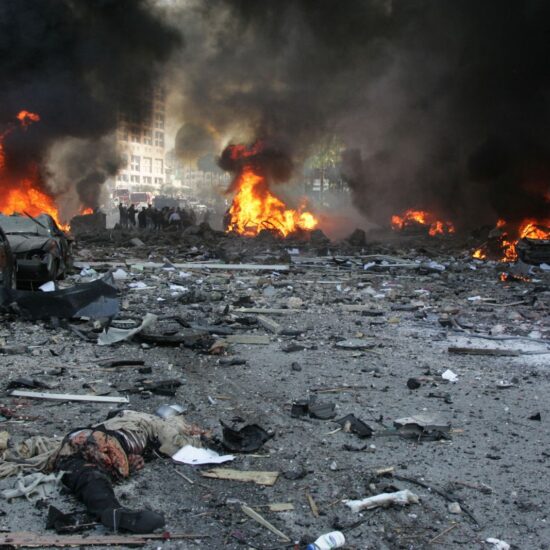
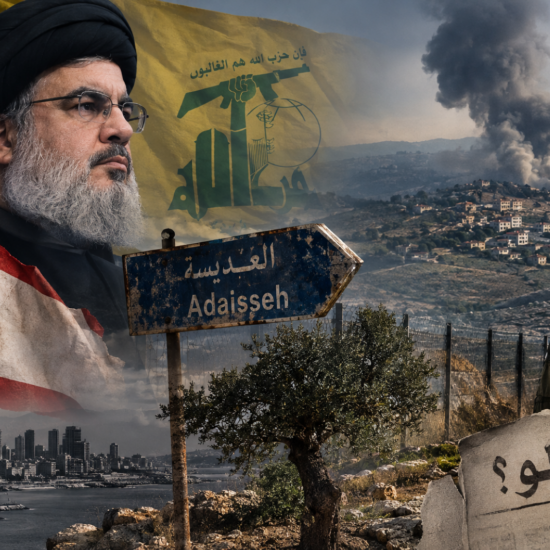
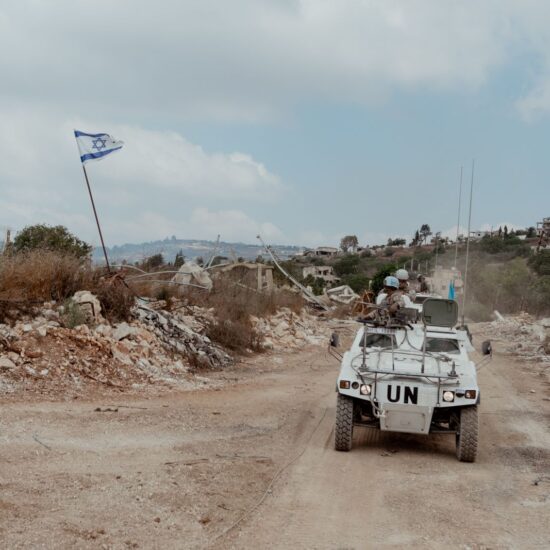
In the context of the ongoing war and destruction facing South Lebanon, the Rukayni chronicles emerge as a needed tool for reconstructing memory and documenting heritage. As a primary source, the chronicle is essential to integrating the history of Jabal Amel into the broader narrative of Lebanese history. Perhaps we, today’s readers, are the very audience Haydar and his son were writing for all along, the ones meant to find this treasure, study it anew, and understand it. It falls to academic and public history alike to take up that task, turning the chronicle into a living link between the displaced, the destroyed villages of Jabal Amel and their own deep history, heritage, and memory, a constitutive element of our collective and diverse history as Lebanese.
All extracts from the chronicle have been translated by the author from Haydar Riḍā al-Rukaynī, Jabal ʿĀmil fī Qarn, ed. and annotated by Aḥmad Ḥiṭīṭ (Beirut: Dār al-Fikr al-Lubnānī, 1997), with page references to that edition. An online version is available at: https://archive.org/details/1163-1247-1749-1832/mode/1up
Charles al-Hayek is a public historian and the founder of Heritage and Roots.
The views in this story reflect those of the author alone and do not necessarily reflect the beliefs of NOW.