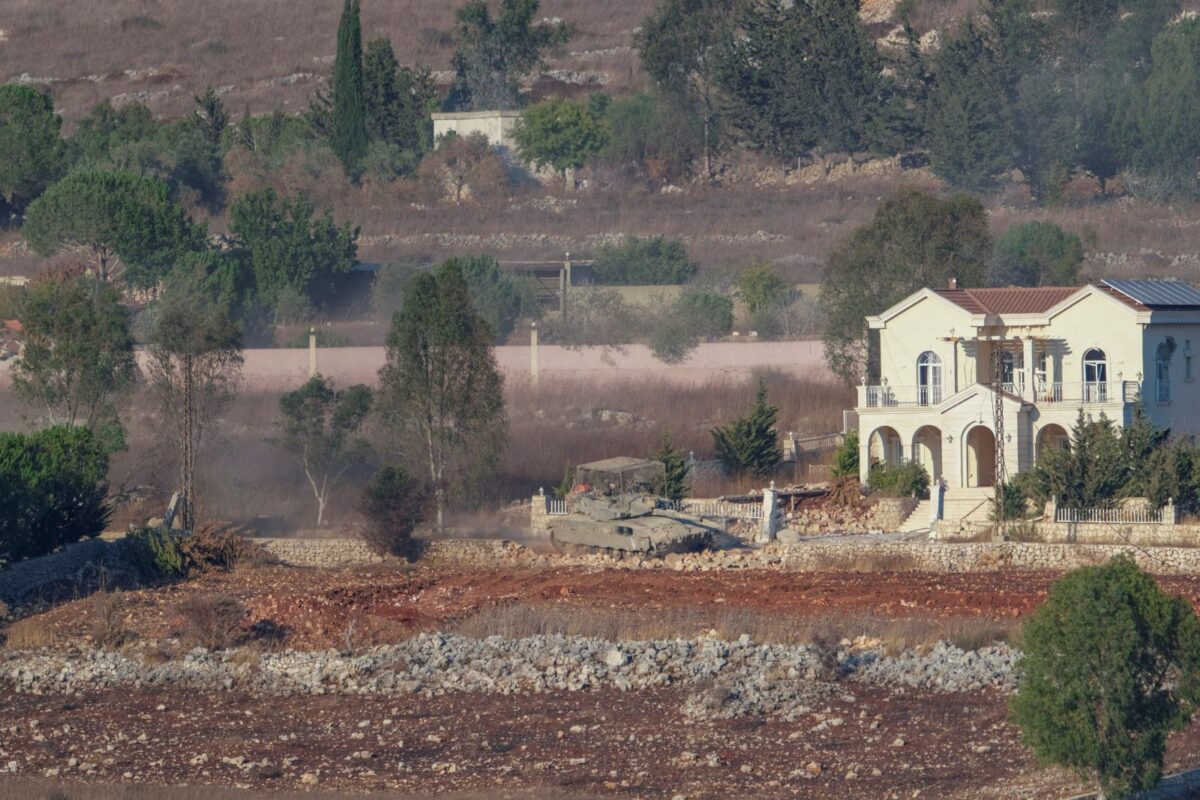
An Israeli tank is seen beside homes in Houla, in the Marjayoun district of southern Lebanon, on August 28, 2026 (Photo by Courtney Bonneau / Middle East Images / Middle East Images via AFP)
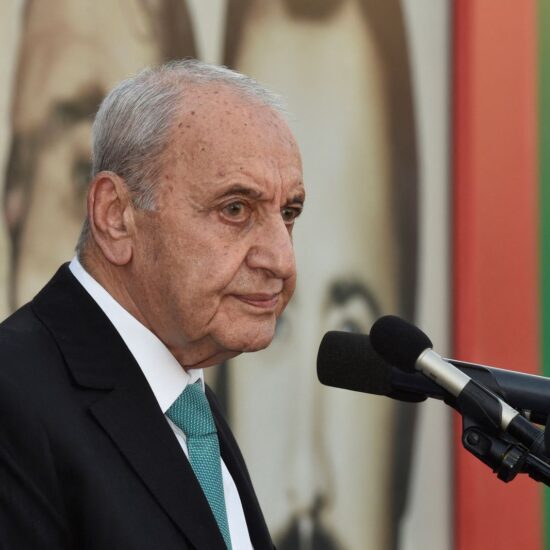
On Sunday, President Joseph Aoun and Prime Minister Nawaf Salam invoked Imam Moussa Sadr to make a promise about southern Lebanon. Aoun recalled that Sadr refused to allow the South to become a bargaining chip and argued that only the legitimate weapons of the state could protect the land. Salam declared that the South would not be abandoned and that its people should no longer pay for conflicts decided by others. On that same day, the mayor of Houla reported that approximately 90 percent of his village’s homes and infrastructure had been destroyed.
Ten houses were demolished on Thursday, eight on Friday and another ten on Saturday. Israeli forces also destroyed the building being used as the municipality’s temporary headquarters. Forests, agricultural fields and olive trees were burned. In Mansouri, displaced residents gathered in a neighboring village and watched their homes being demolished beyond a Lebanese Army checkpoint.
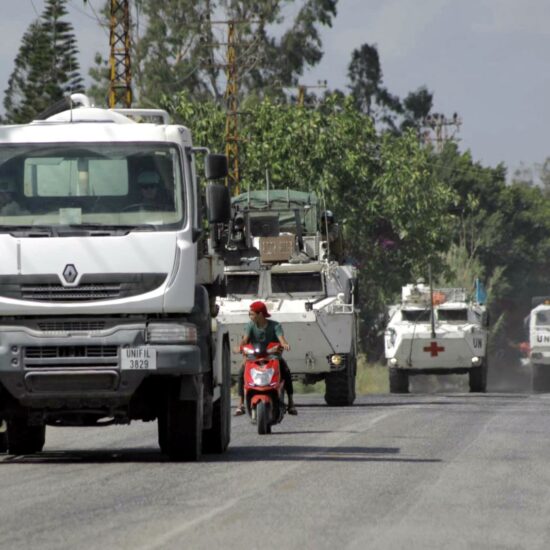
The political debate continues to revolve around who controls the South. Does Hezbollah withdraw first? Does Israel? Can the Lebanese Army deploy? Who verifies the process? Will UNIFIL remain? These questions matter, but they increasingly assume that the South under negotiation will still exist in a form its people can inhabit.
Lebanon may eventually recover the coordinates of the South while losing the society that made those coordinates Lebanese.
Lebanon may eventually recover the coordinates of the South while losing the society that made those coordinates Lebanese. Territory and place are not the same thing. Territory can be marked on a map, occupied by an army and returned through an agreement. A place is built through homes, schools, fields, municipal institutions, family histories and the expectation that people will continue living there. Territory can survive destruction. Place cannot.
Israel says its operations target Hezbollah’s military infrastructure and are necessary to protect its northern communities. Hezbollah’s use of villages and civilian areas must be investigated wherever evidence supports such claims. But military explanations do not erase civilian consequences. When almost an entire village is destroyed, the result extends far beyond the removal of weapons or fighters. It eliminates the material conditions of return.
This changes the value of any eventual Israeli withdrawal. Leaving a functioning village means surrendering control of a living community. Leaving behind ruins transfers the burden to Lebanon. Israel can withdraw while Lebanon, the Gulf states or international donors are left to finance reconstruction, compensate residents and rebuild the infrastructure destroyed during the occupation.
The destruction therefore reshapes the negotiation even if it is not formally written into the agreement. Every demolished house increases the cost of return. Every burned field delays economic recovery. Every destroyed municipal building weakens the local authority expected to govern after the army arrives.
Displacement also changes with time. People initially leave believing they are escaping danger temporarily. They remain connected to their villages through property, relatives and the promise of return. Once homes and livelihoods disappear, temporary displacement begins to resemble permanent relocation. Families find schools elsewhere. Workers search for new employment. Children form attachments to different places. Return remains emotionally important while becoming materially impossible.
This is why the destruction of the South cannot be reduced to a reconstruction file that begins after a political settlement. Reconstruction is already part of the conflict. The ability of residents to return will determine whether the South remains a populated Lebanese region or becomes an emptied security zone managed from a distance.
Hezbollah cannot escape responsibility for this outcome. It maintained that its weapons protected the South, yet southern communities have endured repeated destruction while those weapons failed to protect their homes. But the failure of Hezbollah’s model does not automatically validate a process that leaves residents exposed, displaced and dependent on promises of future aid.
If the Lebanese state and its international partners do not provide a credible alternative, the ruins themselves will become Hezbollah’s strongest remaining argument. The organization will point to every destroyed village as evidence that diplomacy offered negotiations without protection and withdrawal without justice. A militarily weakened Hezbollah may still reproduce its political narrative through a population that feels collectively abandoned.
Aoun and Salam’s invocation of Moussa Sadr was therefore politically significant. They were not only speaking about state authority. They were contesting who has the right to define the South and represent its people. They presented the state, rather than an armed organization, as the continuation of Sadr’s demand that Lebanon assume responsibility for a region it had historically neglected.
That claim cannot be secured through speeches. The state must document every demolished home, protect property records, maintain displaced communities, support municipalities and place reconstruction guarantees inside the negotiations themselves. International verification cannot inspect only Hezbollah’s weapons and Israeli positions. It must also record continuing demolitions, secure civilian access and establish what will make return possible.
An agreement that returns territory but does not make return possible has settled a border. It has not restored a country.
An agreement that returns territory but does not make return possible has settled a border. It has not restored a country. The South may eventually return to Lebanese control. The harder question is whether its people will receive anything to return to.
Ramzi Abou Ismail is a Political Psychologist, Researcher and Analyst.
The views in this story reflect those of the author alone and do not necessarily reflect the beliefs of NOW.