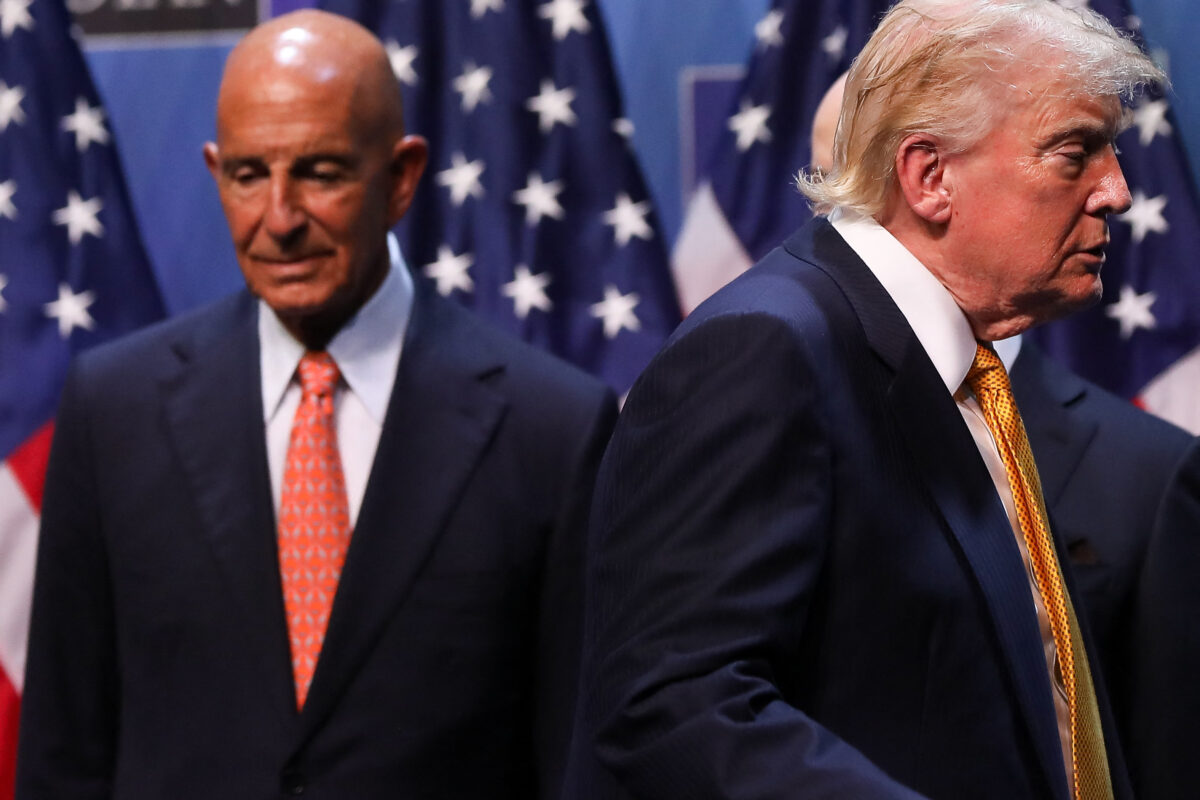
Tom Barrack is supposed to speak for the United States. Listen to him long enough and you start wondering who he is speaking for.
Take his latest sit-down with an influencer. America’s man on Syria told his host that what worries him in the south is not Israel but a Druze sheikh exploiting the illusion of Israeli and American backing to persecute other Druze. He added that the Sweida-to-Daraa belt is a global captagon hub, and that the trade lets some Druze arm themselves. Look at what this does. A community that has just lived through a massacre is recast as a narco-militia problem, and the victims become suspects.
The record on Sweida is not ambiguous. A UN investigation found more than 1,700 people, mostly Druze civilians, were killed and over 155,000 displaced in Sweida during last year’s violence. There were reports of government-aligned forces carrying out scores of summary executions of Druze. So what did the envoy offer? He suggested the atrocities may have been committed by Islamic State militants disguised in government uniforms, not Syrian forces. That is not diplomacy. It is public relations for a client, delivered with the confidence of a man who has never been made to answer for anything.
The pattern runs well beyond the Druze. Barrack seems to see the Middle East’s communities as obstacles to a plan. Those who fit the plan are “partners.” Those who don’t are gangs, smugglers, or “toxic” actors. That is why the Druze, the Kurds and anyone else outside the arrangement being engineered keep ending up in his crosshairs.
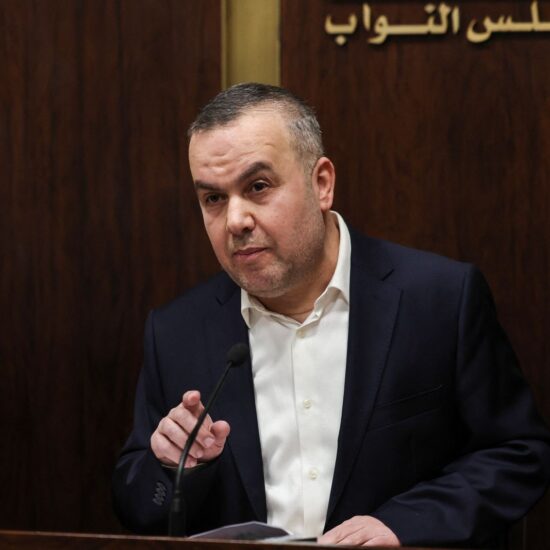
Then there is Hezbollah. On a Beirut visit pressing for disarmament, Barrack called it a “political party” that “also has an armed wing.” At the Antalya Diplomacy Forum he said Lebanon’s ceasefire is fragile because everyone has been “equally untrustworthy,” meaning Israel and Hezbollah alike, and that the path with Hezbollah must be “not killing Hezbollah.” He has even remarked that Hezbollah “runs the best municipalities.” Washington designates Hezbollah a terrorist organization, and the group has the blood of Americans, Lebanese and Syrians on its hands. An envoy who spends his time looking for its redeeming features has lost the plot. Notably, his critics included two Senate Republicans, not just partisans of one side.
Then there is the Orientalism, which is not subtle. Barrack told Lebanon that if it didn’t act, it would become Bilad al-Sham again, a line that sounded to many Lebanese like a threat to their sovereignty, and he was forced to walk it back. He mused that the region “has never had peace for 5,000 years.” After a Baabda press conference, he had to explain that his use of the word “animalistic” toward reporters wasn’t derogatory. This is a man who treats an ancient, plural, sophisticated region as a tribal squabble to be managed from a hotel lobby. Lebanese, Syrians and Druze are not extras in his story.
Washington designates Hezbollah a terrorist organization, and the group has the blood of Americans, Lebanese and Syrians on its hands. An envoy who spends his time looking for its redeeming features has lost the plot.
Follow the incentives. Barrack is simultaneously ambassador to Turkey and envoy for Syria, and critics, including fellow Republicans, have long pointed to his perceived closeness to Erdoğan’s government. The Syria file therefore sits in the hands of someone whose day job is keeping Ankara happy. When he repeats the Turkish line on the SDF and shows unlimited patience for Damascus’s new rulers, we are entitled to ask whose interests are being served, and whether they are American ones.
And why is he still there? Barrack is a billionaire real estate investor and long-time Trump donor, rewarded with a diplomatic posting in 2025. Strip away the friendship with the president and the résumé looks like that of someone who would have been quietly replaced a long time ago. Diplomacy is not deal-making over a golf-club lunch. Consequences in this region are measured in graves.
Anyone who calls himself an ally of the United States should be insulted by this. Allies are told that American power stands behind pluralism, protection of minorities and accountability for atrocity. Barrack’s version offers none of those: minorities are managed, massacres are explained away, and terrorist groups are given “paths.” If that is American policy, it should be debated openly. If it isn’t, the president should find an envoy who understands the difference between mediating and carrying water.
The Druze of Sweida, the Kurds of the northeast and the Lebanese deserve better than a salesman. So does America’s reputation.
Makram Rabah is the managing editor at Now Lebanon and an Assistant Professor at the American University of Beirut, Department of History. His book Conflict on Mount Lebanon: The Druze, the Maronites and Collective Memory (Edinburgh University Press) covers collective identities and the Lebanese Civil War. He tweets at @makramrabah