While the government defends the decision on legal grounds, critics argue it contradicts promises of justice, undermines the investigation, and exposes the limits of reform rhetoric under Prime Minister Nawaf Salam.
The Lebanese government’s decision to appoint Gracia Azzi as Director-General of Customs has triggered a wave of anger that extends far beyond administrative concerns. For families of the victims of the August 4, 2020 Beirut port explosion, the move is seen as another blow to an already fragile quest for justice and a stark contradiction of repeated political pledges to uphold accountability.
Azzi’s appointment is legally defensible under Lebanese law, which does not bar individuals from public office unless they are convicted. Yet her name remains linked to the port explosion investigation, having been questioned by Judge Tarek Bitar. For many, this alone makes the decision politically and morally indefensible.
“It affects morale before anything else”
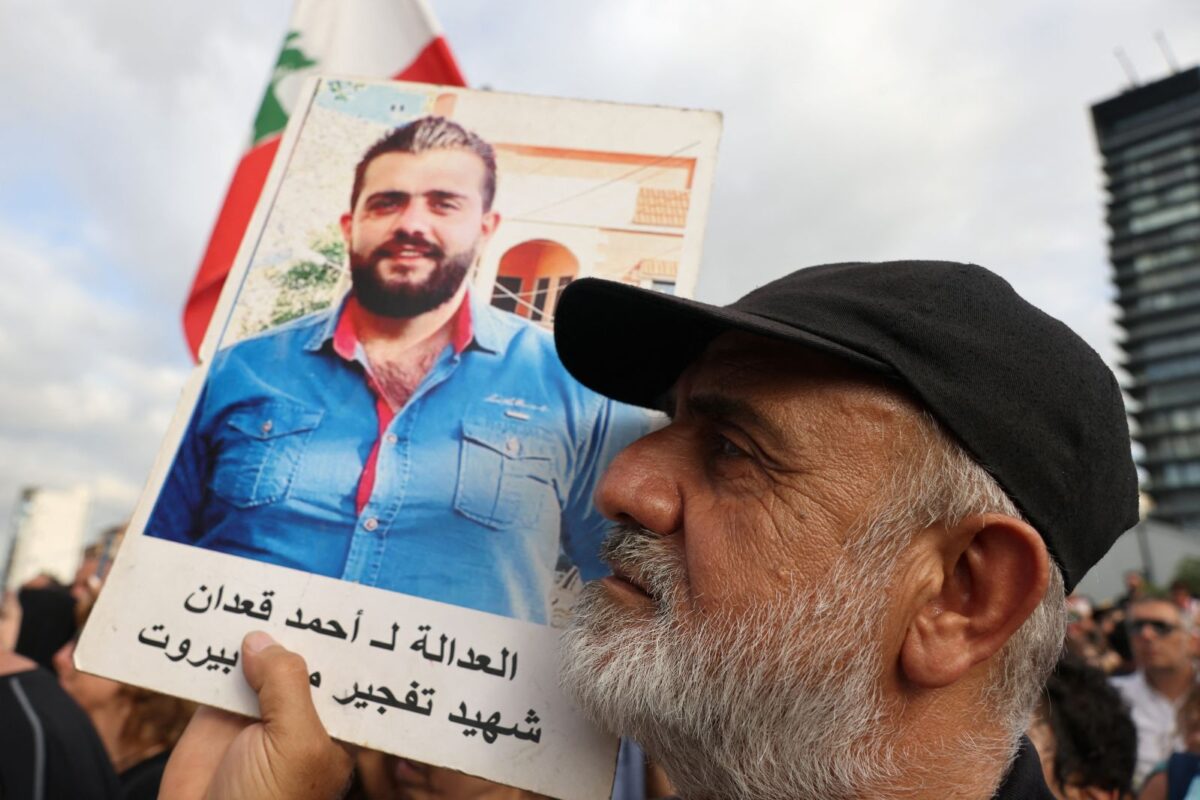
Among the most vocal critics is William Noun, whose brother Joe Noun was killed in the explosion. Speaking to NOW Lebanon, Noun said the decision strikes at the heart of public trust and deeply affects those who have followed the case for years.
“This decision has a direct impact, especially coming from a presidency and a government that constantly speak about justice,” Noun said. “We have heard, again and again, that delayed justice is not justice. But when you appoint someone with corruption files and links to the port case as director-general, it completely undermines that message.”
Noun stressed that the damage is not only political, but deeply emotional. “It affects morale first and foremost the morale of the families, of everyone following the case. This is not just about us as victims’ families. This file concerns the entire country.”
He added that the families are escalating pressure through protests and direct communication with ministers and the prime minister. “We are holding the government accountable. This appointment also affects the judge himself. When officials under investigation are promoted, it sends a message that the investigation, the judge, and the entire case do not matter.”
For Noun, the move represents a “moral setback” for a judiciary already under immense pressure. “Judge Bitar has been facing an enormous battle for years — pressure from political forces and rising expectations from families who have been waiting for answers for nearly six years.”
A legal contradiction waiting to explode
Farouk El-Moghrabi, lawyer and a former adviser to Lebanon’s minister of human rights, described the appointment as “catastrophic,” warning that it exposes a serious legal and political contradiction.
“Beyond corruption allegations, Gracia Azzi is a defendant in the Beirut port explosion case,” El-Moghrabi said. “She was questioned recently by Judge Bitar. That alone makes this appointment deeply problematic.”
While acknowledging the principle of presumption of innocence, El-Moghrabi argued that the government is ignoring another fundamental legal reality. “Yes, there is a presumption of innocence. But there is also the fact that she is formally accused and under investigation. What happens if the indictment is issued soon? What if an arrest warrant follows? Who does the government expect to deal with that scenario?”
El-Moghrabi said the appointment directly contradicts official claims about transparent and merit-based appointments. “This decision undermines all the talk about reforming appointment mechanisms and ensuring transparency. It exposes the gap between rhetoric and reality.”
Beyond the political and moral debate, questions have also emerged about whether the appointment can be challenged through legal means. But according to legal experts, the narrow scope of Lebanon’s administrative justice system leaves little room for accountability once such decisions are made.
Legally, El-Moghrabi expressed skepticism about the possibility of challenging the appointment before the administrative courts, noting that such cases require strict conditions, including direct harm. “Frankly, I doubt there is an effective legal path here, which makes the decision even more dangerous.”
“Rebranding sectarian patronage”
Investigative journalist Riad Kobaissi, who has spent years exposing corruption within Lebanon’s customs administration, was blunt in his assessment. In comments to NOW Lebanon and in a video posted on his Instagram account, Kobaissi described the appointment as a step backward.
“This is a bad decision,” he said. “It shows that talk about reforming appointment mechanisms is nothing more than rebranding sectarian patronage.”
Kobaissi argued that the appointment contradicts both the president’s oath speech and the government’s ministerial statement. “Ethics come before the law, this should be self-evident. You cannot speak about justice and accountability while making decisions that undermine them.” He said.
For critics, the controversy surrounding Azzi’s appointment is no longer just about one position within Customs. It has become a symbol of Lebanon’s broader struggle with impunity and a test of whether the promises made after the Beirut port explosion still carry any meaning.
As families of the victims continue to mobilize, the question remains whether the government will reconsider its decision, or whether this appointment will stand as yet another reminder that, in Lebanon, justice is often postponed and sometimes quietly sidelined altogether.