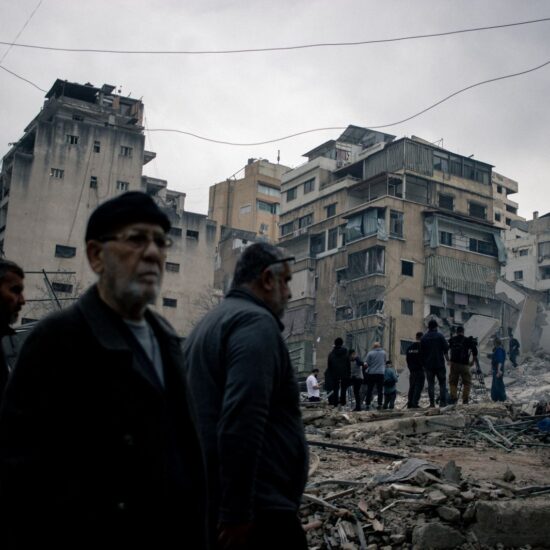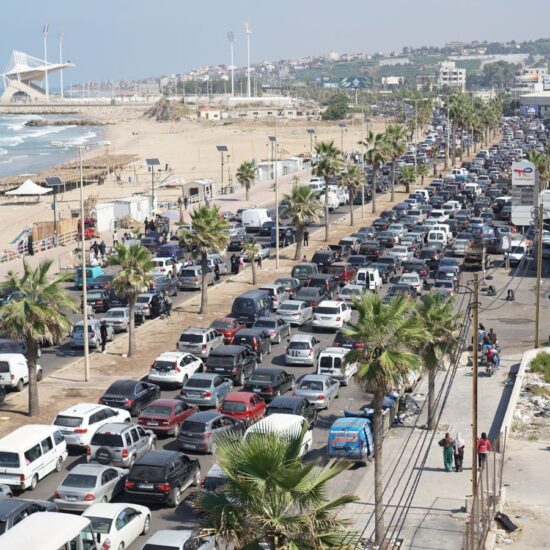
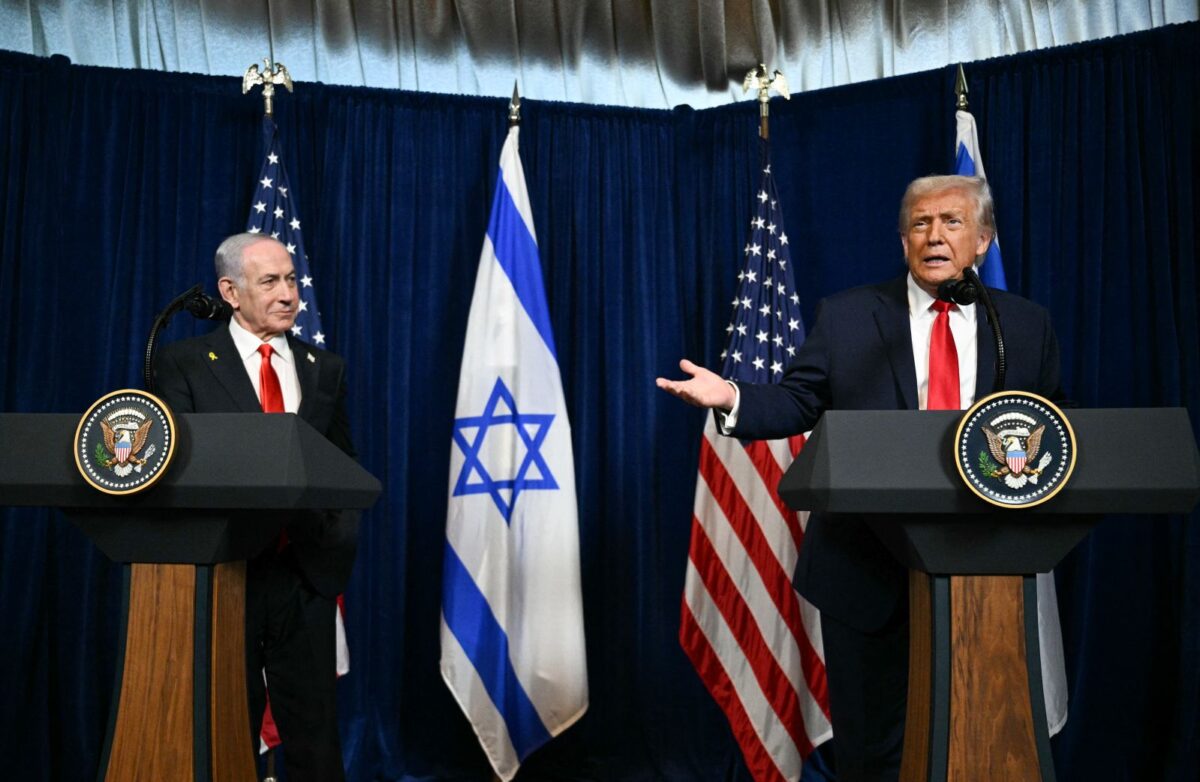
The press conference with Donald Trump and Benjamin Netanyahu was designed to signal strategic harmony—on Gaza, on Iran, on “phase two,” and on the broader architecture of a regional order Trump wants to brand as both decisive and transactional. But in the middle of this choreography, a question about Lebanon punctured the performance and exposed the emerging doctrine: Lebanon is no longer treated as a sovereign actor with a complicated internal balance. It is treated as a “disadvantaged” space—an arena where force may substitute for politics, and where the state is judged by a standard it cannot meet without confronting the very structure that has hollowed it out.
Asked whether Israel should strike Hezbollah again because Lebanon had “failed” to disarm it, Trump did not offer a formal endorsement. He offered something more useful: permission through ambiguity. “We’ll see about that,” he said. Then came the line that should worry Beirut more than any threat dressed up as diplomacy: “The Lebanese government is at a little bit of a disadvantage… with Hezbollah.”
This is not empathy. It is a reframing.
To describe Lebanon as “disadvantaged” is to strip the Lebanese state of agency while preserving its liability. The government is presented as too weak to act, yet still responsible for outcomes. Hezbollah is cast as the variable that makes sovereignty conditional, not foundational. And Israel—never challenged in Trump’s remarks on timing, restraint, or proportionality—remains the default enforcer.
This framing is not rhetorical. It is already being translated into policy. In recent weeks, Washington has pushed to raise the level of Lebanon’s representation in the ceasefire “mechanism,” arguing that the next phase can no longer be managed through technical envoys or liaison officers. The message is blunt: the United States wants political ownership, not procedural management. By urging political participation—specifically—Washington is signaling that security arrangements will now be explicitly linked to sovereign decision-making and economic choice. Border stability, energy investment, trade channels, and potential regional integration in the Eastern Mediterranean are being bundled into a single negotiating track. The implication is clear: Lebanon will be treated either as a state capable of assuming political responsibility, or as a space governed by pressure—where economic incentives accompany security coercion, and hesitation carries a cost.
In other words, the Trump-Netanyahu message on Lebanon is not “We support the Lebanese state.” It is: We recognize you are unable to control the militia; therefore, the rules of the game will be written around you.
That logic fits neatly into the broader tone of the press conference. On Gaza, Trump spoke in the language of deadlines and punishment: Hamas would have a “very short period of time” to disarm, and if it fails, the consequences would be “horrible.” On Iran, he returned to the rhetoric of eradication and “obliteration,” promising to respond quickly if Tehran rebuilds. The pattern is clear: disarmament is not a negotiated end-state; it is a prerequisite. Those who fail to comply are not merely adversaries—they are obstacles to a “peace” defined by enforcement.
Lebanon is being folded into that template.
But Lebanon is not Gaza, and Hezbollah is not Hamas—at least not in how it has embedded itself into state institutions, patronage networks, and a national economy that has been engineered to depend on political paralysis. The disarmament question in Lebanon is not a technical file. It is a struggle over what the Lebanese state is, who governs it, and whether the republic is a home for citizens or a corridor for an axis.
Trump’s comment—delivered casually—nonetheless lands as a strategic assessment: Washington will not pretend Beirut can do what it has refused to do for decades. That sounds like realism. Yet realism without responsibility becomes a recipe for escalation. If Lebanon is “disadvantaged,” then strikes become “inevitable.” If the state cannot deliver, then bypassing it becomes “pragmatic.” And if Hezbollah “behaves badly,” then Lebanon—once again—pays the price for decisions it did not collectively authorize.
This is exactly how Lebanon has been managed into collapse: by treating sovereignty as rhetoric while allowing armed power to operate as policy.
The more dangerous implication is that the Trump team appears comfortable with a post-war regional order where non-state actors are confronted by coalitions if necessary, not contained by institutions. Trump openly said there are “other countries” willing to “wipe out” Hamas if it does not disarm. Translate that posture into Lebanon and you get a grim forecast: international patience for Lebanon’s endless “balance” between state and militia will evaporate, and Lebanon will be judged as a territory—useful, expendable, and punishable—rather than as a state worthy of political investment.
Lebanon’s leadership should not misread this as a moment to hide behind weakness. The “disadvantage” line is a warning: if Beirut continues to outsource its sovereignty, others will treat Lebanon as an outsourced problem. And outsourced problems do not receive diplomatic solutions; they receive security fixes.
If the Lebanese government wants to avoid being reduced to a footnote in someone else’s press conference, it needs to stop performing helplessness as policy. The argument cannot be that the state is too weak to act. The argument must be that the state is being prevented from acting—by an armed party that has treated Lebanon like a theater, not a homeland.
Trump’s remarks were not a strategy for Lebanon. They were a mirror. And what Lebanon should see in that mirror is the cost of pretending that a militia can be both a national shield and a separate authority. In the new regional language emerging from Mar-a-Lago, that illusion is no longer considered a Lebanese internal compromise. It is considered a regional liability.
Lebanon will be treated accordingly—unless it treats itself differently first.
Makram Rabah is the managing editor at Now Lebanon and an Assistant Professor at the American University of Beirut, Department of History. His book Conflict on Mount Lebanon: The Druze, the Maronites and Collective Memory (Edinburgh University Press) covers collective identities and the Lebanese Civil War. He tweets at @makramrabah