As protests and nationwide strikes across Iranian cities enter their third week, reported figures on the number of protesters killed by the Islamic Republic’s security forces all point to a horrific toll of “thousands.” Iran International TV has reported the death toll as “at least 12,000,” while CBS News, citing sources inside Iran and documented confirmation, has put the death toll as “up to 20,000.”
Iranian merchants initially launched strikes two weeks ago in protest against the extreme instability of foreign exchange rates—particularly the U.S. dollar against the Iranian rial—as well as the country’s bankrupt economy. Shortly thereafter, citizens protesting deteriorating economic conditions joined them in cities across the country. Throughout these two weeks of demonstrations and strikes—one of several major protest waves over the past decade—distinct slogans emerged that set this movement apart from previous ones. Protesters openly declared that they reject clerical rule, demand the restoration of the Pahlavi monarchy, and consider these protests their “final battle.”
After demonstrators repeatedly chanted slogans calling for the return of Reza Pahlavi, the former Crown Prince of Iran, he took a more prominent role at the end of the second week, issuing two major calls for mass street demonstrations. In his first appeal, he simply urged people to show up and voice their demands. In the second, he called for greater coordination and asked protesters to bring national symbols with them—specifically urging them to carry these symbols visibly in the streets. Both calls were met with millions of participants across cities and rural areas alike.
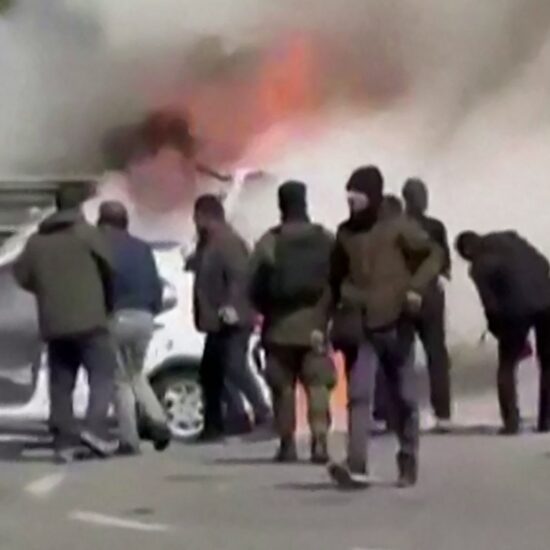
Protesters flooded the streets in opposition to the Islamic Republic and its Supreme Leader, Ali Khamenei, while simultaneously expressing support for Reza Pahlavi and the return of a secular Pahlavi-era system. Carrying distinctive flags and photographs of the former crown prince, demonstrators voiced unified and coordinated slogans. The outcome of this massive mobilization was brutal and bloody repression, the arrest of tens of thousands, an immediate nationwide internet shutdown, the severing of international communications, and the suspension of operations for many domestic media outlets.
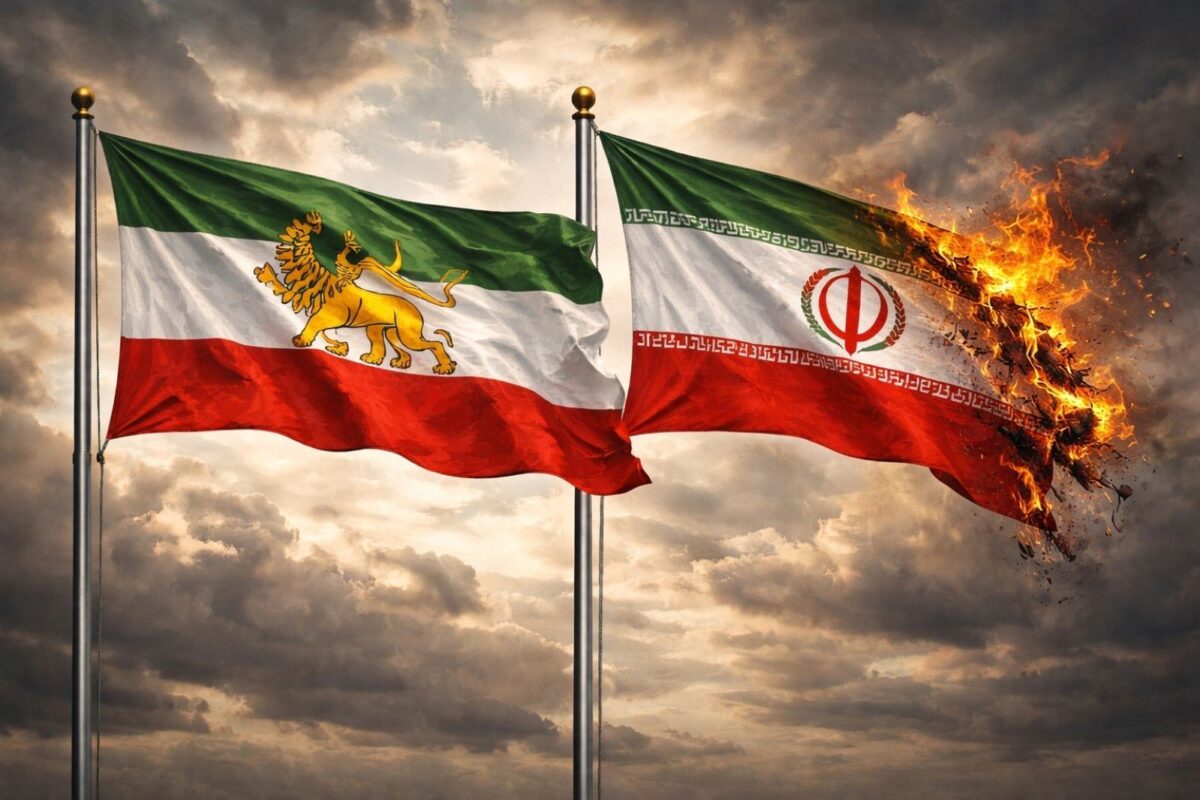
Thousands of Iranians were killed simply for demanding a different form of governance, economy, and culture. Thousands of protesters carried the Lion and Sun flag, Iran’s national emblem prior to the 1979 Islamic Revolution. This same flag has recently been raised by Iranian diaspora protesters abroad, in several bold acts replacing the Islamic Republic’s flag outside Iranian embassies.
Since the 1979 ideological revolution, Iran’s official flag has consisted of green, white, and red horizontal stripes, with the phrase “Allahu Akbar” embedded by the Islamic Republic—an element that had never previously existed on Iran’s national flag.
Today, however, opposition forces who have taken to the streets in earnest—and who have paid for their demands with thousands of lives—are calling for the hoisting of a different flag: the same tricolor arrangement, but bearing the Lion and Sun emblem at its center. This demand is not merely a symbolic change of logo or insignia. Rather, it represents an explicit call for the dissolution of the Islamic Republic—a system that has imposed severe political, economic, and cultural conditions over the past 47 years—and the establishment of a new form of governance that, similar to the Pahlavi era, would restore a dignified and sustainable quality of life for Iranians.
Over the past four decades, the Islamic Republic has expanded religious laws and imposed extensive ideological restrictions under the guise of legislation and Sharia, intervening in nearly every aspect of citizens’ lives. This has generated widespread social discontent. Such frustration reached a critical point three years ago during nationwide protests following the state killing of Mahsa (Jina) Amini in police custody. That uprising resulted in deaths, severe injuries, mass arrests, and months of sustained street demonstrations demanding an end to mandatory hijab laws and religious rule.
Earlier, in 2019, another major uprising erupted in response to economic hardship and a sudden spike in fuel prices. According to Reuters, approximately 1,500 protesters were killed by Islamic Republic security forces during that crackdown.
In all previous major and bloody uprisings, protesters primarily demanded the removal of the ruling system without articulating a unified alternative model. References to the Pahlavi dynasty appeared sporadically and locally. In recent weeks, however, this has fundamentally changed, transforming into a nationwide and collective demand.
For this reason, the act of carrying the historic Lion and Sun flag in opposition to a flag marked by religious symbolism is neither sentimental nor merely performative. It signals a profound and structural shift. Iranians are explicitly demanding the dismantling of ideological governance, the establishment of social freedoms, an open and dynamic economy, and the ability to live normal lives with standard global connections—conditions they associate with the secular Pahlavi era half a century ago.
Today’s protesters—exhausted, yet resolute—have taken to the streets fully aware of the risks of death or imprisonment. Despite darkness, isolation, and complete disconnection from the outside world, they continue to occupy protest squares. They regard the ideological vision of Shiite clerics and the system of Velayat-e Faqih as failed, dangerous, and illegitimate. At their core, they have reached a firm conclusion: political Islam, symbolized by the “Allahu Akbar” inscription at the center of the national flag, has yielded nothing but devastation for Iran and growing misery for its people—especially when contrasted with their historical memory of the secular Pahlavi state, which brought development, progress, and dignity to Iranian citizens.
The question that now remains is this: after these bloody and turbulent days in Iran and the Middle East, which flag will ultimately be raised—officially—over the Iranian plateau and its diplomatic buildings around the world?
Armin Soleimani is a Middle East reporter
The views in this story reflect those of the author alone and do not necessarily reflect the beliefs of NOW