Pope Leo XIV concluded his three-day visit to Lebanon with an open call for unity, peace, and justice, a message enhanced in his most symbolic stop: the Beirut Port.
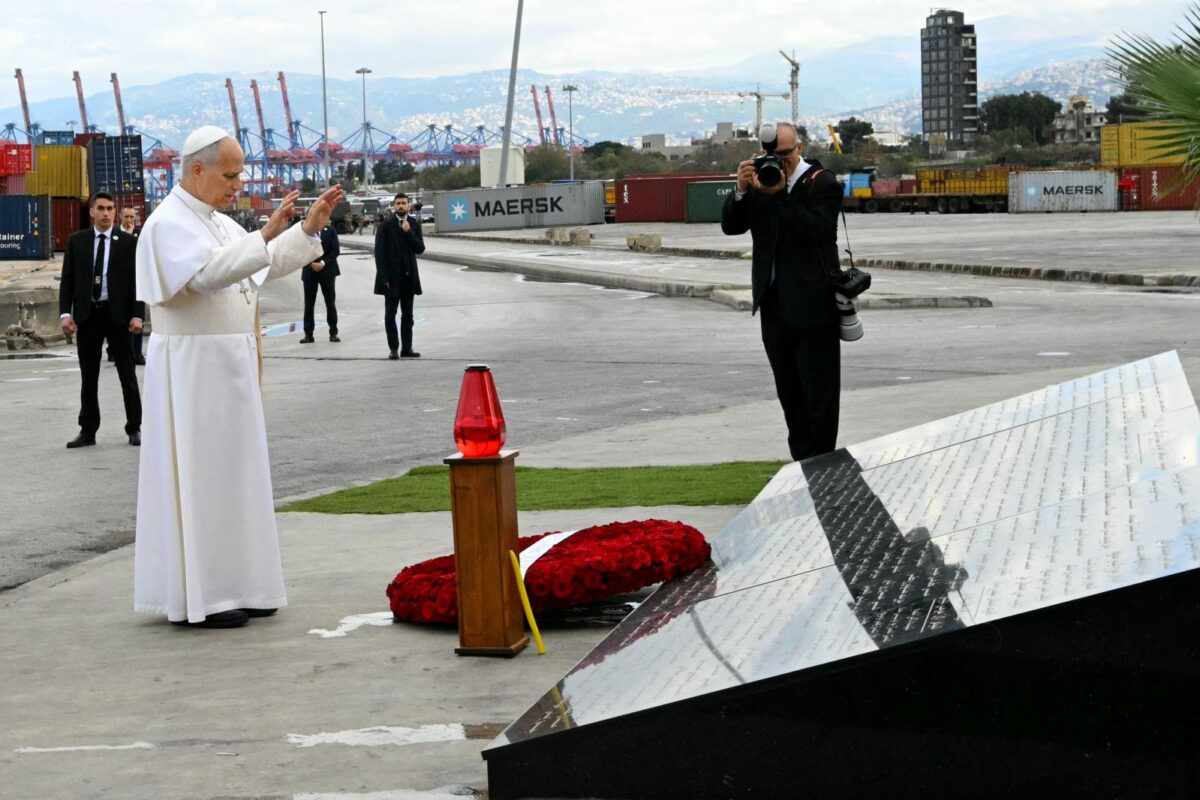
Standing at the site of the 2020 explosion, Pope Leo XIV offered a moment of silent prayer and lit a memorial candle in honor of the more than 220 people killed and over 6,500 wounded.
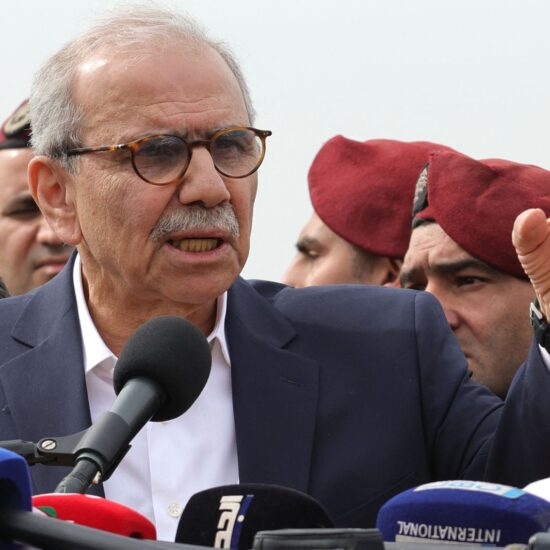
Prime Minister Nawaf Salam and several officials welcomed the Pope as he arrived at the port. He walked quietly toward the memorial wall carrying the names of the victims and stood in stillness for several minutes, while the entire area fell silent around him.
The Pope also spent time with families of the victims, hearing their stories and the pain they continue to carry. He gave small symbolic gifts to the children who came with their parents, highlighting the human weight of a tragedy that is still unresolved for so many in Lebanon.
Pope Leo met survivors and relatives of the victims one by one, shaking hands, offering blessings, and listening.
Yet five years after the explosion, justice remains elusive. The investigation has been repeatedly obstructed, suspended, or politically blocked, leaving no officials convicted and deepening public anger at what many view as another chapter in Lebanon’s long history of impunity.
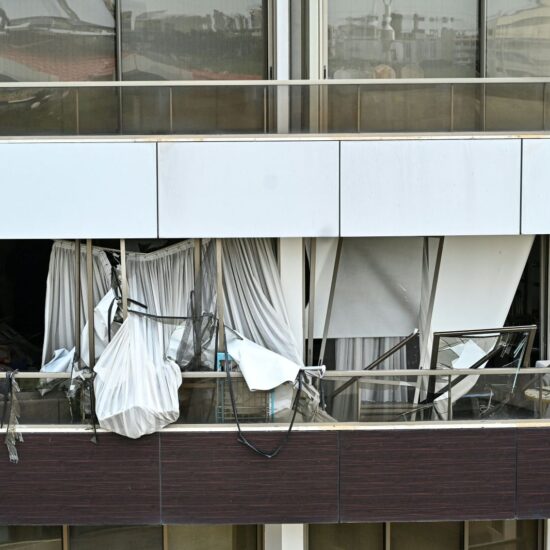
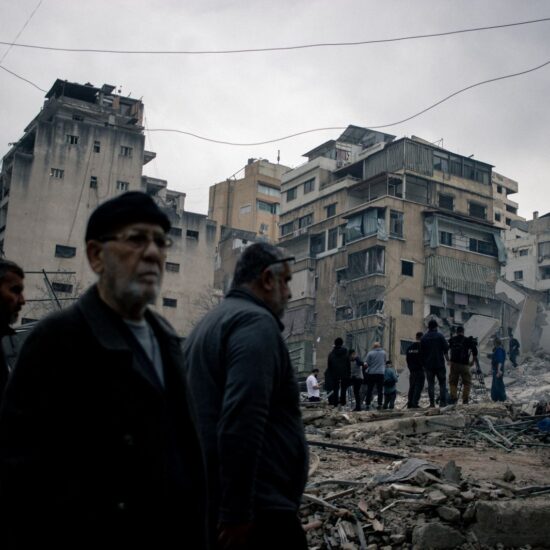
The blast, which devastated entire districts and caused billions of dollars in losses, became a national symbol of deep corruption and state negligence.
Upon his arrival on Sunday, Pope Leo urged Lebanon’s political leaders to pursue truth as the foundation for peace and reconciliation.
Repeated political interference has paralyzed the judicial investigation, turning the blast site into a stark symbol of impunity and state collapse.
Joseph Antoun, a relative of a victim who lost his life in the Beirut port blast, described the Popes presence to NOW as a “much needed healing moment that has brought a meaningful act of solidarity to the families still devastated by what happened and have not yet seen the accountability they’re looking for.” For individuals like Joseph, the Vatican’s attention to the Beirut Port felt like a reminder that the world has not turned away from Lebanon and that this particular national tragedy is still remembered, although, justice has not yet been served.
What is the message?
Against the backdrop of Lebanon uncertainty, Pope Leo XIV’s decision to pray at the site of the 2020 Beirut port explosion takes on a heightened significance.
His visit emerges as a symbolic act of solidarity and a moral appeal to unity, justice, and peace at a time when the nation fears another cycle of violence and fragmentation.
Tensions are climbing across Lebanon as near-daily Israeli strikes on the south raise the specter of a new escalation, barely a year after a war that shattered the country’s security, battered its economy, and further strained its society.
In that sense, the Pope’s presence is meant to send a message that even in uncertain times marked by conflict threats and sectarian pressure, there is still space for collective mourning, demands for accountability, and a shared vision of coexistence.
Pope Leo XIV received a warm and enthusiastic welcome throughout Lebanon. Upon his arrival on Sunday, he was greeted with official ceremonies attended by politicians from across the spectrum, while thousands of Lebanese lined the streets along his motorcade, under the heavy rain to see him.
For a country still reeling from the devastating conflict between Hezbollah and Israel just over a year ago, and living under the constant shadow of potential new strikes, his visit offered a rare glimmer of hope, especially to the families of the victims of the Beirut port disaster who are still waiting for justice.
Beyond its religious significance, the pope’s presence at the port, combined with his direct engagement with victims’ families, symbolized solidarity, moral attention, and a reminder that Lebanon’s wounds have not been forgotten.
“For a moment, we felt seen again,” said Maria who lost her brother in the blast, “His prayer has gave us a sense of connection, healing and comfort, but peace will come when justice is served and those involved are held accountable.”
Maria told NOW she sees the Popes visit to the blast site holding a message to remind Lebanon’s leaders that justice is also a spiritual duty.
For many Lebanese, the Pope’s presence at the port was the first high-level acknowledgment of their pain since the blast whilst being a move to restore global attention to an investigation that Lebanese leaders have tried to bury.
Both the president and the prime minister repeatedly pledged to safeguard the “independence of the judiciary” and to prevent political interference. But in a country where impunity has long been the rule, those promises have done little to convince families that accountability will ever come.
Rodayna Raydan is a Lebanese-British journalist. You can follow her on Twitter @Rodayna_462