Pope Leo visits Lebanon, offering a message of hope amid growing war uncertainties.
Pope Leo XIV arrived in Beirut on Sunday afternoon, stepping off the plane at Rafic Hariri International Airport to an unusually broad show of unity from Lebanese officials and citizens. He was received on the tarmac by President Joseph Aoun, Parliament Speaker Nabih Berri, Prime Minister-designate Nawaf Salam, and senior religious figures from the Maronite Church. A 21-gun salute marked his arrival as the motorcade prepared to leave the airport under tight security.
Crowds gathered along the road leading from the airport, extending into Dahye, where residents lined balconies and sidewalks to watch the convoy pass. The turnout included Christians and Muslims, with many families bringing their children out to see the Pope. Members of the Mahdi Scouts — Hezbollah’s youth organization — were also present. They stood in formation at several points along the route, carrying both Lebanese flags and yellow Vatican flags.
The crowds remained orderly as the convoy moved toward Baabda. Some people filmed the procession; others simply waved flags as the Pope passed. For many, the visit represented a rare moment of calm in a country still dealing with economic collapse, displacement, and continued instability. The Vatican has framed the trip as a message of support for Lebanon’s social and religious diversity, and the broad welcome along the route underscored that point on the first day of the visit.
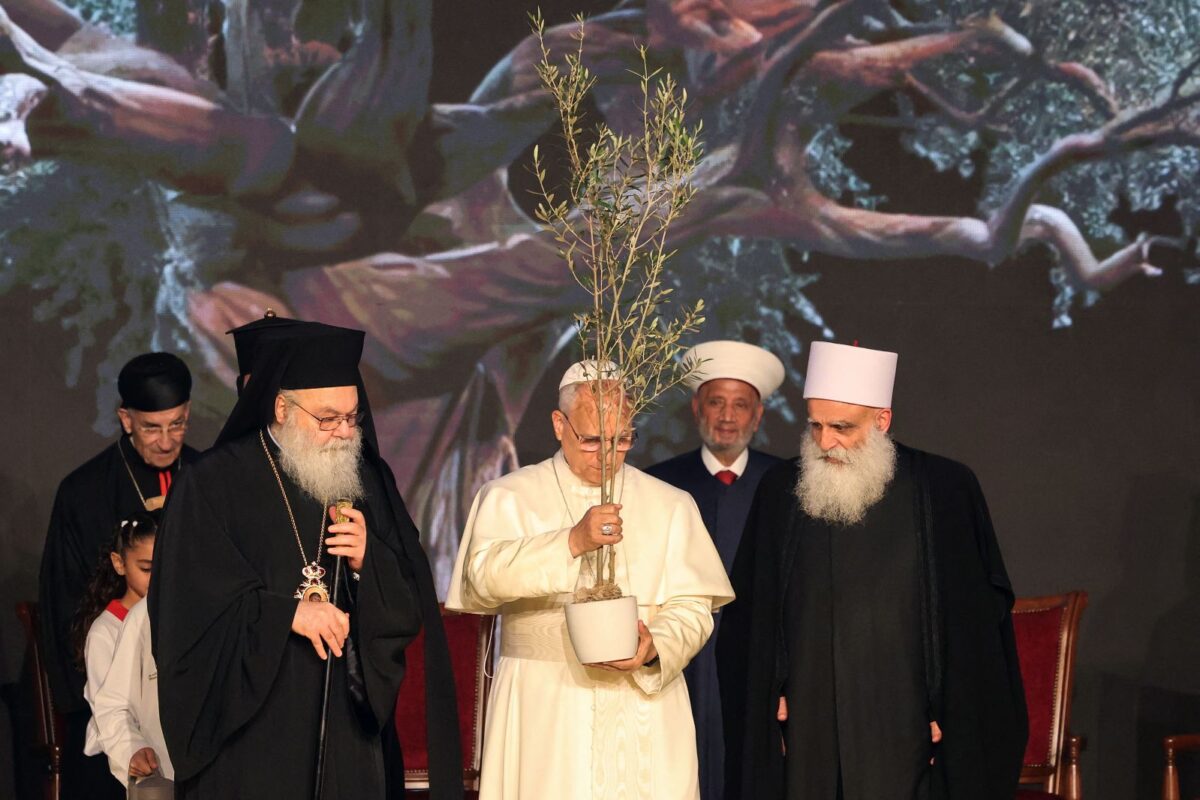
This morning, Pope Leo XIV will travel to the mountains above Jbeil to visit the tomb of Saint Charbel Makhlouf at the Saint Maron Monastery in Annaya — his first scheduled stop of the day. From there, he will continue down the coast to the Shrine of Our Lady of Lebanon in Harissa, where he is expected to meet with bishops, priests and pastoral workers.The rest of the day includes a private meeting with Catholic patriarchs and later an ecumenical and interreligious gathering in downtown Beirut’s Martyrs’ Square, followed by a youth meeting at the headquarters of the Maronite Patriarchate of Antioch in Bkerké.
In Lebanon
First Speech: In his first address from Baabda Palace, Pope Leo XIV framed Lebanon as a symbol of resilience and coexistence in a region marked by conflict. He urged Lebanese citizens to see peace as an active mission rather than an abstract ideal, praising the everyday efforts of millions at home and abroad who quietly work toward stability. Acknowledging the country’s hardship, he commended the Lebanese for “rising in the face of difficulties,” and called on them to avoid sectarian disputes and strengthen connections across communities.
Hezbollah Tunnels: International and local media were taken by the Lebanese army into a Hezbollah tunnel south of the Litani River, in a rare tour aimed at showing progress on last year’s ceasefire deal. Army officials said they have quietly dismantled Hezbollah positions and seized weapons over the past year, a low-profile approach meant to avoid internal tensions but one that fueled skepticism and Israeli claims. The visit comes just weeks before the army completes the first phase of its deployment in the area. Journalists were shown one of 177 tunnels the army says it has dealt with so far.
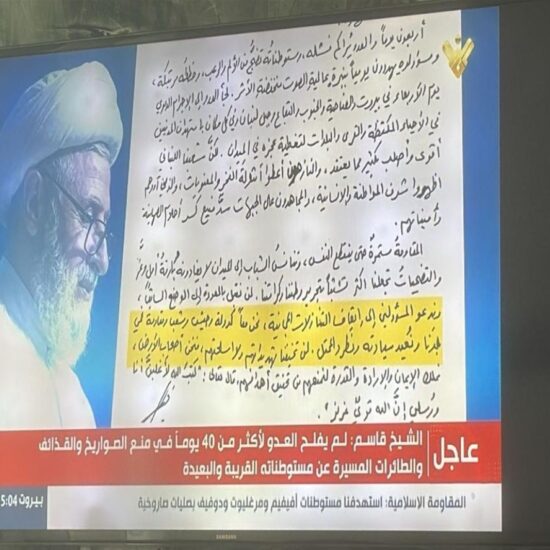
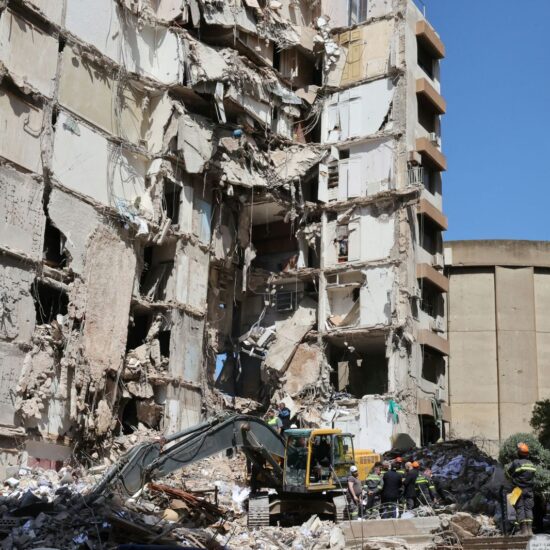
Threatening a Response: Hezbollah’s deputy leader Naim Qassem said the group reserves the right to respond to Israel’s assassination of senior commander Haytham Ali Tabtabai in last week’s strike on Beirut’s southern suburbs. In a televised speech, he called the killing “a blatant aggression and a heinous crime,” adding that Hezbollah will choose the timing of any retaliation. Qassem said the possibility of a new war with Israel “is there,” though not inevitable, and urged Lebanon to prepare a national defense plan that relies on “its army and its people.”
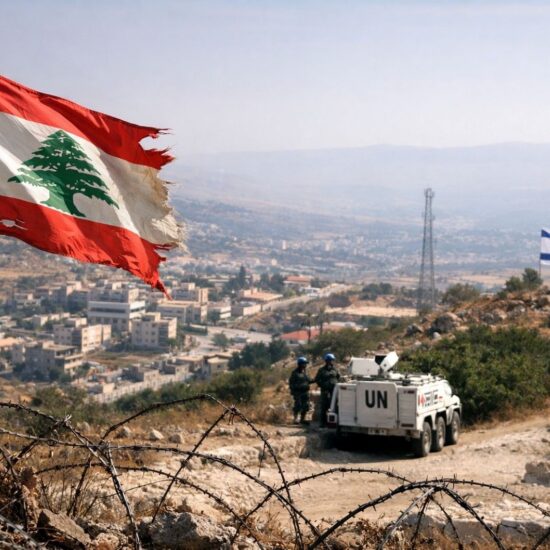
Framing the UNIFIL: Israel’s Army Radio reported that senior Israeli defense officials are concerned UNIFIL may be sharing sensitive military and intelligence information with Hezbollah. The Israeli military described the UN peacekeeping force as “a destabilizing force” that fails to limit Hezbollah’s presence in southern Lebanon. Some officials suggested that the situation would improve if UNIFIL ended its mission and withdrew from the region sooner rather than later.
Give Back the Bomb: The United States has urgently asked Lebanon to return an unexploded GBU‑39 bomb used by Israel in the recent assassination of Hezbollah commander Haytham Ali Tabtabai in Beirut’s southern suburbs. The bomb, largely intact at the site, has raised U.S. concerns that Russia or China could gain access to its sensitive technology.
In The Region
Two-State Solution: On his flight from Türkiye to Lebanon, Pope Leo XIV reaffirmed the Vatican’s support for a two-state solution to the Israeli-Palestinian conflict, calling it “the only solution” that can ensure justice for both sides. He confirmed that in his private talks with Turkish President Recep Tayyip Erdogan, they discussed the wars in Gaza and Ukraine, with Leo noting Turkiye’s “important role to play” in resolving both. While emphasizing the Holy See’s commitment to mediating between Israel and the Palestinians, the pope avoided directly commenting on Israel’s ongoing military actions in Gaza.
Israeli Violence in Syria: An Israeli operation in Beit Jin, near Damascus, killed 13 people, including women and children, Syrian state media reported, in the latest military incursion in southern Syria. Syria’s foreign ministry condemned the raid as a “war crime,” accusing Israel of seeking to “ignite the region.” The Israeli military said the strike targeted suspects from the Lebanese Islamist group Jamaa Islamiya, who had reportedly planned attacks against Israeli civilians. Clashes during the operation left at least six Israeli soldiers wounded, three seriously, with troops returning fire and receiving aerial support.
New Base: Preparations for the Gaza Stabilisation Force (GSF) command centre continue in al-Arish, northern Sinai, despite logistical and political challenges. The multinational force will train and deploy troops to maintain security and aid in post-ceasefire Gaza. Egypt is taking a leading role, coordinating with Israel, but analysts warn the plan’s success hinges on Hamas agreeing to disarm, a condition the group has so far resisted.
What We Are Reading
Beirut awaits Pope Leo XIV after symbolic stop in Turkey: Pope Leo XIV is concluding his first official foreign trip in Turkey and is set to arrive in Lebanon on Sunday, the second stop of a sensitive regional tour. In Turkey, he held interfaith meetings and marked the 1,700th anniversary of the First Ecumenical Council, emphasizing coexistence and peace. Lebanon is preparing for his visit amid economic collapse, political instability, and security concerns, with authorities deploying reinforcements and managing crowd controls.
War Fears Surge as Sistani Intervenes:Fears of war along the Lebanon–Israel border have risen after an Israeli strike killed Hezbollah’s new chief of staff, Hayssam al-Tabtabai. Iraq’s top Shiite cleric, Sayyed Ali al-Sistani, reportedly urged Iran to protect Lebanon’s Shiite community and prevent further escalation. While Hezbollah remains aligned with Tehran, Sistani’s intervention signals Najaf’s emphasis on calm and provides moral support to Lebanese Shiites facing renewed violence and displacement.
When Noah’s Arch Sinks… and Hezbollah’s Myths Sink with It: NOW’s managing editor Makram Rabbah, writes that the arrest of fugitive Nouh Zaiter exposes the collapse of myths Hezbollah and Iran built around protection, heroism, and resistance. Once shielded by militia networks, Zaiter surrendered without resistance, revealing the fragility of the party’s carefully cultivated narrative. Rabbah argues that Hezbollah is now shifting its focus from Israel to portraying the Lebanese state as the real enemy, framing calls for sovereignty, judicial reform, or disarmament as existential threats.
A State That Speaks and a Party That Decides: Lebanon at a Strategic Crossroads: Political psychologist Ramzi Abou Ismail writes that President Joseph Aoun’s Independence Day speech boldly affirmed state sovereignty over weapons and war, yet Hezbollah’s response to Israel’s strike in Dahieh—claiming it alone will decide retaliation—exposed the true power dynamics in Lebanon. Abou Ismail argues that Hezbollah faces a strategic trap: retaliating risks escalation, while restraint undermines its internal narrative, and full integration under state authority would be the most rational path but is blocked by collective narcissism and fear of appearing weak.