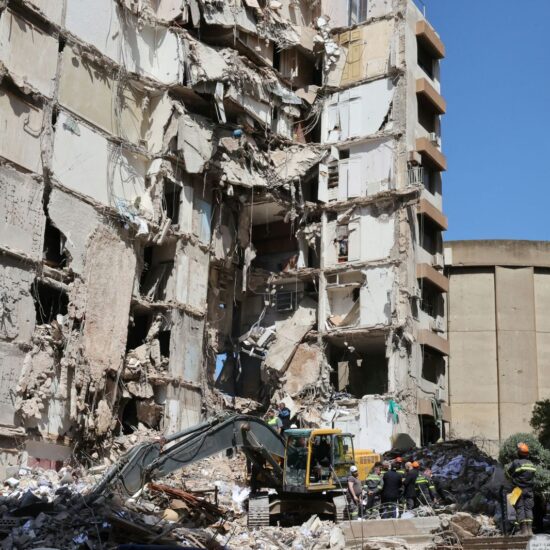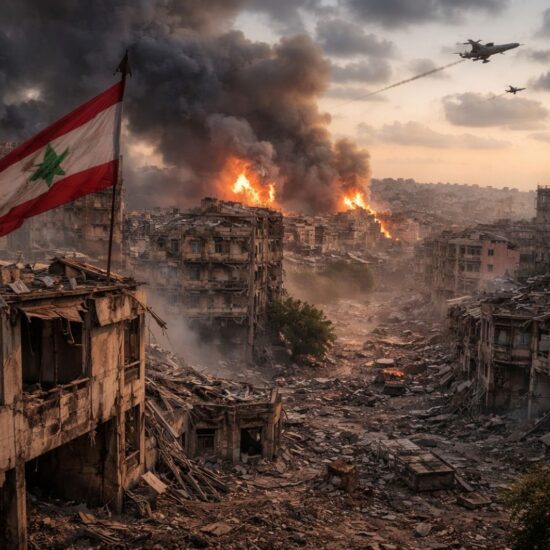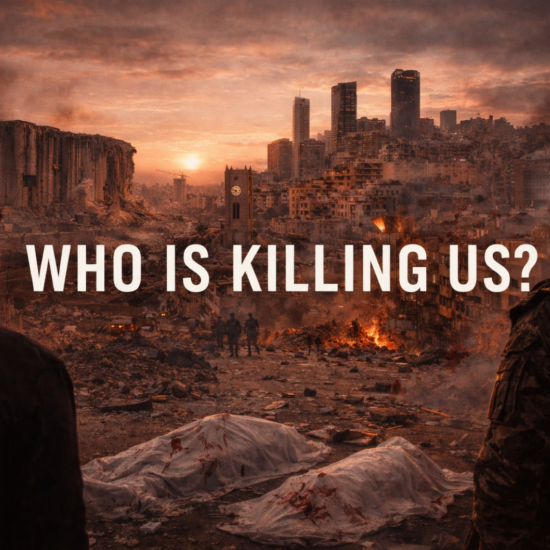
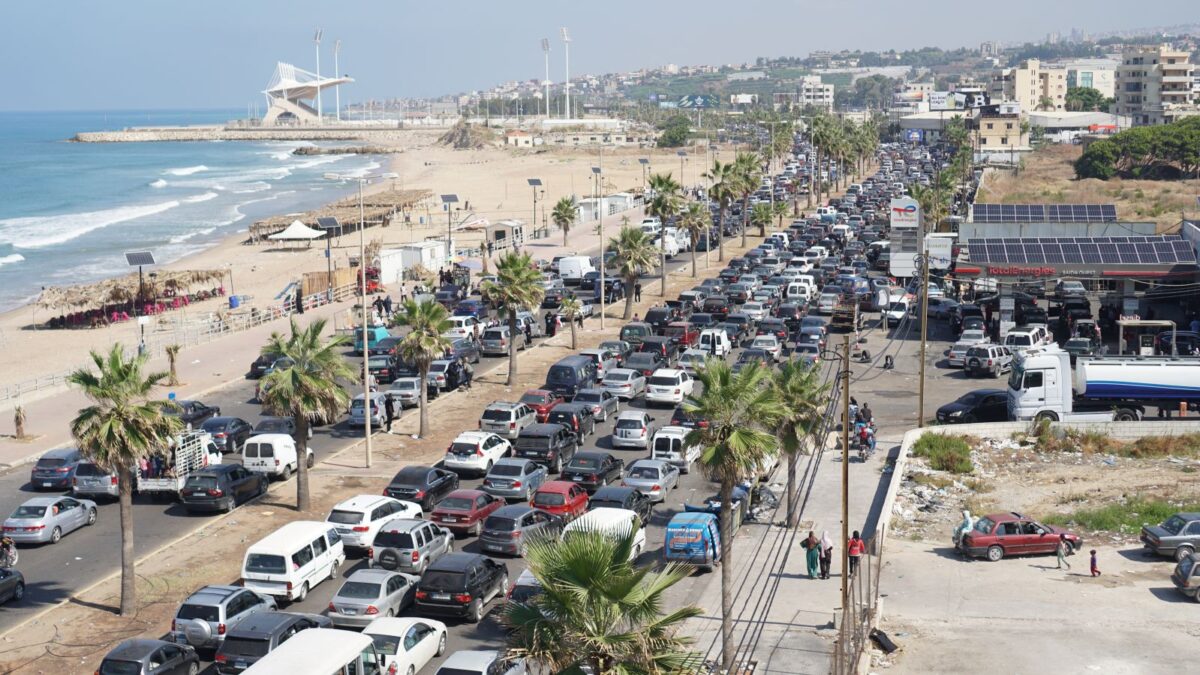
Lebanon today stands at the most dangerous crossroads it has faced since the days of the Civil War. This is not only because the destruction is immense, or because the displacement is staggering, though both are true. It is because the present war has stripped away the last illusions surrounding the post-war order and the viability of the state. What we are witnessing is not merely another episode in Lebanon’s long cycle of crises. It is the political unmaking of the Second Republic.
The republic that emerged from Taif was supposed to close the chapter of civil war and inaugurate one of reconstruction, institutional recovery, and national reconciliation. Taif was meant to place the country on the path of state-building, restore public authority, and consolidate power within institutions rather than militias, patrons, and foreign guardians. Yet the truth is harsher: the Second Republic was never truly born. It was stillborn. What should have been the birth of a new political order was, from the very beginning, a coup on the Taif. The promise of recovery was sabotaged almost as soon as it was formalized, emptied of its meaning by the very political class that claimed to implement it, reflective of the vacuous state.
The war had ended, but the men of the war did not disappear with it; they inherited the peace, and instead of founding a serious republic, they converted the state into an arrangement of spoils. Sovereignty was never consolidated within public institutions. The Lebanese state was not rebuilt as the supreme center of authority; rather, it was fragmented, bargained over, and subordinated, first to the old warlords and, for years, to Syrian tutelage. The Second Republic did not represent the serious beginning of a new Lebanon. It was a post-war settlement dressed up as a state, carrying within it the seeds of its own exhaustion.
From the outset, power was distributed not in the service of the public good, but in the service of factional survival. Ministries, contracts, appointments, and public services became part of a system of political feeding. Each leader took his share of the pie, ensuring the continued loyalty of his constituency, often through little more than breadcrumbs, while the state itself was hollowed out from within. What emerged was a structure of organized evasion: some spoke in the name of the state while ensuring that the state would never become strong enough to restrain them.
If there was a beginning to the end, it came in 2019. Lebanon’s financial collapse was not an unavoidable tragedy, nor simply the result of bad luck or regional instability. It was the outcome of decades of corruption, debt, patronage, unsustainable financial engineering, and a ruling class incapable of thinking beyond its own immediate survival. The collapse was one of the most consequential in contemporary history, and it was entirely political in origin.
Those who claim that the collapse was simply the result of Hariri-era politics beginning in 1997 conveniently omit that every major party in government continued the same practices after 2005 and all the way to 2019, formally becoming part of the very Hariri-politik they later used as a scapegoat to explain away their own failures. The crisis was not the work of one camp alone.
The October 17 uprising briefly shattered the script. For one moment, a collective political awakening seemed possible. Large numbers of Lebanese recognized that the problem was not this minister or that party, but the structure and foundations of governance itself. They understood that the threat was systemic, that the very model under which the country had been governed since the war was not merely dysfunctional but predatory. Yet the uprising was ultimately defeated in the familiar way: intimidation, fragmentation, exhaustion, sectarian remobilization on demand, and the deliberate sabotage of any alternative political future. The old order survived yet, through their cunning ability to weaponize fear and sectarian tension, as opposed to reform and patriotism.
Then came the Beirut port explosion, the single most devastating symbol of state failure in the post-war period, our very own Chernobyl. An explosion in the form of a revelation, the masses understood that such negligent government that is undermined at every turn by criminal and militant political parties, could never lead the flock. Faced with unprecedented disasters, from economic collapse to covid and complete paralysis, the people protested, but to no avail. Once again, the Lebanese found themselves disheartened and discouraged.
The years following the uprising and the port explosion are best described as managed decomposition, and not recovery. A patient suffering from terminal cancer can not be treated with paracetamol. The economy did not revive. The banking sector was not seriously restructured. Political life did not renew itself. Instead, Lebanon drifted deeper into a condition in which institutions remained formally alive but functionally empty. The banks were allowed to persist as zombies, unrestructured and unpunished, and the state itself began to resemble the very order it protected: standing upright long after its political life had already drained out of it.
Now, with the current war, the central contradiction of the Second Republic has been laid bare with brutal clarity. A state that cannot decide questions of war and peace is not sovereign in any meaningful sense. A state that cannot monopolize violence cannot seriously speak of reform, recovery, or national rescue. Every other file becomes secondary before this one. Financial reform, anti-corruption discourse, reconstruction plans, donor conferences, constitutional debates: all of them become cosmetic when the most basic attribute of statehood is absent.
Following the two clearest modern definitions of the state, those associated with Max Weber and Karl Marx, two ideological opposites, the point remains strikingly similar: the state’s most basic function rests on coercive power, and its backbone is its armed force. Administrative and economic functions, however important, come after that, followed by the judicial institution and the ideological apparatuses. Even these two men understood that without coercive power, or more gently put, without a monopoly on violence, the very foundation that allows a state to function is absent.
That is what the present war has revealed. Lebanon has once again been dragged into a regional confrontation whose costs are borne by its people, while the state remains unable either to impose its will or to shield the population from the consequences. The humanitarian burden is immense, the displacement overwhelming, and the political class once again finds itself appealing to diplomacy and the language of the state after having spent decades undermining both. Those who hollowed out the state in the name of resistance, sectarian protection, or strategic necessity still turn to that same weakened state when they require legitimacy, negotiation, or reconstruction. They sabotage it, then seek refuge in it.
This is why the language of “breakdown” is no longer enough. Breakdown suggests something temporary, a stoppage that can be reversed once the machinery is restarted. But Lebanon’s problem is no longer mere dysfunction. The idea that the country can continue indefinitely with a central state too weak to impose its authority, yet somehow strong enough to absorb the costs of every extra-state military decision, has reached its limit. The contradiction can no longer be disguised.
The state’s own contradictions are equally exposed. It speaks of sovereignty, legality, and diplomacy, yet shows no willingness to make the confrontation required to give those words meaning. If the state is serious in treating unauthorized military activity as illegal, where is the enforcement? If it is not serious, then what remains of sovereignty beyond rhetoric? This is the recurring tragedy of Lebanon: those at the top speak the language of the state while governing through its absence.
And even amid this state of breakdown, when the prospect of negotiations appears on the horizon, we find ourselves once again trapped in a deadlock. The political consensus that Nabih Berri so often flaunts has extended beyond appointments and cabinet formation into negotiations over the very survival of the nation. The logic of sectarian parity, when applied in this context, has been enough to obstruct even the proposition of sending a delegation to Cyprus. It is the same mentality that has also left the army in paralysis. At the very moment the country requires urgency, clarity, and decisiveness, it is dragged back into the familiar rituals of bargaining, sectarian arithmetic, and institutional immobilization. More importantly, this old trick of “buying time” while waiting for regional shifts has, over the years, turned into a habit of losing time. The longer we remain trapped in a state of indecision, the more likely we are to be met with even harsher and more humiliating terms.
And it is here that Lebanon’s power-sharing model must be confronted for what it has become: a liability. It does not protect the state; it disables it. It does not produce stable coexistence; it produces vetoes, paralysis, selective constitutionalism, and permanent bad faith. Nothing captures this unseriousness better than the way Nabih Berri has invoked the language of national consensus, whenever political convenience demands it. When Michel Sleiman was elected back in 2008, Berri treated national consensus as more important than constitutional amendment. When Joseph Aoun’s election became the issue, constitutional amendment suddenly became inviolable. This is not constitutional thought. It is opportunism masquerading as principle. It is also quite revealing of the deeper truth of the Second Republic: its foundations were never firm rules or a coherent national compact, but improvised bargains manipulated by those who benefit from ambiguity.
The result is a republic defeated by war and by its own design. It has become a system that cannot govern except by postponement, cannot reform except rhetorically, and cannot defend sovereignty except selectively. The constant paralysis is not incidental. It is structural. It is what this order produces.
Yet the death of the Second Republic does not mean that a Third Republic is waiting just around the corner. Political death does not automatically produce political rebirth. Lebanon has repeatedly shown a remarkable ability and resilience to resist both collapse and renewal, to remain suspended in a state of decomposition. That is the real danger now. Not only war. Not only exodus. But the consolidation of a zombie state: a state with institutions but no authority, offices but no power, laws but no force, and governments but no governing capacity.
This is why any serious conversation about reform must begin with first principles. Financial reform without sovereignty is futile. Administrative reform without sovereignty is futile. Electoral reform without sovereignty is futile. Constitutional reform without sovereignty is futile. If the state cannot monopolize violence, then every other reform is built on sand. A state whose authority has been systematically eroded cannot be rescued by technical fixes alone.
But this is precisely the point: Lebanon did not simply arrive here because the state failed in the abstract. It arrived here because the state was methodically weakened, circumvented, and emptied out by those who treated it as an instrument when useful, and as an obstacle when necessary. They spoke in its name when it granted them legitimacy, and undermined it whenever it threatened to restrain them. They carved out its institutions, appropriated its authority, and ensured that the republic would remain too weak to impose itself on them.
The tragedy of the present moment is therefore larger than the war itself, even as the war has made it undeniable. Lebanon is not living through another crisis in a long episode of humiliation. It is confronting the end of a political order that exhausted itself long ago and now survives only through inertia. The Second Republic is dying, and its citizens are paying the price in blood, displacement, humiliation, and exile.
What comes next is uncertain. But what should no longer be in doubt is this: a state that cannot decide war and peace, cannot defend the public interest, and cannot act against those who have hijacked its authority is no longer a republic in any meaningful sense. It is only the shell of one. And those who undermine the state, threaten it when it suits them, then seek refuge in it, asking it to negotiate, to shelter their people, and to bear the burden of their decisions, are still more dangerous.
Nasser Hafez is a graduate student and researcher at the Department of History and Archaeology at the American University of Beirut, specializing in contemporary Lebanese History.
The views in this story reflect those of the author alone and do not necessarily reflect the beliefs of NOW.