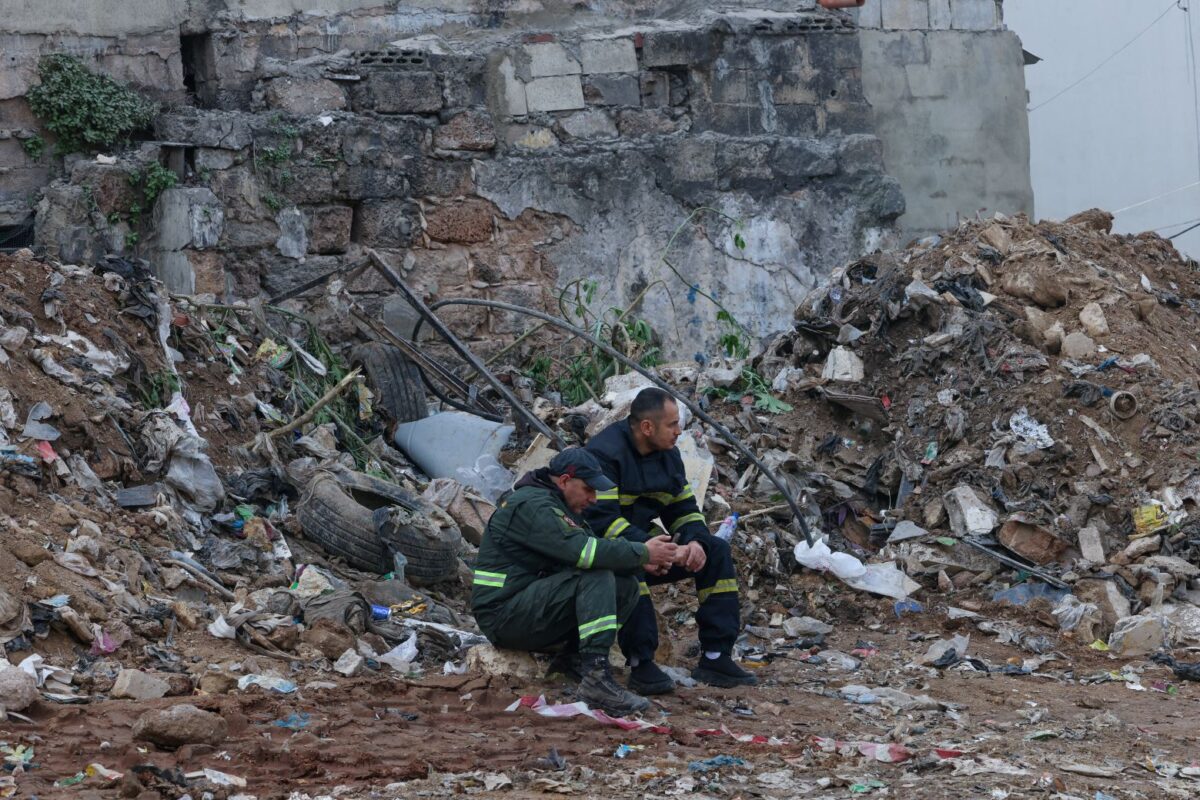
When a building collapses, the easiest word to reach for is tragedy. But tragedy implies inevitability. What happened in Tripoli was not inevitable. It was foreseeable, documented, and ignored.
For years, engineers, municipalities, journalists, and residents have warned that hundreds of buildings in Tripoli are structurally unsafe. Estimates vary, but the number most commonly cited exceeds 800 buildings at risk of collapse, many of them in the city’s poorest neighborhoods. This was not hidden knowledge. It was public, repeated, and bureaucratically acknowledged.
Once a state knows that risk exists, responsibility begins. The collapse we witnessed was therefore not the result of bad luck or individual negligence alone. It was the outcome of a governance model that allows danger to accumulate and intervenes only after lives are lost.
State responsibility is twofold
The state’s responsibility here is not singular, it is twofold. First, the state bears responsibility as the primary enabler of risk. By failing to enforce building codes, follow up on engineering reports, or act on official lists of endangered buildings, the state allowed a known danger to persist. This is not passive failure. It is institutional permission. When risk is identified but left unaddressed, it becomes a policy outcome.
Second, the state bears responsibility as the final guarantor of protection. Once danger is acknowledged, responsibility cannot be shifted onto residents without offering realistic alternatives. Evacuation orders without housing plans, financial assistance, or social protection are not safety measures. They are symbolic gestures detached from reality. Telling families to evacuate while offering no place to go is not governance. It is abandonment.
“People cut corners” is not an excuse. It is the reason the state exists
A common response to these collapses is that people have always taken shortcuts to save time, reduce costs, or survive economic hardship. This is true. And that is precisely the point. States do not exist to govern ideal citizens. They exist because human behavior is predictable: people cut corners, markets externalize risk, and poverty forces dangerous choices. Regulation, inspection, and enforcement are designed to manage this reality, not deny it.
If “people take shortcuts” were an excuse for inaction, there would be no need for food safety laws, traffic regulations, or workplace protections. Housing safety is no different, except that failure results in mass death.
The money argument collapses under scrutiny
The most revealing aspect of this case is financial not structural. By official estimates, rehabilitating the endangered buildings in Tripoli would have cost around $30 million. The state claims it does not have this money. Yet, in the same period, it approved $90 million for reconstruction in the South.
This is not an argument against reconstruction in the South, nor should it be framed as a regional competition. It is an argument about how the state defines urgency. Rehabilitation is prevention. Reconstruction is reaction. A state that refuses $30 million to prevent death but mobilizes $90 million after destruction is not suffering from lack of resources, rather from backward priorities. Money is found after catastrophe, not before it. Lives become worth funding only once they are lost. The problem, then, is not that the state is broke. It is that the state is reactive by design.
Selective neglect is still neglect
Supporters of Hezbollah – and many in the South – often argue that their region has been historically forgotten and abandoned by the state. This feeling is real and rooted in long-term insecurity, underdevelopment, and exposure to war. But the conclusion drawn from this experience is often wrong. The South is not uniquely abandoned. Tripoli, Akkar, the Bekaa, Baalbek-Hermel, and other rural and peripheral areas all experience the same pattern of selective statehood. The state withdraws from daily protection and reappears only after disaster. This is not sectarian neglect. It is peripheral neglect.
When every region is told it is uniquely forgotten, accountability becomes fragmented. Anger turns inward, competition replaces solidarity, and the state escapes structural responsibility. Competitive victimhood benefits no one except the system that produced the failure. The uncomfortable truth is this: The South is not forgotten, it is remembered selectively, often after destruction. So is Tripoli. So is Akkar. So is the Bekaa.
Governance by exposure
What unites these regions is not geography or sect, but a governance model that exposes certain populations to risk while protecting others. This is not absence of the state; it is selective presence. The state regulates when it wants to, polices when it must, and intervenes when destruction becomes visible. But when risk accumulates slowly, it withdraws.
This is what political theorists call governing by exposure: deciding, implicitly, which lives are protected and which are left to absorb danger. Once 800 buildings are officially known to be at risk, every subsequent collapse is no longer an accident. It is a failure after warning.
Stop calling it a tragedy
Calling what happened in Tripoli a tragedy may sound compassionate, but it is politically convenient. Tragedy absolves. Responsibility demands accountability. Tripoli did not collapse because the state could not act. It collapsed because the state chose not to act in time. A state that cannot prevent risk must at least protect people from its consequences. Here, it did neither. And unless this logic is confronted, the question is not whether another building will fall, but where, and how many will be inside when it does.
Ramzi Abou Ismail is a Political Psychologist and Senior Research Fellow at the Institute for Social Justice and Conflict Resolution at the Lebanese American University.
The views in this story reflect those of the author alone and do not necessarily reflect the beliefs of NOW.