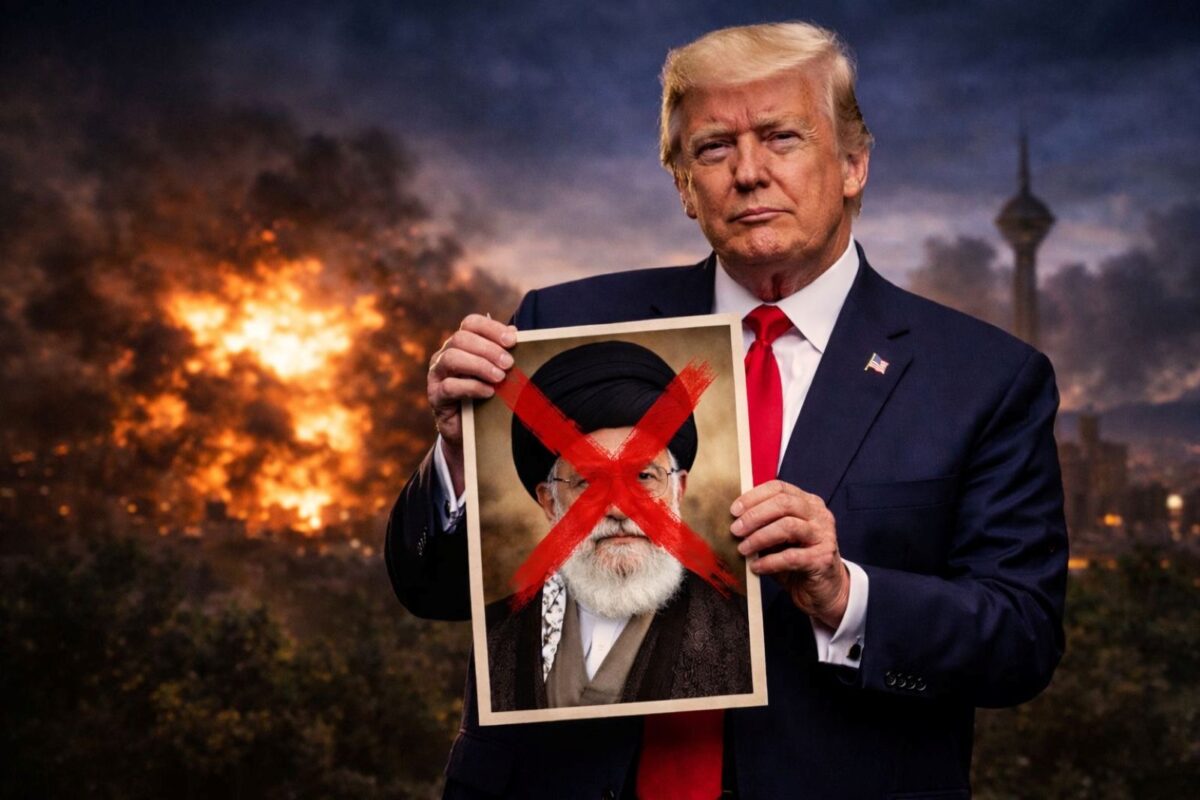
Donald Trump declared Saturday that Iran’s Supreme Leader Ayatollah Ali Khamenei is dead, framing it as long-delayed justice and urging Iran’s security forces to defect.
There is no independent confirmation from Tehran.
Why it matters
- If true, this would be the most consequential blow to Iran’s leadership since the 1979 revolution.
- Trump isn’t just signaling military dominance — he’s openly inviting regime change.
- The risk of retaliation or internal collapse just spiked.
What Trump is doing
In a Truth Social post, Trump:
- Announced Khamenei’s death as fact.
- Credited U.S. intelligence and coordination with Israel.
- Claimed elements of Iran’s military and security forces are seeking immunity.
- Warned bombing will continue “as long as necessary.”
- Called on Iranian forces to align with “patriots.”
The message blends triumph, threat, and inducement.
The pressure play
This isn’t just an announcement. It’s psychological warfare.
By offering “immunity now” and threatening destruction later, Trump appears to be:
- Testing elite cohesion inside Iran.
- Encouraging defections within the IRGC.
- Framing this as a decisive break rather than a prolonged war.
But leadership decapitation does not guarantee regime collapse. It can just as easily harden the system.
The unknowns
- No verified confirmation of Khamenei’s status.
- No clarity on who controls Iran’s command structure.
- No visibility into the succession process.
If confirmed, the immediate question won’t just be who replaces him — it will be who controls the transition.
The bottom line
Trump is betting that maximum pressure plus leadership removal equals regime fracture.
It could trigger internal unraveling.
Or it could consolidate Iran’s security state around a more militant successor.
One thing is certain: if Khamenei is truly gone, the Middle East just entered a new and far more dangerous chapter — and the next move won’t come from Washington. It will come from Tehran