We are living through a subtle but consequential shift in the global order, one in which Donald Trump has reasserted himself as the central reference point of international politics. This is not because he resolves crises, but because he reorders how they are interpreted. From renewed discussions surrounding Greenland, to the sudden emergence of the “Board of Peace,” to persistent speculation about a potential U.S. strike on Iran, global politics has once again begun to orbit around anticipation rather than outcomes.
This shift matters. Power today is exercised not only through decisions, but through the ability to command attention, suspend resolution, and force other actors into a reactive psychological posture. Trump’s political intuition lies precisely here. He understands that the question dominating global discourse is no longer what is happening, but what he might do next. Greenland is not about acquisition, Iran is not necessarily about war, and the Board of Peace is not primarily about diplomacy. Each functions as a device that reinforces centrality, positioning Trump as the axis around which uncertainty revolves.
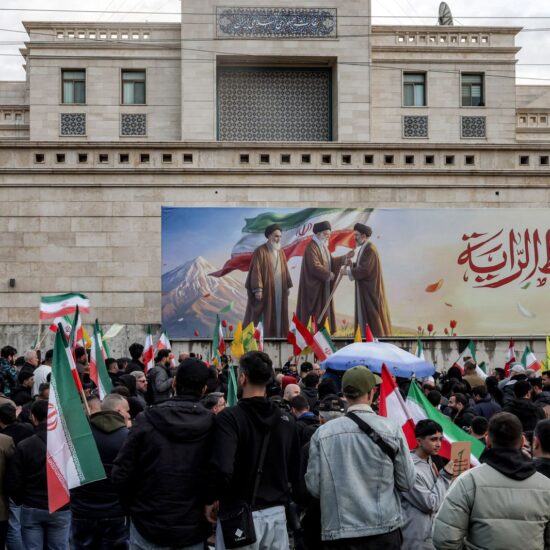
Nowhere is this clearer than in the recurring discussion of a possible U.S. strike on Iran. The persistence of this narrative, despite the absence of concrete military movement toward war, is not accidental. The threat itself performs strategic labor. It reassures allies, unsettles adversaries, and reframes Iran’s internal crisis as an international security question rather than a legitimacy problem. In doing so, it freezes political time, keeping all sides in a state of suspended calculation.
Yet the danger lies in what this discourse obscures. A military strike on Iran, absent a clear and credible plan for what follows, would almost certainly fail in political terms, even if it succeeded militarily. This is the most consequential illusion shaping current debate. Airstrikes can degrade capabilities, destroy infrastructure, and impose costs, but they cannot resolve a legitimacy crisis. Unless Washington has fully accounted for day one after the Supreme Leader, military action would not transform the Iranian regime; it would likely stabilize it.
From a political-psychological perspective, externally imposed threats do not accelerate the collapse of embattled regimes. They reorder loyalties. When a system under internal pressure becomes a system under external attack, the political dynamics change fundamentally. Siege psychology activates. Elite divisions compress. Dissent is redefined as collaboration. Protest becomes treason. The regime shifts from managing discontent to managing survival, a terrain on which authoritarian systems are often most effective.
This is the paradox Washington has repeatedly underestimated. A strike on Iran without a post-succession political framework would allow the regime to reframe economic collapse as foreign aggression, delegitimize internal opposition, and reassert moral authority through resistance narratives. Iran does not need to defeat the United States. It merely needs to outlast the moment of attention. A weakened Iran is not a transformed Iran; it is often a more defensive, more repressive, and more strategically patient one.
None of this denies that Iranian power is under strain. It clearly is. But the regional consequences of that strain are frequently misread. After three decades of responding to Iranian expansion, many in the Middle East now expect that Iranian contraction will naturally produce relief or stabilization. History suggests otherwise. Power vacuums do not generate calm; they generate competition. As Iran recalibrates under economic pressure and diplomatic isolation, it does not simply retreat. It bargains.
This is where the analysis must move beyond state-to-state logic and confront the role of proxies. When patron states weaken, their proxies do not disappear. They become more valuable. They function as leverage, insurance, and bargaining assets in negotiations over survival and relevance. This logic is essential to understanding what comes next across the region.
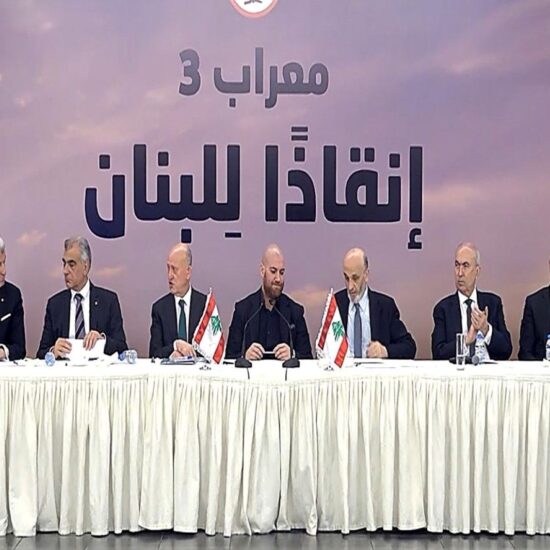
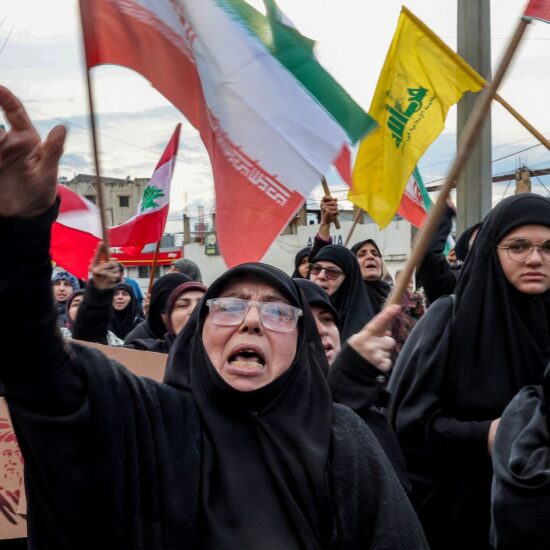
In Lebanon, this dynamic is particularly clear. Hezbollah is not an isolated actor operating independently of regional shifts. Nor is it merely an ideological extension of Iran. It is embedded within a broader survival economy in which military capacity translates into political value. As long as the Iranian regime believes its survival is negotiable, its proxies remain part of the negotiating table.
This is why expectations that Hezbollah will simply “give in” as Iran recalibrates are analytically flawed. Its persistence is not stubbornness; it is function. Proxies are not liabilities to be abandoned when pressure mounts. They are assets to be leveraged when bargaining intensifies. Military logic alone fails to explain this. The issue is not firepower, but political utility.
Trump’s approach, by keeping Iran suspended between threat and restraint, exacerbates these dynamics rather than resolving them. Attention without sequencing creates unfinished wars and suspended futures. A strike without a day-after plan would not redraw the Middle East; it would harden authoritarian survival strategies, intensify proxy bargaining, and prolong instability across already fragile states.
The Middle East has experienced this pattern before. External pressure is mistaken for transformation, motion for change, and weakening for resolution. Power rarely disappears. It fractures, relocates, and renegotiates. Unless external actors grasp the psychological mechanics of regime survival and proxy bargaining, they will continue to misread the consequences of their own actions, mistaking disruption for progress while the region absorbs yet another cycle of strategic miscalculation.
Ramzi Abou Ismail is a Political Psychologist and Senior Research Fellow at the Institute for Social Justice and Conflict Resolution at the Lebanese American University.
The views in this story reflect those of the author alone and do not necessarily reflect the beliefs of NOW.