How we interpret history is never neutral. The frameworks we use shape not only the answers we find, but the questions we think worth asking. The same body of evidence can tell very different stories depending on whether identity is treated as inherited or constructed, whether emphasis is placed on economic structures or cultural narratives, and whether history is read as continuity or rupture. Nowhere is this more consequential than in the history of Christian minorities in the Middle East, where lived experience and analytical rigor do not always pull in the same direction.
The sectarian fear of Christian minorities in the region is not an illusion. It is rooted in real historical experiences: violence, discrimination, demographic decline, and legal inequality. These were not merely episodic disruptions. At times, they were embedded in legal hierarchies and political arrangements that differentiated between Muslim and non-Muslim subjects. Protection did not imply equality, and periods of relative stability should not obscure moments when these arrangements broke down into large-scale violence, coercion, or displacement. Recognizing these asymmetries is essential to any historically grounded account.
Yet as an analytical framework, fear can function like any other bias. When it becomes the primary lens through which history is read, it tends to compress complex realities into a single narrative, selecting evidence that confirms its conclusions while marginalizing what does not.
At its most extreme, this perspective portrays the entire history of the Ottoman Empire as a continuous project of Islamic persecution of Christians. Such a reading reduces a complex imperial system to a single religious logic. It overlooks the administrative pragmatism of Ottoman governance, the negotiated character of the millet system, and the significant shifts in policy over time. Rather than examining institutions and political transformations, it retroactively imposes a unified narrative of persecution.
But recognizing this complexity is not the same as replacing one simplification with another. Ottoman pragmatism did not operate in a vacuum of equality. The more accurate picture is neither continuous persecution nor harmonious coexistence, but a layered arrangement whose character depended heavily on period, region, and political circumstance.
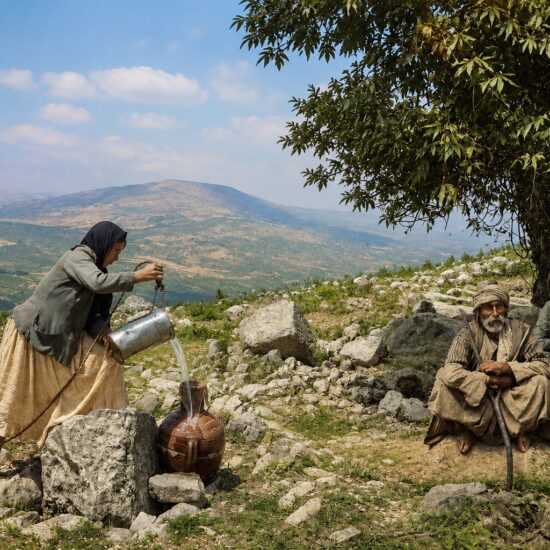
This narrative also obscures socioeconomic differences within Christian communities themselves. Christians were never a single, homogeneous bloc. Class position, access to trade, ties to European markets, and integration into imperial administration produced significant internal diversity. Urban merchants in Beirut or Istanbul occupied positions fundamentally different from those of peasants in Mount Lebanon or Anatolia. When such distinctions are ignored, identity substitutes for analysis, and internal complexity is flattened into a shared condition. At the same time, this diversity did not eliminate exposure to forms of legal and political vulnerability that could, under certain conditions, become acute.
Geography and chronology further complicate the picture. Conditions varied across regions and across time, whether between the seventeenth century and the Tanzimat era, or between imperial centers and peripheral provinces. Patterns of coexistence, rivalry, reform, and conflict were not uniform. When this logic is extended across time and place, evidence is reorganized to sustain a single narrative, while conflicting cases are pushed aside. The result is not analysis, but a simplified story imposed on a far more complex past.
A similar reduction collapses distinct Islamic empires and political systems into a single homogeneous entity. The Ottomans, Safavids, and others are treated as if they operated according to a fixed logic of persecution, despite significant differences in their institutions, legal traditions, and political structures. This flattening often extends further, conflating specific historical states with Islam itself, merging political authority, religious doctrine, and lived practice into a single undifferentiated category. In the process, the internal plurality of Islamic thought and experience disappears.
Acknowledging these distortions does not mean denying that minority fear may be grounded in real dangers. The point is more precise: the experience of vulnerability, however legitimate and at times rooted in structural inequality and episodes of violence, cannot on its own serve as an explanation of history. The Ottoman Empire, the millet system, and the diversity within Christian communities do not fit neatly into a single persecutory narrative. The problem is not the experience itself, but what is built upon it.
Taking time and place seriously is therefore not a methodological detail. It is what separates history from myth. Any community, Christian minorities included, can only be understood when its experiences are situated within shifting social hierarchies, political arrangements, and economic transformations that resist single-cause explanations. Identifying where continuity ends and rupture begins is what guards against essentialism, the tendency to treat complex, changing communities as fixed and self-evident. It is a call for a framework rigorous enough to account for both domination and coexistence without reducing either to a single, totalizing story.
Boghos is a researcher in political economy, social history, and intellectual history, with a focus on the modern Levant. He holds a BA in Political Science from Haigazian University and is currently a graduate student specializing in Middle Eastern Studies at the American University of Beirut. His work examines capitalist transition in Mount Lebanon, the intellectual history of the Levantine Left, and the social and historical conditions that gave rise to liberalism in Lebanon, including its structural features, its relationship to Christian communities, and its embeddedness in the socioeconomic transformations of the nineteenth and twentieth centuries.
The views in this story reflect those of the author alone and do not necessarily reflect the beliefs of NOW