
There are moments when diplomacy stops whispering and starts speaking in a language no nation can pretend not to understand. This is one of those moments.
Today, Washington is no longer speaking in abstractions. It is speaking Lebanese to Lebanon: clearly, directly, and with diminishing patience.
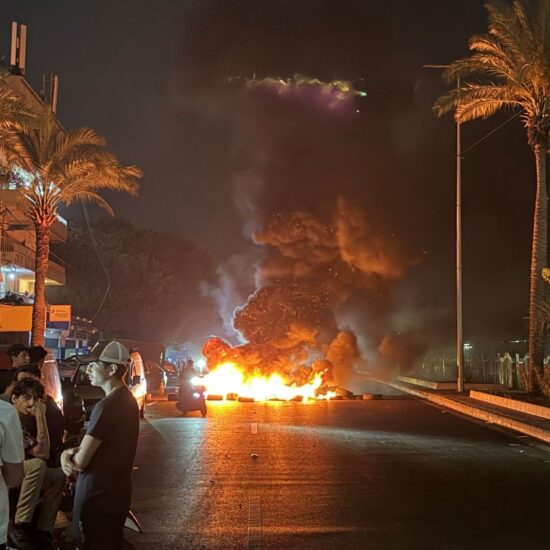
This is not about symbolism. It is about a narrowing window between a rare opportunity and a dangerous collapse. Between engaging President Donald Trump’s initiative, or drifting toward a security explosion that will not ask for permission.
President Joseph Aoun is right about one thing: there is no turning back from negotiations.
Lebanon has no other option if it intends to recover its land and assert its rights.
And yet, his rejection, for now, of meeting Benjamin Netanyahu under American sponsorship exposes something deeper than procedural caution.
It exposes fear, hesitation and miscalculation.
The official reasoning is familiar: security arrangements must come first, Israeli strikes must stop, and only then can political steps follow. Logical? Yes. Sufficient? Not anymore.
Because in geopolitics, timing is not a detail—it is the equation.
Trump is not offering Lebanon a permanent seat at the table. He is offering a fleeting moment. Lebanon is not rejecting Netanyahu as much as it is hesitating in front of its own sovereignty.
For decades, Lebanon survived by living in two realities at once: a state on paper and a parallel authority in practice.
That duality is now collapsing.
The United States is no longer negotiating with ambiguity. It is speaking to one entity only: the Lebanese state.
The United States is no longer negotiating with ambiguity. It is speaking to one entity only: the Lebanese state.
President Trump is waiting for a decision, not from those who operate outside the constitution, but from those who claim to represent it.
And here is the uncomfortable truth: if the state does not decide, others will continue deciding for it.
From Bkerki, after meeting Maronite Patriarch Bechara Boutros al-Rahi, U.S. Ambassador Michel Issa sent a message that went beyond diplomacy and into the core of Lebanon’s fragile balance.
The message was twofold.
First, that Lebanon’s Christian component is not marginal to the equation, it is central to preserving the country’s identity, pluralism, and institutional survival. Washington’s posture, as expressed in Bkerki, reflects a clear concern: that Lebanon’s diversity must not be reduced, intimidated, or politically side-lined under any form of coercive dominance.
Second, Issa’s tone reflected a blunt reality about Lebanon’s political paralysis: those who continue to tie national decisions to external agendas are effectively locking themselves outside the logic of a sovereign state. In that sense, the message was not exclusionary, it was corrective. A reminder that Lebanon cannot function as a state while part of its political structure remains hostage to forces beyond it. Beyond the attack by Hezbollah on the Patriarch, the aim was clearly sending an intimidation message to the Christian Maronite negotiating President.
“Is Netanyahu a Bogeyman?” Netanyahu, Issa implied, is not a myth or a taboo figure. He is a negotiating counterpart.
“Is Netanyahu a Bogeyman?” Netanyahu, Issa implied, is not a myth or a taboo figure. He is a negotiating counterpart.
That alone dismantles decades of Lebanese political theatre that treated the act of negotiation as betrayal rather than statecraft.
Lebanon has already negotiated indirectly for years, maritime agreements, ceasefires, mediated understandings. The principle was never rejected. Control over it was.
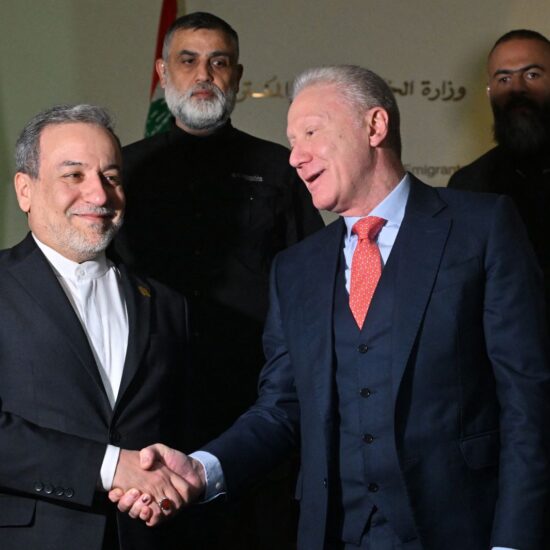
Issa’s message was unmistakable: a visit by President Aoun to Washington is not a concession, it is leverage. A chance to place Lebanon’s demands directly on the table, from territorial rights to full sovereignty.
So, the question becomes unavoidable: if indirect negotiation was acceptable yesterday, what exactly makes direct negotiation unacceptable today?
Lebanon’s central conflict is no longer with Israel. It is internal. It is a struggle over who holds the authority to decide war and peace.
In a system where the state competes with a parallel structure, sovereignty becomes fragmented. Those who benefit from that fragmentation cannot afford its end.
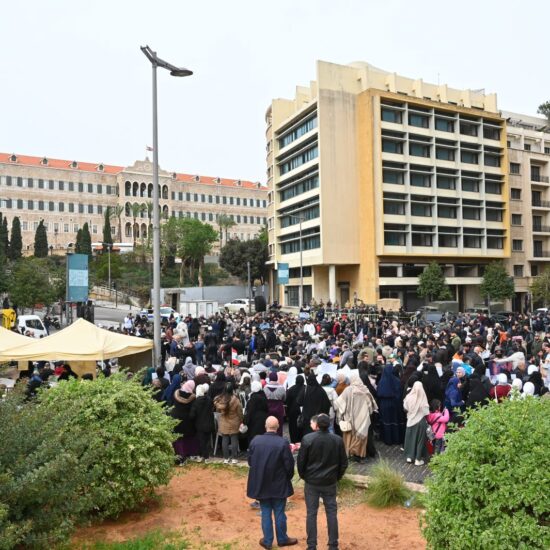
This is why every step toward restoring state authority is portrayed as a threat. Why organized campaigns distort national decisions into sectarian fear. Why political paralysis is maintained as a form of control.
But clarity matters. A state reclaiming its authority is not provocation. It is survival.
No serious path forward avoids confronting Hezbollah.
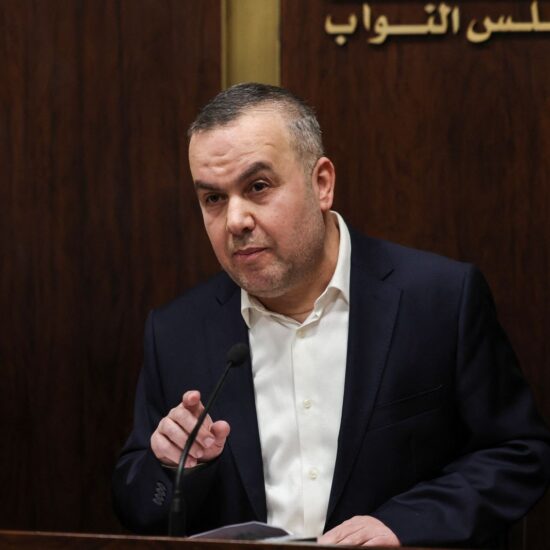
Its leadership rejects direct negotiations while defending indirect ones as strategic success. Yet those same arrangements have produced tangible losses: compromised resources, constrained sovereignty, and the normalization of external military freedom inside Lebanon.
This is not resistance delivering outcomes. It is a system managing decline and measurable losses. And when challenged, it shifts the arena inward, mobilizing sectarian sentiment and political pressure to block any transition toward a unified state decision.
Washington’s Patience Is Not Infinite.
There is a growing realization in Washington that expecting Lebanon, in its current structure, to produce genuine peace is unrealistic.
A sovereign agreement cannot emerge from a divided authority. At some point, the approach shifts from engagement to containment. From persuasion to reality management.
The danger for Lebanon is not confrontation. It is irrelevance.
Lebanon has lived this pattern before: delayed decisions, postponed reforms, leadership waiting for external validation before internal action.
The cost is already visible: in economic collapse, institutional decay, and a generation shaped by hesitation. So, the question is no longer abstract.
How many deferred decisions can a country survive? How many “not yet” moments before “never” becomes the reality?
Trump’s clock is ticking. And so is regional patience. This is not an open-ended negotiation. It is a closing window.
How many deferred decisions can a country survive? How many “not yet” moments before “never” becomes the reality?
Trump’s clock is ticking. And so is regional patience. This is not an open-ended negotiation. It is a closing window.
If Lebanon continues to hesitate, it will not preserve balance. It will lose relevance. And in this region, irrelevance is never silent.
Lebanon is not being asked whether it wants peace, it is being taken to it. For now, with dignity and honor.
Because the reality is now unavoidable:
Either Lebanon seizes this moment—on its own terms, with its own voice, reclaiming every inch of sovereignty and every decision tied to it.
Or others will decide for it. Not in political slogans. But in reality.
Elissa E Hachem is a journalist and political writer specializing in regional affairs and governance. Former Regional Media Advisor at the U.S. State Department’s Arabic Regional Media Hub, with broad experience in strategic communication across government and private sectors.
The views in this story reflect those of the author alone and do not necessarily reflect the beliefs of NOW.