The Lebanese state’s inability or unwillingness to enforce security or maintain surveillance leaves residents in Lebanon vulnerable, while sectarian tensions simmer as communities feel targeted or abandoned.
This is not just a matter of security failure; it is a moral and political crisis, one in which the very presence of armed actors among civilians is being weaponized, deepening divisions and fueling fear. Beirut’s civilians are paying the price for a war they did not choose.
This shifting landscape has raised urgent questions about who controls security in Beirut, and at what cost to civilians.
This shifting landscape has raised urgent questions about who controls security in Beirut, and at what cost to civilians.
Only after these concerns began surfacing more publicly did political figures, including Member of Parliament Waddah Sadek, sound the alarm, warning that the capital risks fragmenting into “security zones” where state authority is absent and civilians are left exposed. But the issue extends far beyond political rhetoric.
At the core of the growing anxiety is the presence of non-state armed actors, particularly Hezbollah and members linked to the Islamic Revolutionary Guard Corps, operating within densely populated civilian areas.
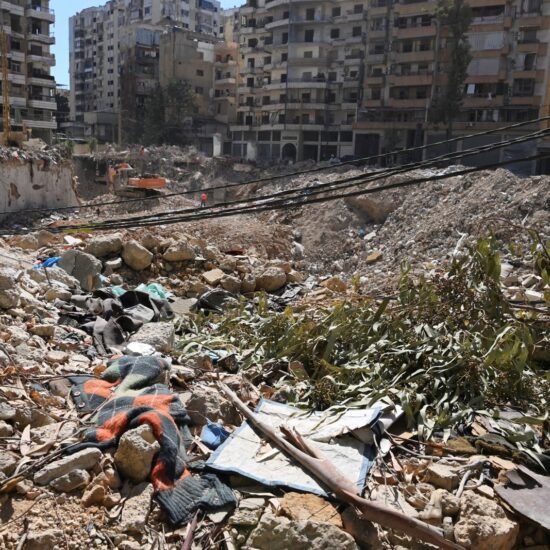
For many residents, this reality transforms ordinary neighborhoods into potential flashpoints. In Hazmieh, for example, the Israeli military publicly stated that it had “struck an IRGC Quds Force terrorist in Beirut,” identifying the target as Mohammad Ali Kourani, a member of Iran’s Revolutionary Guards’ Quds Force member in Beirut. Around three weeks ago, a strike on the Ramada Plaza hotel in Raouche, killed at least four people, with Israel saying it targeted key commanders of Iran’s Islamic Revolutionary Guard Corps’ Quds Force believed to be operating in the capital.
Such incidents have raised alarms among residents who feel that ordinary neighborhoods in the capital are becoming entangled in a broader theatre of threat and insecurity.
“Of course it contributes to instability,” said May Chidiac, a journalist and former Minister of Administrative Development with long-standing involvement in Lebanese political affairs. Speaking to NOW, she warned that the presence of armed groups within civilian environments not only endangers lives but deepens mistrust between communities, particularly as different groups begin to feel unequally exposed to risk.
Chidiac was also sharply critical of the state’s response, pointing to what she described as a “security gap” in the capital. The reported dismantling of surveillance infrastructure and the lack of consistent control by official forces, she argued, raises serious concerns about accountability and civilian protection.
“There’s a big security gap in Beirut… How is it possible to allow cameras to be shut down and networks dismantled across the city? This is not acceptable.” Chidiac highlights what she sees as a critical failure in maintaining even the most fundamental elements of urban security.
Yet beyond immediate security concerns, the war has begun to reshape Lebanon’s already fragile social fabric. As Israeli strikes have repeatedly hit areas of Beirut in incidents where members of Hezbollah or operatives linked to the Islamic Revolutionary Guard Corps were reportedly present, fear has taken on a deeply personal and sectarian dimension.
For many residents, the anxiety is no longer abstract—it is tied to the belief that proximity to certain actors may turn entire neighborhoods into targets. This perception is quietly fueling mistrust between communities, as some Lebanese begin to see themselves as involuntary participants in a war they neither chose nor control. In this climate of rising tension, concerns over security are increasingly intersecting with questions of identity, belonging, and collective responsibility.
The presence of armed factions in civilian areas, Tannir notes, is not new but the scale of its consequences is becoming harder to ignore.
Lina Tannir, a Professor at the American University of Beirut and political activist, situates the current moment within a longer trajectory of institutional erosion. The presence of armed factions in civilian areas, she notes, is not new but the scale of its consequences is becoming harder to ignore.
“When decisions of escalation are taken unilaterally, the rest of the population ends up bearing the cost,” she explained, highlighting a growing sense among many Lebanese that they are paying the price for conflicts they did not choose.
At the same time, Tannir stresses the importance of avoiding reductive narratives that conflate entire communities with armed groups. Such framing, she warns, risks reinforcing the very sectarian divisions that are already being exacerbated by the current crisis.
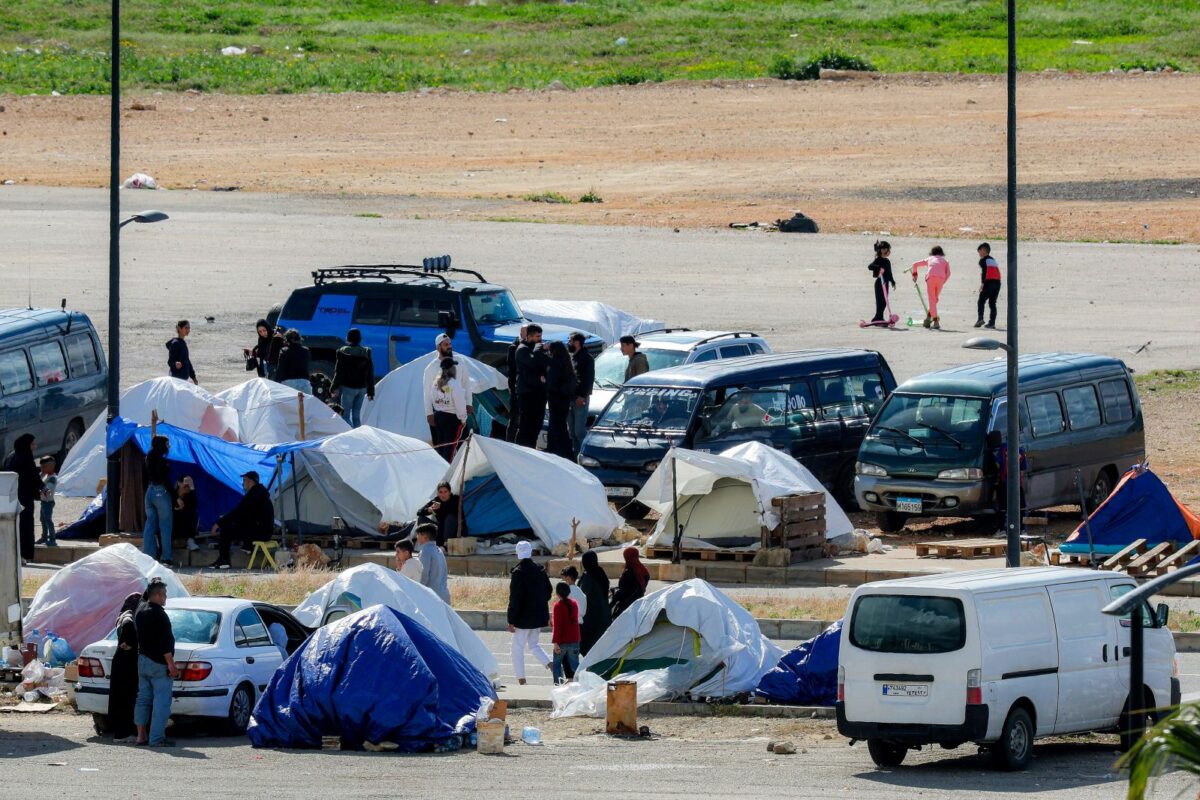
The debate over security has also spilled into how the state is managing displacement within the capital.
The debate over security has also spilled into how the state is managing displacement within the capital. A proposed plan to establish a temporary shelter in Karantina intended to house a limited number of displaced families quickly became a flashpoint, exposing how deeply security fears and sectarian anxieties are now intertwined.
While the scale of the project is modest, its symbolism is not. For some residents, the concern is not the presence of displaced civilians themselves, but the possibility that such sites could be exploited by armed actors, particularly in a context where trust in state oversight remains low. Chidiac was unequivocal on this point, arguing that the decision should be “totally canceled,” warning that in such a fragile security environment, these spaces risk being used in ways that escape state control.
Others warn that, while such concerns may carry some validity, their escalation risks feeding a broader climate of fear and division, particularly when displaced communities become the focus of suspicion. Lina Tannir stressed that “people are becoming polarized,” noting that narratives around security threats can be easily exploited to deepen existing fractures. She added that Lebanon cannot afford to allow security debates to fracture its already fragile social fabric. In this context, the challenge lies in striking a delicate balance between legitimate security concerns and the urgent need to protect displaced populations without fueling further polarization.