The Sanctions Message: Hezbollah’s Power Runs Through Lebanon’s Own Institutions
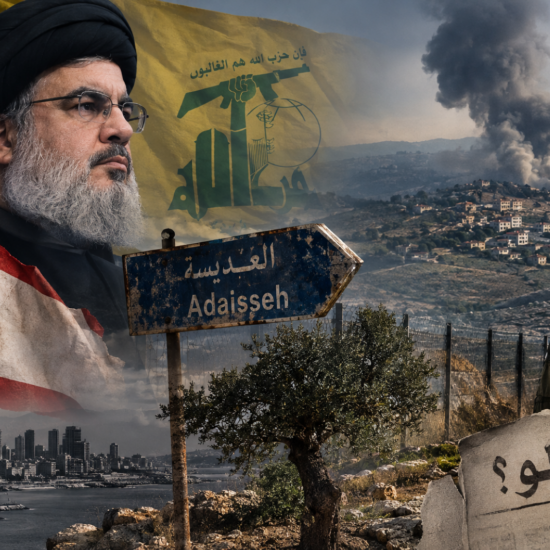
The U.S. Treasury’s decision to sanction Ahmad Asaad Baalbaki, Amal’s security director, is not merely another strike against Hezbollah’s political ecosystem. It is a warning that Washington is now looking at the wider security architecture that allows Hezbollah to survive inside Lebanon, intimidate its opponents, and preserve its weapons under the cover of the state.
The U.S. Treasury’s decision to sanction Ahmad Asaad Baalbaki, Amal’s security director, is not merely another strike against Hezbollah’s political ecosystem. It is a warning that Washington is now looking at the wider security architecture that allows Hezbollah to survive inside Lebanon, intimidate its opponents, and preserve its weapons under the cover of the state.
Why it matters: Baalbaki’s designation pierces one of the most convenient myths in Lebanese politics: that Hezbollah operates alone. It does not. It survives through allies, party operatives, militia partners, security facilitators, and officers embedded in state institutions who help blur the line between the republic and the militia.
According to the Treasury designation, Baalbaki coordinated public displays of force with Hezbollah leadership to intimidate Hezbollah’s political opponents in Lebanon. His subordinate, Ali Ahmad Safawi, is described as having coordinated with Hezbollah on attacks against Israel and led Amal militia forces in joint Hezbollah-Amal military operations.
That language matters. It moves the conversation beyond the lazy vocabulary of “resistance” and places it where it belongs: in the realm of coercion, militia coordination, and the systematic obstruction of Lebanese sovereignty.
The bigger picture: The sanctions also named two Lebanese security officials: Brigadier General Khattar Nasser Eldin, chief of the National Security Department at the General Directorate for General Security, and Colonel Samir Hamadi, chief of the Lebanese Armed Forces Intelligence Directorate’s Dahiyah Branch. Treasury accused both men of sharing important intelligence with Hezbollah during the ongoing conflict.
This is the real bombshell.
For years, Lebanese politicians have spoken about the army and the security services as if they were sealed off from Hezbollah’s influence. The Treasury action says otherwise. It suggests that the problem is not only Hezbollah’s weapons outside the state, but Hezbollah’s access inside the state. A militia does not need to formally control an institution if it can penetrate its sensitive branches, receive intelligence, and benefit from officers willing to treat the party as a partner rather than as an armed faction that has usurped national sovereignty.
Between the lines: Baalbaki represents Hezbollah’s allied militia environment. Nasser Eldin and Hamadi represent something even more dangerous: the possibility that parts of Lebanon’s official security structure have become service providers for Hezbollah.
That distinction is essential. Amal can be understood as Hezbollah’s political and street-level partner. But the LAF and General Security are supposed to belong to the republic, not to any party, sect, foreign patron, or armed axis. When officers within these institutions are accused of sharing intelligence with Hezbollah, the issue is no longer simply political alignment. It becomes a question of institutional betrayal.
The state of play: Lebanon is now being asked to reclaim the most basic functions of sovereignty: war, peace, borders, intelligence, security, and diplomacy. But no state can disarm Hezbollah while its own institutions are being used to protect Hezbollah’s military project.
This is why the sanctions are not just punitive. They are diagnostic. They identify the machinery that keeps Hezbollah alive: parliamentarians who defend its arms, Amal officials who coordinate with its security structure, Iranian envoys who sustain its regional role, and Lebanese officers who allegedly feed it intelligence from within the state.
The bottom line: Sanctioning Baalbaki is important because it exposes Hezbollah’s Lebanese security partners. But sanctioning Nasser Eldin and Hamadi is even more consequential because it points to the deeper disease: the infiltration of the state itself.
Lebanon’s sovereignty will not be restored by speeches, formulas, or diplomatic choreography alone. It will require confronting the networks that allow Hezbollah to remain both outside the state and inside it at the same time. That is the real meaning of these sanctions. Washington is no longer only targeting Hezbollah’s weapons. It is targeting the Lebanese infrastructure that helps those weapons survive.