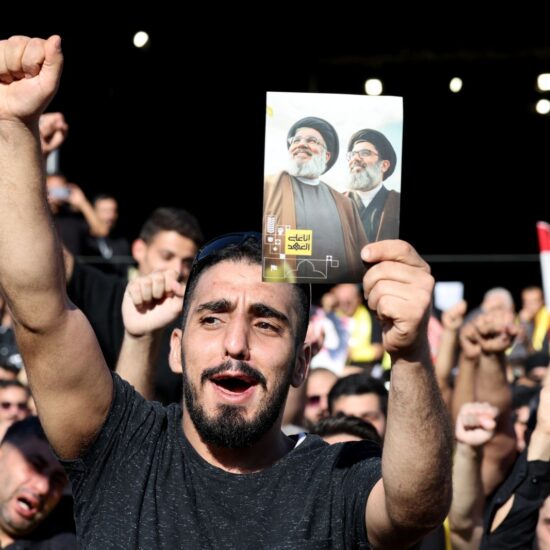
These are Lebanese… defending what remains of their land and dignity… a Lebanese party… a natural reaction.”
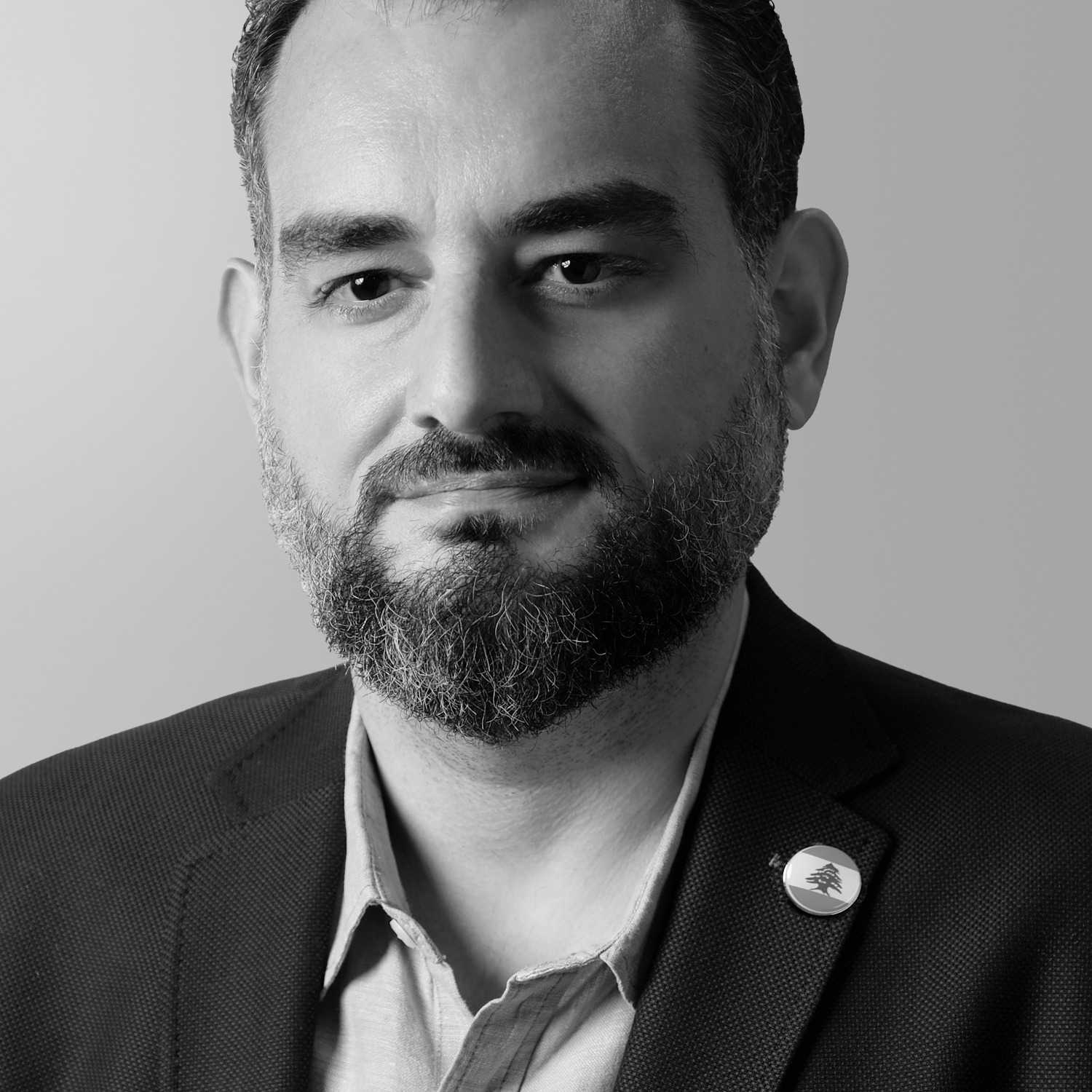
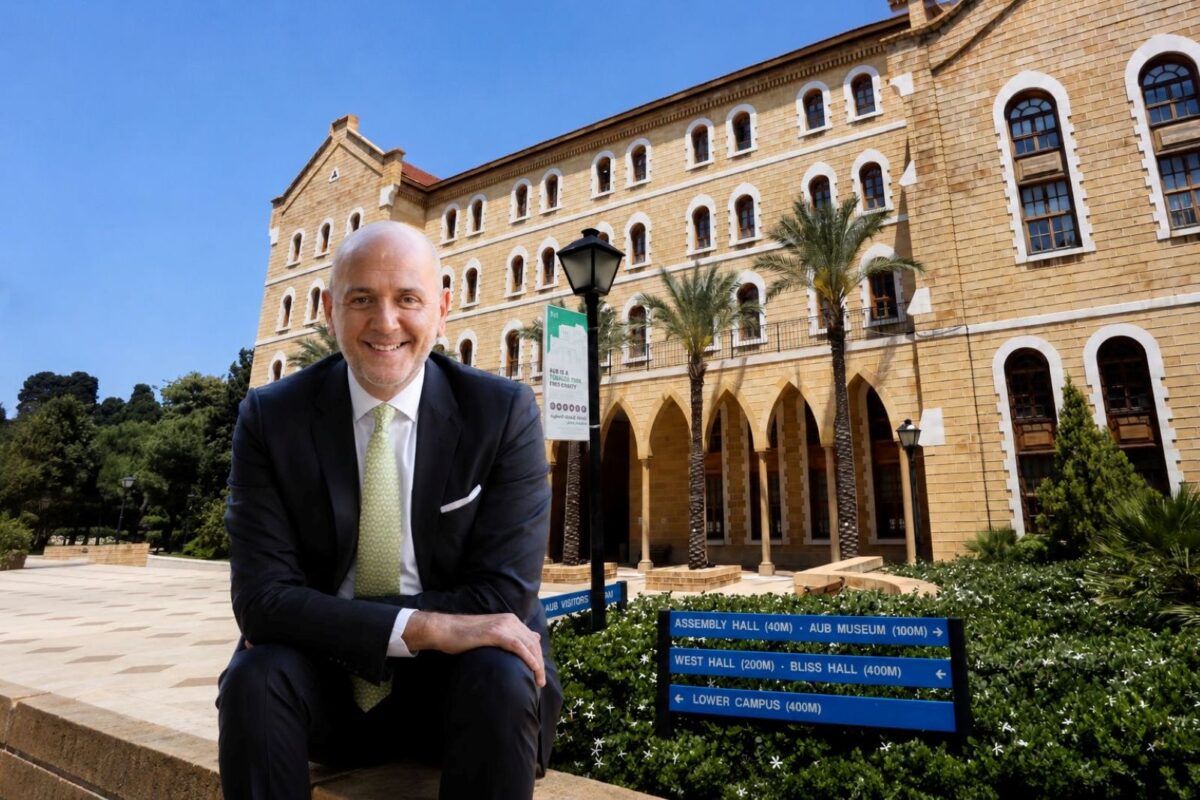
With this tender little summary, Ricardo Karam, a former member of the Board of Trustees of the American University of Beirut, managed to perform a remarkable act of compression. Hezbollah, in his telling, is no longer an armed organization operating above the state, no longer a force whose decision of war and peace is tied to Tehran, no longer a party implicated in intimidation, assassinations, abductions, and the systematic erosion of sovereignty. It becomes instead a collection of wounded Lebanese boys, standing nobly in defense of “land and dignity.”
How moving. How convenient. How beautifully packaged.
What an effortless dignity, especially when declared from the comfort of a television studio. What an immaculate form of heroism, once washed clean in the language of public relations. What a generous memory, one that begins with Israel, ends with Israel, and somehow manages to step gracefully over everything Hezbollah has done to the Lebanese, to the Lebanese state, and to the American University of Beirut itself.
Had such a statement come from an ordinary commentator, it could have been treated as just another entry in the long catalogue of Lebanese political theater. But when it comes from someone who once sat on AUB’s Board of Trustees, the matter becomes rather less innocent. AUB is not a decorative line in a résumé. It is not a social accessory to be worn when prestige is needed. It is not an elegant backdrop for public appearances. It is an institution with memory, with wounds, and with a long history of surviving political violence. Anyone who has served on its Board of Trustees should know that laundering armed power as “dignity” is not merely a difference of opinion. It is an insult to the memory of the institution itself.
Karam, like many others, sees Israel as a principal source of the region’s disasters. Fair enough. But he then uses that truth as a velvet curtain behind which Hezbollah’s own record conveniently disappears. As if Israel’s crimes grant Hezbollah a lifetime exemption from moral scrutiny. As if occupation elsewhere absolves a militia here from killing Lebanese, hijacking the state, dragging the country into wars, and placing Lebanon’s national decision at the disposal of Iran’s Revolutionary Guard.
To say that Hezbollah’s members are “Lebanese” is not exactly a discovery worthy of a research grant. Yes, they carry Lebanese identity cards. Yes, they come from Lebanese villages and towns. But the question was never about civil registry records. The question is much simpler and much more dangerous: who owns the decision? Who owns the weapons? Who decides war? Who negotiates? Who gives the orders? Who pays? And who benefits? A Lebanese birth certificate does not magically nationalize a project whose strategic command lies elsewhere.
This is where Karam’s relationship to AUB matters. He is not merely a television personality skilled at polishing reputations and turning danger into soft, consumable human-interest material. He is also a man connected to an institution whose president, Malcolm Kerr, was assassinated; whose professors were kidnapped; and which lived, in West Beirut, through a season of terror that no trustee, former or current, has the luxury of treating as a footnote in the mythology of “resistance.”
Malcolm Kerr was not an enemy of Palestine. He was not a colonial caricature, not a hostile outsider, not one of the convenient villains required by the rhetoric of the resistance axis. He was a scholar deeply connected to the Arab world, to Beirut, and to AUB. Yet on January 18, 1984, he was assassinated outside his office at the university, in a crime attributed at the time to “Islamic Jihad,” the organization that became associated, in Lebanon’s political and security memory, with the rise of Iranian armed influence in the country.
Nor is this merely a matter of archival grief. Only weeks ago, AUB was forced to move temporarily to remote teaching after Iranian threats circulated against American universities in the region, and after commentators close to Hezbollah echoed that atmosphere and named both the American University of Beirut and the Lebanese American University as possible targets.
And what did the industry of whitewashing do in response? It performed its usual miracle: it looked away. When AUB is threatened, silence becomes prudence. When Iran is mentioned as a source of intimidation against American universities, voices become suddenly delicate. When a university campus appears as a possible target in the rhetoric of the so-called resistance, students and professors are invited to appreciate “the context.” But the moment Hezbollah is questioned about its weapons, the orchestra begins: dignity, land, honor, the South, sacrifice, and all the familiar violins of televised patriotism.
Then there is the less romantic matter of money, reputation, and institutional responsibility. AUB is not a small private club floating above history. It is a university with an American, Lebanese, and global identity. It depends on partnerships, grants, programs, and international trust, including programs funded by the United States government to help students and expand access to education. These funds are not cocktail-party abstractions. They help real students, often from underprivileged backgrounds, pursue an education that their families could not otherwise afford.
So, when a former member of AUB’s Board of Trustees presents Hezbollah with such emotional innocence, the issue is not simply that he has offered an opinion. Everyone, after all, is entitled to an opinion, even a remarkably polished one. The issue is that his opinion carries institutional consequences. Does Karam think of the students whose scholarships depend on international confidence? Of the researchers whose work depends on trust? Of the university that must defend itself from being reduced to scenery in someone else’s ideological theater? Or is AUB, in this performance, merely another prestigious logo to be placed behind the speaker, another credential in the architecture of public charm?
Hezbollah is not an innocent child of history. It is an armed power project that invested in grievance in order to confiscate the state, used Palestine in order to rule Lebanon, and used Lebanon in order to serve Iran. The insistence that its members are “Lebanese” is therefore less an argument than a trick of language. Lebanese were also killed by Hezbollah. Lebanese were also silenced by Hezbollah. Southerners also paid the price of Hezbollah’s adventures. And AUB, too, has a memory that cannot be rinsed clean by television soap.
Ricardo Karam may polish whomever he wishes in the studio. He may turn weapons into “dignity,” dependency into “principle,” and intimidation into a misunderstood form of patriotism. He may place soft lighting over hard facts and call the result nuance. But some things resist laundering: Malcolm Kerr’s blood, the kidnapping of professors, the threats against universities, and the fear of students who simply want to learn without becoming extras in the theater of resistance.
AUB did not survive war, kidnapping, assassination, and intimidation in order to become a decorative credential for those who excuse the forces that once terrorized it and may threaten it again. It deserves far more from those associated with its name than this elegant little exercise in denial. It deserves a memory that does not tremble before power, a conscience that does not outsource judgment to television sentiment, and a loyalty that recognizes the obvious: no institution built on freedom can be defended by whitewashing a party that recognizes neither the state, nor the university, nor the freedom that made both possible.
Makram Rabah is the managing editor at Now Lebanon and an Assistant Professor at the American University of Beirut, Department of History. His book Conflict on Mount Lebanon: The Druze, the Maronites and Collective Memory (Edinburgh University Press) covers collective identities and the Lebanese Civil War. He tweets at @makramrabah
This article was originally published in BeirutTime.