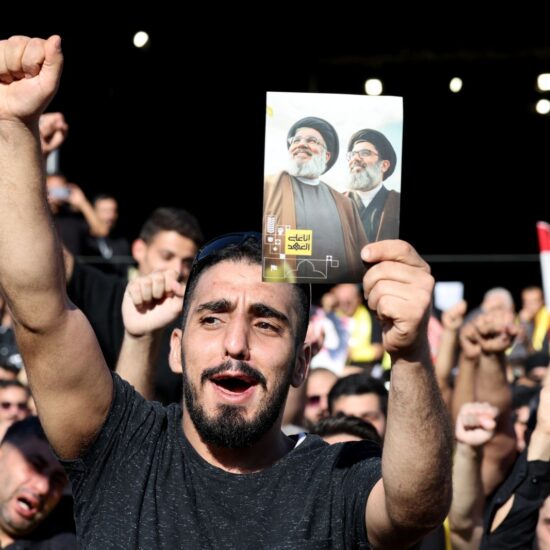
If one narrative seeks to monopolize history in the name of resistance, another retreats into a past that never was. Though they differ in substance, both converge in effect: they fracture the present and foreclose the possibility of a shared national future.
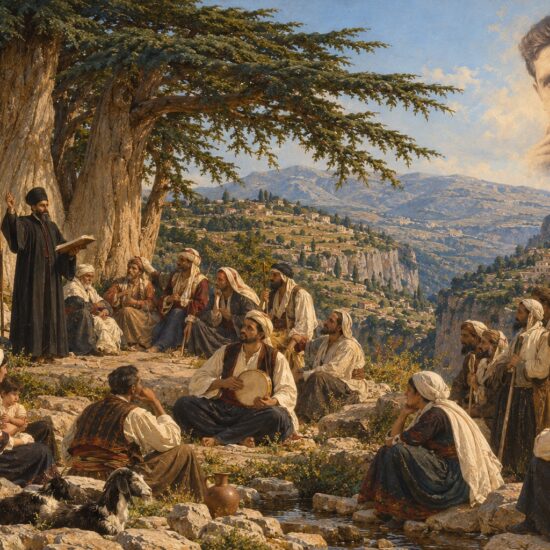
This second tendency, circulating within certain fringe Christian political and cultural circles, is best understood not as a project of renewal, but as a symptom of decline. After centuries during which Christian communities, particularly the Maronites, played a central role in shaping Lebanon’s political and cultural life, they now find themselves grappling with a deep sense of displacement and loss.
The responses have taken multiple forms. Some assert an unbroken Phoenician continuity as the essence of Lebanese identity. Others emphasize a revived Syriac linguistic and cultural heritage. Still others advance the notion of Lebanon as an exclusively Maronite homeland, implicitly denying the historical legitimacy of other communities.
These narratives are not confined to political actors. They are disseminated by influencers, cultural figures, and, at times, individuals who present themselves as scholars. In some instances, the mythologisation reaches the level of the absurd; transforming culinary traditions into symbols of resistance, mirroring, in structure if not in content, the very narratives they claim to oppose.
These claims span a wide spectrum, yet they share a common teleological purpose: the construction of a distinct, bounded identity rooted in an imagined continuity. At one end, elementary distortions of political geography before 1920 are deployed as though the territorial configurations of the modern Lebanese state were self-evident throughout antiquity. At the other, genetic determinism and discourses of ethnic purity lend a veneer of scientific authority to what is, in essence, an evolving field that demands historical contextualization rather than nationalist appropriation.
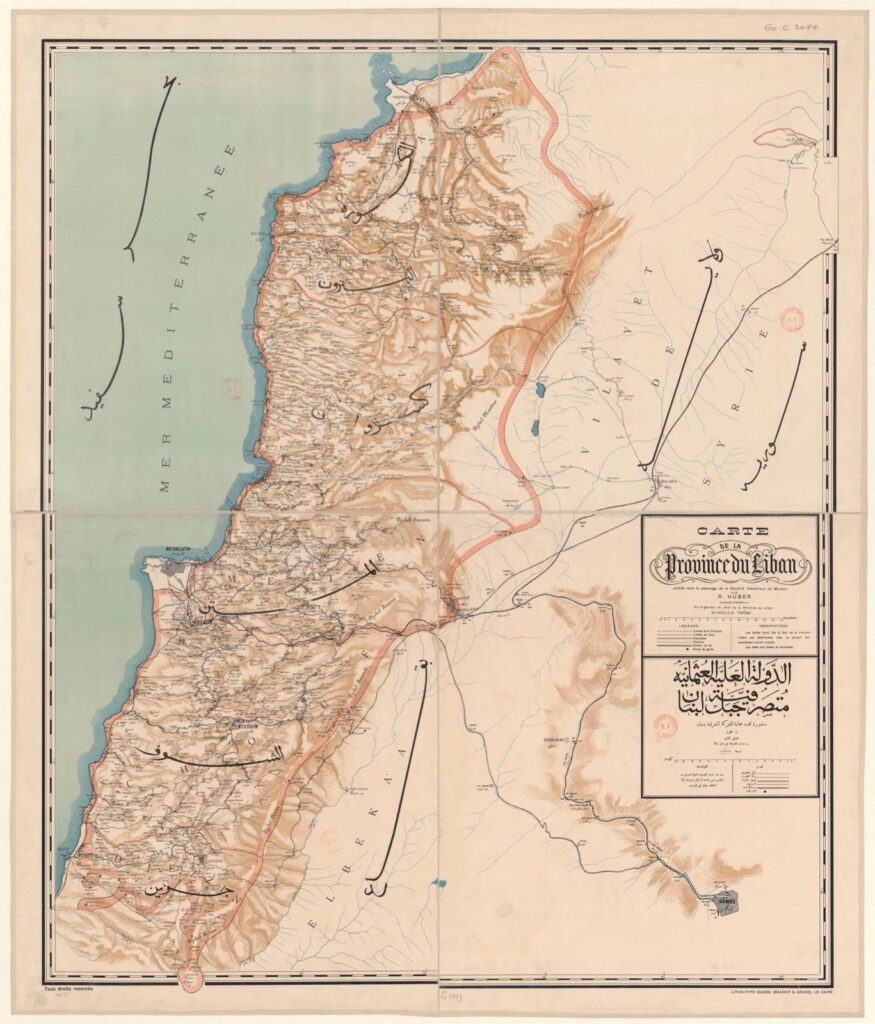
Map of the province of Mount Lebanon, published under the patronage of the Oriental Society of Munich, around 1900
The invocation of an unbroken Phoenician or Canaanite lineage exemplifies this tendency, abstracting populations from their historical context while ignoring the most basic historical truth: identity, language, and culture change over time. Equally telling is the reclamation of Syriac as an ancestral vernacular, which overlooks the established historical record. Syriac is not native to the territory of present-day Lebanon. It developed as a literary dialect in Edessa, modern-day Urfa in southeastern Turkey, before being adopted as a liturgical and ecclesiastical language across Eastern Christian communities. It was a language of the Church and of learning, not of everyday domestic life in the Levantine littoral.
To these layers one must add more recent appropriations of Western decolonial frameworks, whereby the substitution of “West Asia” for “Middle East” is presented as an act of indigenous self-determination, often by reproducing almost verbatim the conceptual vocabulary of certain Western academic-activist circles. Taken together, these overlapping narratives do not merely distort the past; they displace the very intellectual tradition that historically distinguished Lebanese and Eastern Christian communities: a commitment to critical education, cross-cultural engagement, and a forward-looking capacity to reconcile heritage with modernity.
What renders this tendency particularly damaging is its separatist trajectory. It increasingly distances itself not only from the broader Lebanese framework, but even from historic alliances—most notably with the Druze community, which played a foundational role in the emergence of Mount Lebanon as a political entity.
This is not an argument against federalism or alternative constitutional arrangements. Those are legitimate subjects of contemporary political debate. What is at issue is the use of an imagined past to predetermine present outcomes—to transform mythology into political inevitability.
At its core, this narrative reflects a retreat from the very values that once enabled Lebanese Christians to exert influence far beyond their demographic weight: openness, intellectual exchange, pluralism, and the production of knowledge. These values were not incidental; they were foundational. They allowed Lebanon to serve as a cultural and intellectual hub within the Arab world.
Mythologized identities, whether Phoenician or sectarian, cannot substitute for these principles. Culinary symbolism cannot replace civic values. Historical fantasy cannot sustain a viable political future.
The consequences of these competing narratives, Shia and Christian alike, are profound. They do not merely distort the past; they actively shape the present. Communities that internalize false histories inevitably arrive at false conclusions about their role in the world, and they make decisions accordingly. In doing so, they participate, often unknowingly, in their own undoing.
Public history, when practiced responsibly, operates under the demands of scholarly rigor and ethical accountability. Its purpose is not to provide communities with myths that justify violence or sanctify death. It is to equip citizens with the tools to question, analyze, and understand.
In times of conflict, this responsibility becomes even more urgent. Cultural heritage and historical memory are not luxuries; they are conditions of survival. They preserve continuity in moments of rupture. They allow societies to endure.
Conflict can destroy in seconds what took centuries to build. But memory, if preserved with integrity, can outlast destruction.
The role of public history, therefore, is not to intoxicate or mobilize. It is to clarify. It is to return history to the people in all its complexity, its contradictions, and its shared humanity. It is to resist the transformation of the past into a weapon and instead reclaim it as a common inheritance.
Lebanon today faces one of the gravest challenges in its modern history. In such a moment, the choice between myth and history is not academic. It is existential.
A society that chooses comforting illusions may find temporary cohesion, but only at the cost of its future. A society that chooses honest history, however difficult, lays the foundation for renewal.
And when peace comes, as it inevitably will, it is those who preserved their memory with integrity who will possess the clarity, the cohesion, and the moral vocabulary to rebuild.
This is what public history owes Lebanon: not dreams, not intoxication, not false memories, but truth, rigorously pursued and responsibly shared, so that a people may understand who they are, where they have been, and how they might still move forward together.
Charles H. al-Hayek, Public Historian, founder of Heritage and Roots.
The views in this story reflect those of the author alone and do not necessarily reflect the beliefs of NOW.