
Politics has always attracted climbers. Some climb because they believe there is work to be done. Others climb because there is a table waiting at the top.
From a distance, however, the distinction is rarely obvious. Both groups attend the same conferences, shake the same hands, issue the same statements, and speak the same language of service, responsibility, sacrifice, and history. The difference only becomes visible once power is actually obtained.
One group sees the office as a mission. The other sees it as a reward.
For most of history, successful political systems understood that both impulses existed and attempted to keep them in balance. Ambition is not inherently a vice. People who carry burdens generally expect some compensation for carrying them.
Mission vs Position
The problem is not the existence of the feast. The problem begins when the feast becomes the purpose of the climb.
The problem is not the existence of the feast. The problem begins when the feast becomes the purpose of the climb.
Titles multiply faster than achievements. Committees emerge to supervise other committees. Meetings are convened to prepare for future meetings. Statements are issued to acknowledge previous statements.
From a distance, everything appears energetic and productive. Up close, however, one discovers a remarkable amount of motion accompanied by very little travel.
Eventually, the political system undergoes a subtle but important inversion. Instead of rewarding results, it begins rewarding permanence. Longevity becomes a substitute for accomplishment. Survival becomes a substitute for competence.
The ability to remain seated in the same chair for over thirty years is treated as evidence that the chair was deserved in the first place. Asking what was actually achieved during those thirty some years is often considered rude, disruptive, or insufficiently respectful of experience.
At that stage, politics gradually ceases to govern and begins to perform.
The objective is no longer to solve problems but to remain indispensable to their existence. Crises become assets rather than liabilities because unresolved crises require managers, negotiators, spokespersons, coordinators, and the countless supporting actors who populate every political ecosystem.
The mission, whatever noble language once surrounded it, quietly leaves the room. The position remains.
The Cult of Survival
Lebanon did not invent this phenomenon, but it has certainly refined it. For understandable reasons, we admire survival. This is a country that has endured wars, occupations, assassinations, financial collapse, and political paralysis.
Yet somewhere along the way, we began confusing the ability to endure a problem with the ability to solve one. Remaining in place became an achievement in itself.
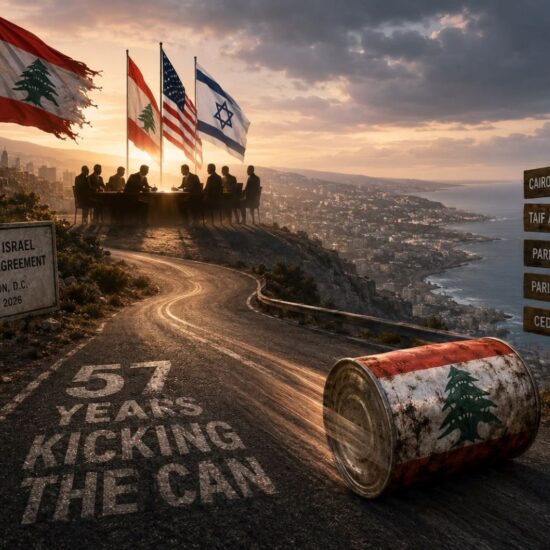
This tendency is visible throughout public life. Decisions are endlessly postponed in pursuit of consensus. Temporary arrangements become permanent realities. Every problem is referred to a future discussion, every discussion to a future committee, and every committee to a future phase.
The result is a peculiar form of political motion in which everyone appears busy, serious, and indispensable, yet remarkably little changes. The system survives, which is then presented as evidence that it is working.
To be fair, however, the current moment offers more grounds for optimism than many of the administrations that preceded it.
Unlike much of the last four decades, the present leadership includes a noticeable number of duty-first operators. Some sit in government, a few in parliament, and many are found throughout the military and public sectors. They are not perfect, nor are they dominant, but they appear more interested in outcomes than in preserving the furniture.
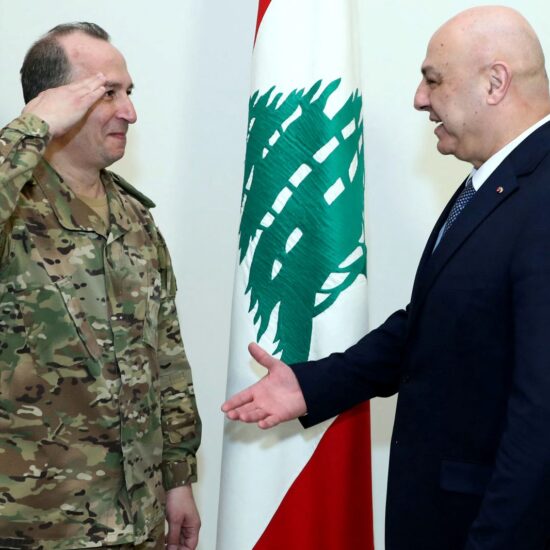
The challenge is that they remain surrounded by a political culture built by feast-first operators. President Aoun and Prime Minister Salam arrived largely because circumstances created openings that neither fully manufactured for themselves.
The third principal actor, Speaker Berri, represents continuity in its purest form. If the feast had a patron saint, Lebanese politics would have nominated him years ago.
Governments have changed, presidents have come and gone, regional orders have risen and collapsed, yet he remains. In Lebanon, some political careers appear to be measured not in electoral cycles but in geological eras.
Clear and Present Opportunity
The question facing the country is therefore straightforward. Can enough duty-first figures shift the center of gravity before the system returns to its default settings?
Because the opportunities currently available to Lebanon are unusually clear. American support exists. Israel has shown willingness to negotiate. Arab states and Europeans would welcome stability. The Assad regime is history, Iran’s regional position is close to collapse, Turkey’s ambitions remain manageable, and the local Axis finds itself more orphaned than at any point in its history.
Statesmanship begins by recognizing reality before it expires.
The answer is not to become dependent on any foreign power or external project. Quite the opposite. A serious state uses momentum without becoming enslaved by it. It partners with opportunity without surrendering its interests to it. If the moment succeeds, it wins alongside it. If the moment fails, it remains standing.
That requires decisions, priorities, and a willingness to confront adversaries rather than endlessly negotiate with them in circles.
Ultimately, the formula is neither complicated nor ideological. Use the support available. Pursue Lebanese interests unapologetically. Reassure allies when necessary. Confront opponents whenever possible.
Most importantly, remember why the ladder exists in the first place. Because once politics becomes entirely about the feast, it stops being politics at all.
Lebanon belongs at the table, not on it.
It becomes catering. And eventually even the guests begin to realize that the meal was never worth tasting.
To bring it home, the real question is not whether Speaker Berri will eventually put duty ahead of the feast. At this stage, that would qualify as a miracle, not a policy.
The question is whether Aoun and Salam are, and will remain, duty-first long enough to force the system – and events – in the same direction.
Because, at the end of the day, Lebanon belongs at the table, not on it.
Eli Khoury is the publisher of NOW and is a co-founder of the Lebanon Renaissance Foundation. He is on Twitter @eli_khoury.