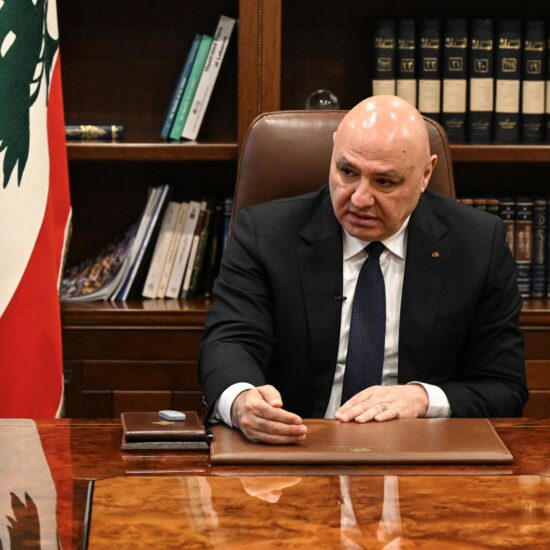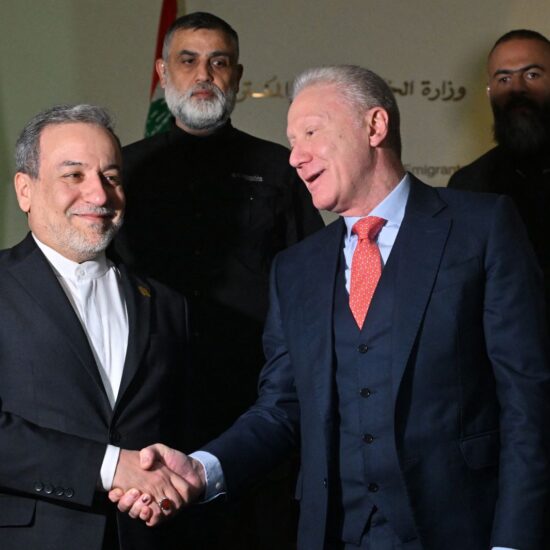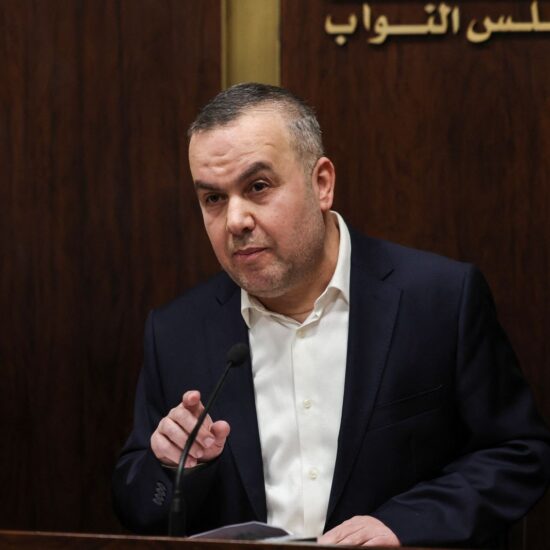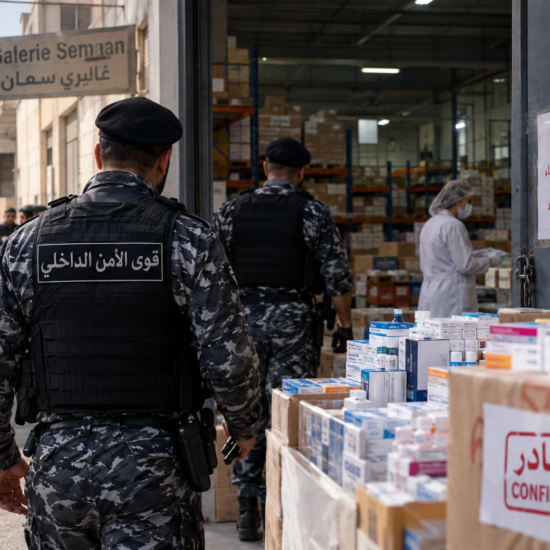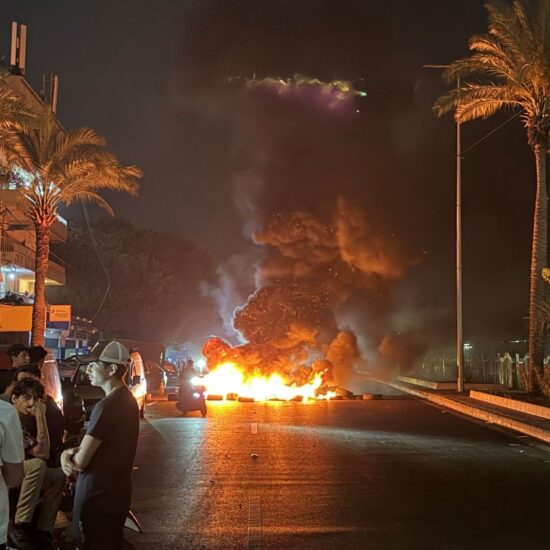
Beirut, LEBANON. Photo by THOMAS NOONAN / HANS LUCAS / HANS LUCAS VIA AFP
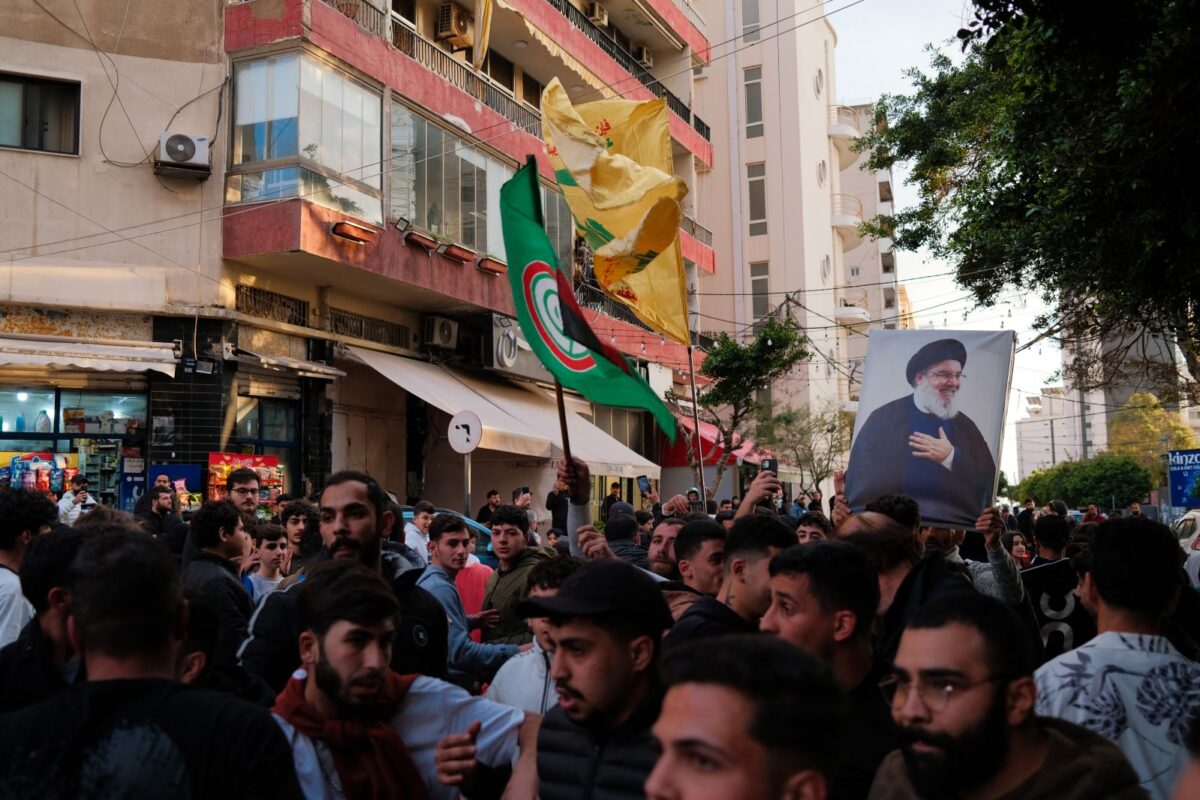
Amal and Hezbollah supporters march through West Beirut to protest against the Lebanese government in Beirut in Lebanon on April 10th, 2026. (Photo by Thomas Noonan / Hans Lucas / Hans Lucas via AFP)
One of the defining features of the past two decades has been the emergence of social media echo chambers. Algorithms, combined with the influence of vocal minorities, often create distorted perceptions of reality, leading individuals to underestimate the severity of political developments unfolding around them. This phenomenon is particularly visible in the relationship between Hezbollah and the Amal Movement.
The two Shiite parties, which buried the hatchet in 1992 after years of bloody confrontation, are once again experiencing growing tensions, albeit for reasons very different from those that characterized their rivalry in the 1980s and early 1990s. While these tensions have intensified since the outbreak of the Lebanese-Israeli war in 2024, their roots can be traced back to the inauguration of President Joseph Aoun on January 9, 2025.
During Aoun’s inaugural speech, it was already apparent that Nabih Berri – Speaker of Parliament and leader of the Amal Movement – understood that the foundations of Shiite political dominance in Lebanon were beginning to erode. Since then, Berri has sought to preserve what remains of that influence, while Hezbollah has remained primarily focused on navigating Iran’s regional priorities amid a rapidly changing Middle East marked by war, Israeli military campaigns, and shifting geopolitical balances.
For those closely following Lebanese politics, the signs are increasingly difficult to ignore. Reading between the lines of political statements, observing the movement of key figures, and analyzing the positioning of various actors reveals tensions that appear to be growing by the week. Berri, for example, has noticeably distanced himself from the fighting in South Lebanon. While he continues to call for a comprehensive ceasefire before any broader settlement can be discussed, he has refrained from actively associating Amal with Hezbollah’s military operations. At the same time, he has reportedly dispatched envoys to Gulf capitals and European countries to communicate Amal’s support for a negotiated end to hostilities.
Ali Hassan Khalil, one of Berri’s closest allies, has reportedly engaged with regional actors including Qatar and Saudi Arabia, presenting Amal as a political force capable of supporting and safeguarding a ceasefire while helping convince Hezbollah to accept it. Equally telling has been Amal’s reluctance to endorse Hezbollah’s repeated attempts to organize demonstrations and motorcycle convoys in Beirut. Many of these initiatives have drawn limited participation, highlighting what some observers see as a growing disconnect between Hezbollah’s leadership and parts of its traditional support base. In this context, Berri’s directives often appear to carry more weight than those of Hezbollah Secretary-General Naim Qassem, who continues to operate in the shadow of Hassan Nasrallah’s legacy.
The tensions are not merely political. They are increasingly visible within Shiite society itself. The destruction of Nabatieh and the use of villages with strong Amal constituencies as launch sites for Hezbollah rockets and drones have generated resentment among segments of the local population. In several instances, Amal supporters have reportedly confronted displaced families or Hezbollah members, fearing that their communities could become targets of Israeli retaliation. The events that unfolded in Al-Baisariyah on June 5 are only the latest illustration of these growing frictions.
These tensions are compounded by economic hardship. The Lebanese state lacks the resources to adequately support displaced families, while reconstruction funds remain largely unavailable. Many residents fear a prolonged period of financial uncertainty in which livelihoods, healthcare, and education will remain neglected. Israeli evacuation orders and the constant threat of airstrikes – whether carried out or merely anticipated – have profoundly affected local communities. Fear and anger have become defining features of daily life.
The memory of municipal employees affiliated with Amal who were killed during the conflict remains fresh. So too does the destruction of Nabatieh’s historic souk and the Israeli strikes that shook Ain el-Tineh and surrounding streets on April 8, 2026, when more than one hundred targets across Lebanon were reportedly struck in a large-scale aerial campaign led by at least 50 Israeli warplanes. For many within Amal, these incidents were interpreted as direct messages not only to Hezbollah but also to the movement itself. Yet the divergence between Amal and Hezbollah is not solely about politics or security. It is also rooted in how each movement understands its own identity and historical mission.
Amal was born from the social and economic grievances of Lebanon’s Shiite community. Founded by Imam Moussa al-Sadr, who famously spoke of the “Harakat al-Mahrumin” or the Movement of the Deprived, the organization sought political representation and socio-economic advancement for a marginalized population. Following the Taif Agreement and the end of the civil war, Nabih Berri became one of the most powerful figures in Lebanese politics, securing for the Shiite community an unprecedented degree of institutional influence. His political project was never primarily centered on regional struggles or ideological confrontation. Rather, it focused on maintaining political influence, protecting communal interests, and sustaining a patronage network capable of serving his constituency. Today, however, that model is under unprecedented pressure.
One revealing example of the differing worldviews of Amal and Hezbollah can be found in how each movement commemorates its dead. Hezbollah frequently presents its fallen fighters as “chouhada a’ tari’ el Quds” or “martyrs on the road to Jerusalem,” emphasizing the regional and ideological dimensions of its struggle. Amal, by contrast, often employs terms such as “Shahid al-Mujahid” (Martyr Fighter) or “Faqid al-Jihad” (Fallen Fighter), language that places greater emphasis on the individual sacrifice itself rather than on a broader regional mission. While subtle, this distinction reflects deeper differences in how both organizations frame martyrdom, resistance, and their place within the wider Middle East.
None of this suggests that Amal is preparing to sever its alliance with Hezbollah. The Shiite duo remains intact. What Berri appears to be doing is something far more pragmatic: attempting to preserve what remains of Shiite political influence after years of mounting military, financial, and political pressure on the Axis of Resistance. In many ways, Berri is practicing, what we call in International Affairs, political realism. He understands that the days when Amal and Hezbollah could largely dictate Lebanon’s major political decisions, influence its borders, and dominate key state institutions are gone. As a result, he has increasingly sought accommodation with regional powers such as Qatar and Saudi Arabia, while maintaining strong ties with France and other European actors. At the same time, Berri appears to be sending a message to Washington and Tel Aviv: if a durable ceasefire is to emerge, a strong Shiite political actor remains necessary to contain, influence, and eventually manage Hezbollah. In his view, the Amal Movement is trying to position itself to play that role.
Georges Haddad is a Lebanese analyst specializing in socio-politics, security, and humanitarian affairs. His work has been published in several local and foreign outlets and focuses on Lebanese politics, armed groups, governance, and regional affairs.
The views in this story reflect those of the author alone and do not necessarily reflect the beliefs of NOW.