To my beloved Lebanon and its people:
Our destinies are intertwined. Though I was born in Brooklyn because the Lebanese Civil War drove my family from Lebanon in the 1970s, my heart belongs to Lebanon. My connection is more than heritage; it is a living memory passed down through my family. Our roots run deep, from Deir El Qamar to Beirut. Even without setting foot on your soil, I, like many Lebanese abroad, know the ache of el-ghorbe, and cherish the nostalgia of what you were and what you could be.
The Lebanon I hold dear is painted with my parents’ memories, filled with joy, community, and traditions. It is the Lebanon of falafel with ṭourmos after school, sunlit beaches, and the cool breezes of ʿAley’s mountains. Through their stories, I have walked the Souks al-Franj and el-Nouriyé in Beirut, breathed in the spices of the markets, and heard the laughter of families gathering for meals.
These recollections reflect a yearning for a Lebanon where diverse communities lived side by side, respecting and celebrating each other’s differences. That yearning is rooted in a shared history spanning thousands of years.
Our connection transcends nostalgia. It is anchored in a shared heritage that predates today’s conflicts. The ties between the Jewish people and Lebanon are ancient and sacred. Lebanon’s cedars helped construct the First Temple in Jerusalem, and Hebrew and Phoenician share the linguistic inheritance of the ancient Canaanite world. Our sages even remembered the ancient Hebrew script by the curious name ketav Libona’ah, and the Psalms place the cedars of Lebanon among the “trees of the Lord.”
My family’s roots are in Deir El Qamar, where my ancestors prayed in a synagogue established in 1638, in the time of Fakhr ad-Dīn Maʿan II, and where Jews lived alongside Druze, Maronites, and others. In the 1840s, amid conflict, my family moved to Beirut. My great-great-grandfather, Ḥakham Musa Choua, became a notable figure in the Jewish community, a successful merchant known as “le Dirani” for his roots in Deir El Qamar. My great-aunt, Dr. Évelyne Choua, was a beacon of care who served the community’s Biqqur Ḥolim, its society for the care of the sick, and ensured hospital beds were available for all, regardless of faith. Their lives reflected the values of coexistence and service that my family carried with it.
When my family came down from Deir El Qamar to Beirut, they arrived in a city whose Jewish life was rising toward its fullest flowering, and its crown was the synagogue of Maghen Abraham.
This month marks one hundred years since Maghen Abraham was inaugurated in Wadi Abu Jamil on August 25, 1926, in the quarter we lovingly called the Valley of the Jews. The photographs from that first day show a hall hung with garlands and packed wall to wall, the whole community pressed in to watch its doors swing open. The joy was such that the community asked, in its own newspaper, that the day be kept and its memory renewed through the years.
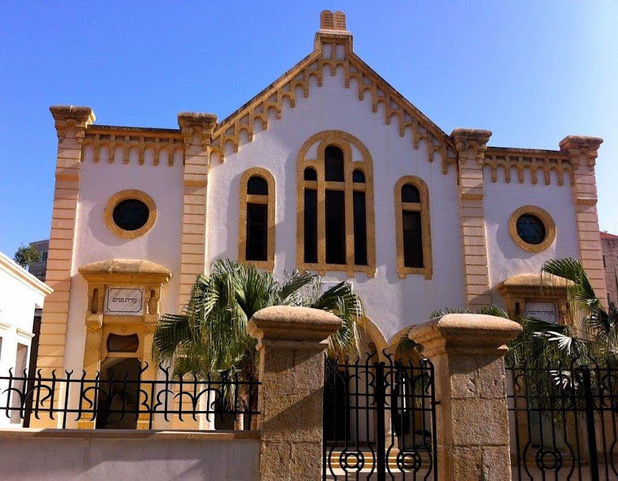
Outside the locked gates of the Maghen Abraham Synagogue in Beirut.
They named it Maghen Abraham, the Shield of Abraham, invoking a patriarch whose name, Abraham or Ibrahim, belongs to the sacred memory of this entire region. It was never only a house of prayer. Around it stood a school, a clinic, a mikveh (1), and a house of study, and the neighbors who came to watch it rise were Druze and Maronite, Sunni and Shiʿa, for in that valley this was simply what a Beirut street was made of.
I know every entrance and every corner of Maghen Abraham, and I have never once stood inside it.
To love a place you have never seen is a strange thing, and I have carried it all my life.
Today the synagogue has been lovingly restored, stone by stone, after years in which it stood roofless and filled with rubble. It is beautiful and it is empty. There is no regular minyan (2) to gather there for prayer, nor a rabbi to lead it, and so its survival, more than its use, is the gift it offers now.
Yet its name is never silent. “Shield of Abraham” is the seal of the first blessing of the ʿAmidah (3), recited three times each day, and this very morning, in Paris and Montreal and São Paulo, in the corner of Brooklyn where so much of Jewish Beirut came to rest, and in a dozen cities besides, someone sealed that blessing with the very words above its locked door in Wadi Abu Jamil.
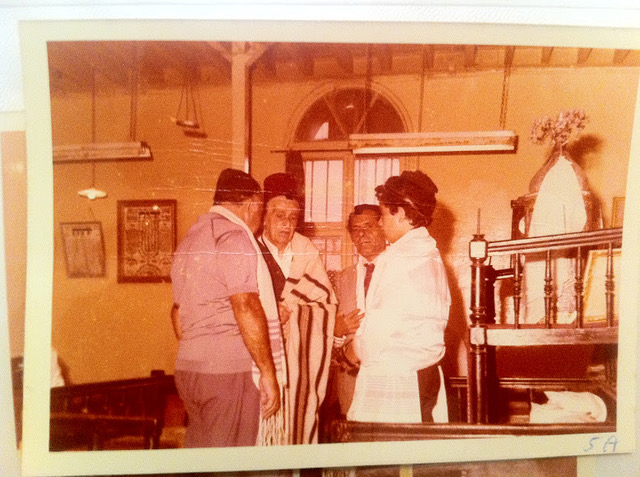
From left: my Jiddo (grandfather), Clément Choua; Ḥakham Ibrahim Kattan; Faraj, the kenis shamash (synagogue beadle); and my Dod (uncle), Mousa Choua, at his Libis Tefillim, his first donning of tefillin for his Bar Miṣva, in ʿAley, Lebanon, where our family spent its summers.
The valley may have emptied, but the blessing was never kept within its walls.
This is the Lebanon I carry with me, a place where our histories intertwine, where ancient synagogues and cedar forests speak to a legacy that belongs to all of us. It is a Lebanon I long to see, a land that feels like home even from afar.
Today, my heart aches for a Lebanon that has too often been made a battlefield, a land of shared history turned into a theater for wars its people never chose. For fifty years now, from the civil war that scattered my own family to the conflicts that still scar the south, Lebanon has paid with its towns and its children for the ambitions of factions and forces that have placed themselves above the country itself.
I have never confused Lebanon with those who have taken it hostage. The Lebanon I love is not the property of any faction or any gun. It belongs to its people. My hope, my prayer, is that Lebanon can reclaim its sovereignty so that its destiny belongs to the state and its people, and to no faction or force above them.
And I dream of a Lebanon that rediscovers its own oldest roots, where the ties among its communities bind them more strongly than any force that would divide them. Our shared history reminds us that coexistence is not foreign to us; it is part of our history. From the friendship of King Solomon and King Hiram to the everyday life once shared among Jews, Druze, Christians, and Muslims on a single Beirut street, we have long known another way.
Let us draw from that past to build a better future. I envision a Lebanon where all its people, regardless of faith, can thrive in peace, a Lebanon that honors its diverse heritage and welcomes home the children it lost.
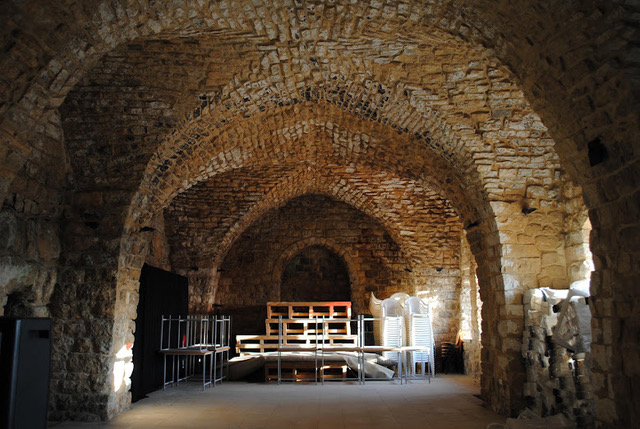
Inside the synagogue of Deir El Qamar, where my ancestors prayed.
Ya Libnan, my love for you is as enduring as the cedars that stand tall in your forests. I dream of walking your streets, of standing at last inside Maghen Abraham on a morning when its benches are full again, and of feeling the connection passed down through generations. I pray for the day I can finally come home to a Lebanon reflecting the values of coexistence, respect, and peace that my family cherished.
This is my love letter, a plea to remember our shared past and strive for a future where we stand side by side as neighbors, friends, and family.
As the Song of Songs says, “The beams of our house are cedars.” (4)
May those beams stand strong once again, supporting a home built on peace, unity, and shared dreams.
With love,
Isaac Choua
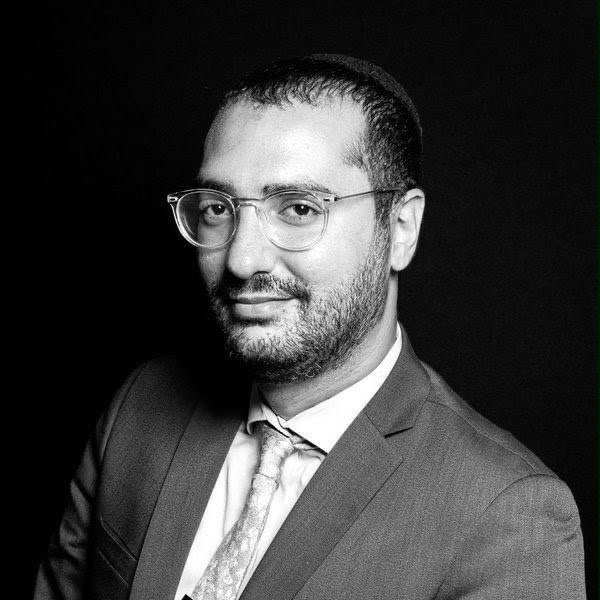
Rabbi Isaac Choua is a writer of Lebanese Jewish descent, his family from Deir El Qamar and Beirut.
The views in this story reflect those of the author alone and do not necessarily reflect the beliefs of NOW.
Endnotes
(1) Mikveh: Jewish ritual bath used for ritual purification in accordance with Jewish law.
(2) Minyan: the quorum of ten Jewish adults traditionally required for certain communal prayers and religious rituals in Judaism.
(3) ʿAmidah (standing prayer), is the central prayer of the Jewish liturgy, traditionally recited while standing and consisting of a series of blessings addressed to God.
(4) Song of Songs 1:17