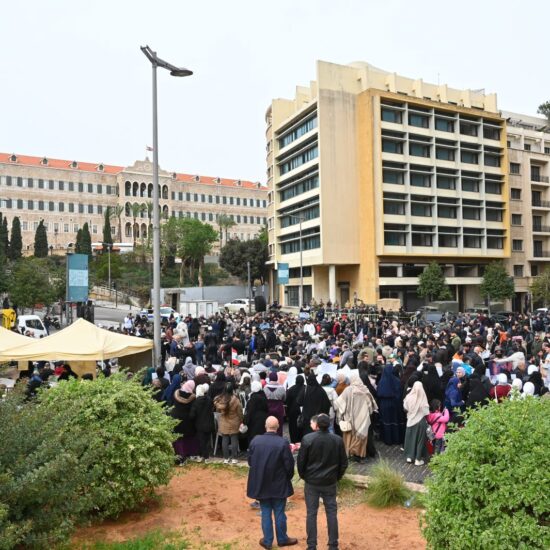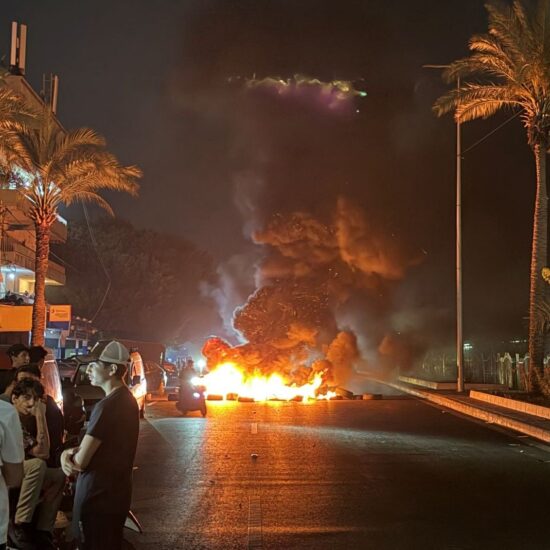
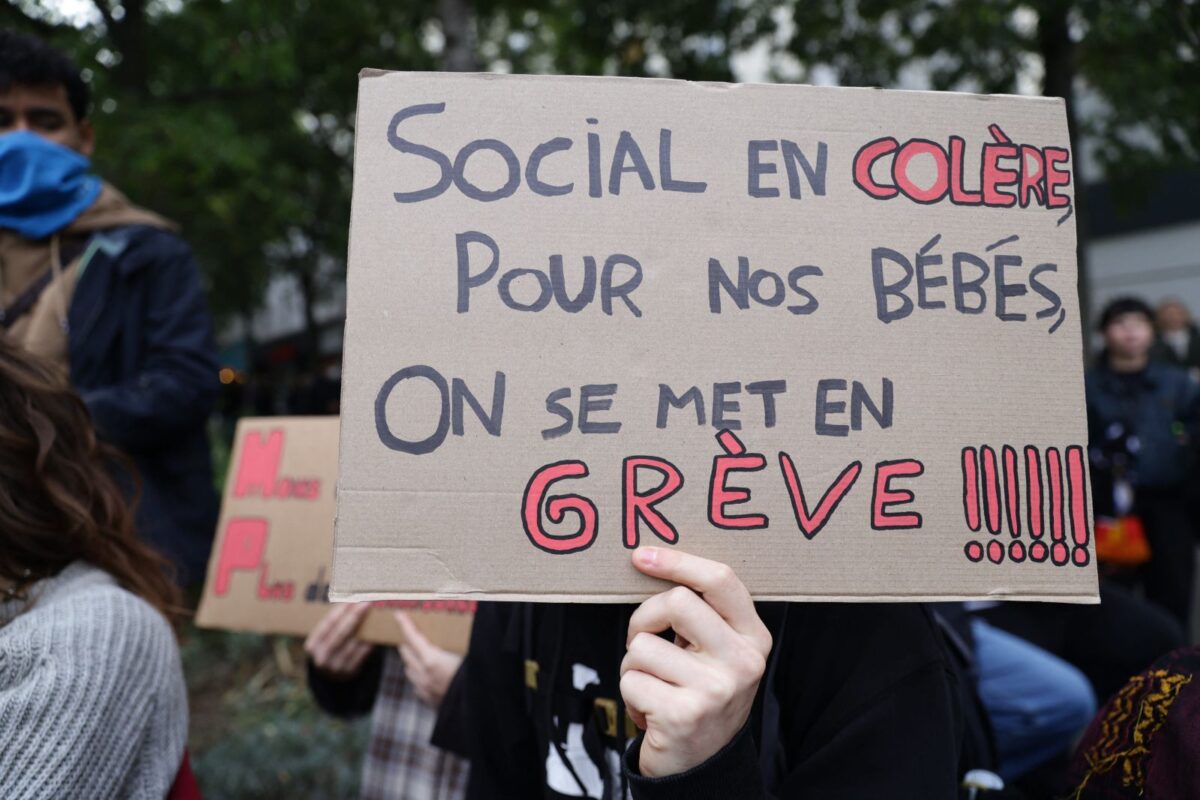
PARIS, FRANCE - OCTOBER 22: Students and protesters gather outside the Pitie-Salpetriere hospital in Paris, France, on October 22, 2026, during a demonstration called by student and high school organisations amid ongoing social and political tensions in France. (Photo by Ibrahim Ezzat / ANADOLU / Anadolu via AFP)
The scenes of protest, rioting, and vandalism coming from France have captured the world’s attention. In a climate of intense political polarization, these scenes have spurred conversations that reached much beyond France, conversations which sought to address the intersection of immigration, war, and a decline in public spending worldwide. Curiously, a great deal of conversation has emerged from Lebanon, with a number of strong opinions that may strike the outside observeras excessive, unnecessary, and in some cases racist. This is important because we now have an idea of what some Lebanese people think of many topics they’re excluded from.
At their core, the protests in France are related to the economic downturn that the French economy has been experiencing for several years, which was made worse by the COVID-19 virus and the effects of the Russian invasion of Ukraine. The riots have been a regular occurrence in past protests in France, and whenever rioting occurs, videos showing protestors and looters of specific ethnicities and political beliefs are amplified by right-wing media. This generates a firestorm of debate regarding immigration and law enforcement, topics which have only grown more salient since the reelection of Donald Trump to the American presidency.
The riots have been a regular occurrence in past protests in France, and whenever rioting occurs, videos showing protestors and looters of specific ethnicities and political beliefs are amplified by right-wing media.
France has occupied a special place in the Lebanese collective memory for centuries. Schools funded by the French government, religious orders, and private individuals have maintained a presence in the Levant since the 19th century. Every year, thousands of Lebanese people travel to France in search of a better life, forming a community that has left its mark. As a result, many in Lebanon feel rather strongly about France, especially as a significant percentage of young people are educated in French as their second schooling language. Normally, strong reactions to protests in France were confined to some fringe right-wing accounts.
This time, the scenes repulsed even “normie” people, people who have shied away from commenting on these things. When some of them expressed opposition to looting, a barrage of comments and nasty remarks began between Lebanese and Algerian accounts on X. Algerians and people of color were the demographics most demonized and targeted by far-right propaganda, so most of the reactions targeted them. Strangely, some Lebanese felt comfortable repeating anti-immigrant talking points, and rhetoric associated with racist politics. Some of them decided this affected them and became participants in the global culture war, which makes no sense on the surface.
As a country experiencing complete socioeconomic collapse, many in Lebanon are looking for the easiest and fastest way out of the country. However, there remains a certain arrogance in us that makes us believe we are better than other MENA citizens.
As a country experiencing complete socioeconomic collapse, many in Lebanon are looking for the easiest and fastest way out of the country. However, there remains a certain arrogance in us that makes us believe we are better than other MENA citizens. What makes us believe we are a more “civilized” people? This form of racism, one which has been on the rise for some time, has gradually become directed against Syrians, Palestinians, and “others” with the aim of deflecting blame off ourselves and finding another reason for our problems. All the while, we were becoming numb to xenophobia and racism.
On the other hand, the vitriol from the communities on the receiving end has also regurgitated tropes about us as a people. Lebanese people are stereotyped as either effeminate men or attractive women, “bootlickers” to one power or another, or some other image of decadence and gendering that is specific to Lebanon. Recently, with the war and occupation of parts of Lebanon by Israel, the stereotype of weakness was reinforced, with the line being: you’re weak and unable to defend your country. It’s ironic that an “anti-Israel” group of people would celebrate the suffering of certain people at Israel’s hands.
We don’t have a clear picture of how this war has affected the politics of Lebanese citizens. However, it is likely the war has radicalized many people and turned them to the right, as wars often do.
We don’t have a clear picture of how this war has affected the politics of Lebanese citizens. However, it is likely the war has radicalized many people and turned them to the right, as wars often do. Nowadays, some people will tell you that they think “open borders” and “the left” have allowed foreign influence to ruin the country. While many well-meaning liberals and leftists may laugh, these sentiments are real, deserve to be discussed, and will likely influence how thousands of Lebanese people make political choices. Ignoring social phenomena which were produced by wars and crises never ends well.
And finally, all these incidents elicit a sense of sadness and despair. No country in our region has anything to look forward to over the coming weeks and months, least of all Lebanon. However, Lebanese people continue to insert themselves in the shallowest and most useless of debates and squibbles, to their sole detriment. What’s worse is that you would often find the same people who express xenophobic sentiments acknowledging that this is an attempt to justify the mess around them, failing to see that they themselves are contributors to fake hysteria and controversy which serve no one at all.
Mohammad el-Sahily is a student and activist. He tweets @moesahily.
The views in this story reflect those of the author alone and do not necessarily reflect the beliefs of NOW.