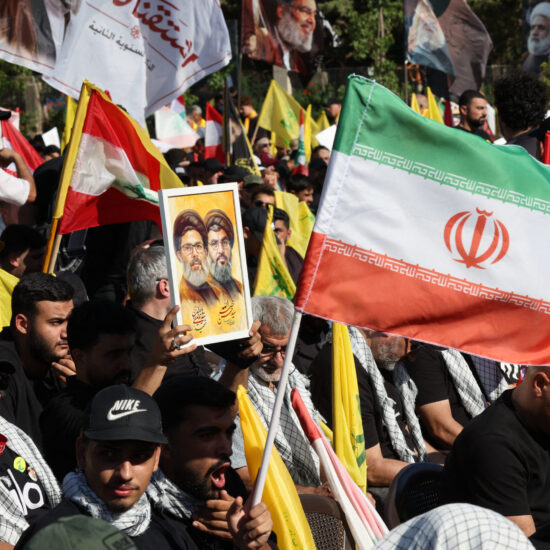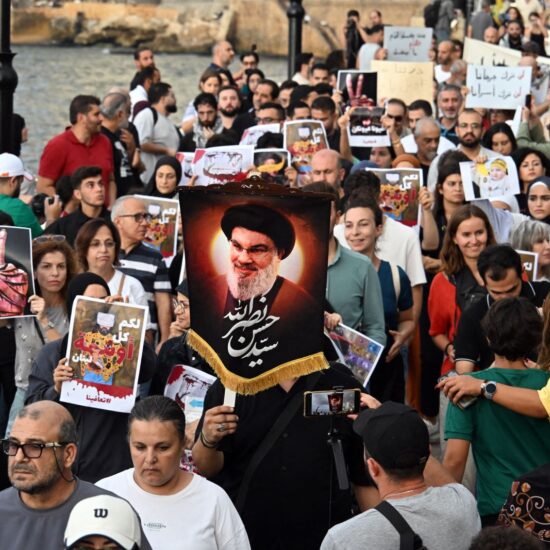
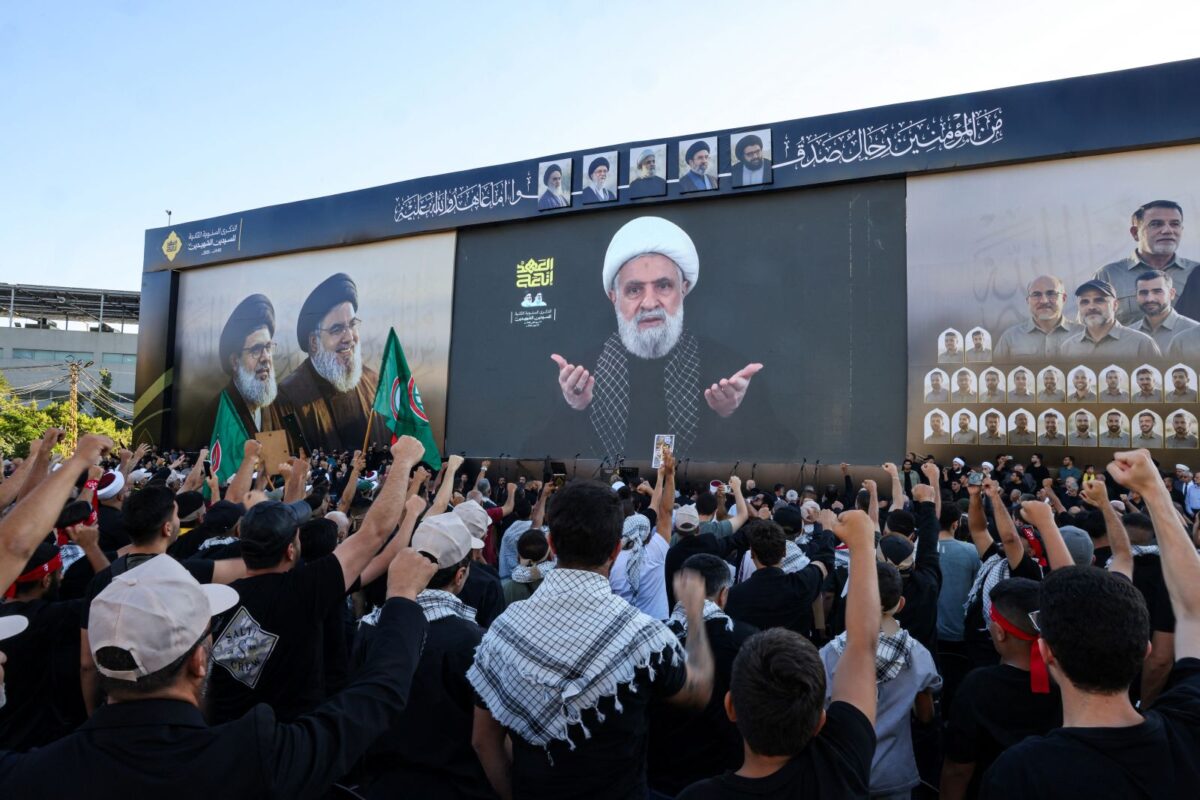
Photo by ANWAR AMRO / AFP. Supporters of Lebanese Shia movement Hezbollah shout slogans as they watch a televised speech by Hezbollah chief Naim Qassem during a ceremony held to mark the second anniversary of the killing of former leader Hassan Nasrallah in a strike by Israel, in Beirut's southern suburbs on September 27, 2026.
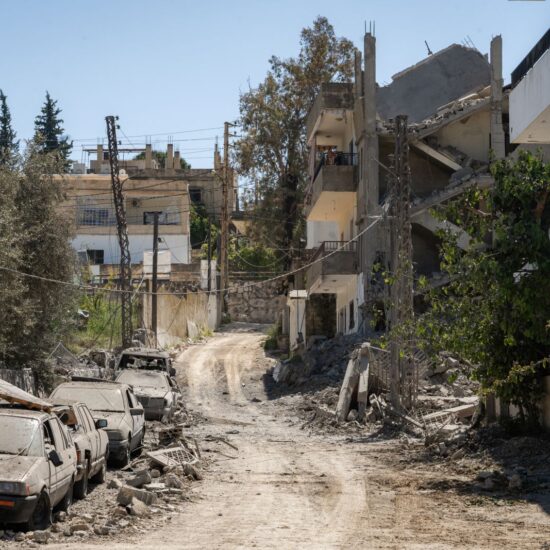
Naim Qassem keeps assuring his audience that Hezbollah remains standing. For families whose homes no longer stand, that is an inadequate answer. The distance between those two realities is becoming the central problem of his leadership. Hezbollah measures endurance through its continued existence, weapons and refusal to concede. People living with the consequences of war need something more concrete: security, a home, an income and the possibility of planning a future. These interests cannot simply be declared identical.
In his September 27 speech commemorating Hassan Nasrallah, Qassem demanded an end to direct negotiations with Israel, accused the Lebanese authorities of contributing to Israel’s project and challenged President Joseph Aoun to remain an arbiter rather than a party to the conflict. Discussion of Hezbollah’s weapons, he insisted, should follow liberation and the return of residents.
Qassem cannot keep presenting Hezbollah’s survival as proof that its people have been protected.
The sequence sounds protective. Its practical consequences deserve scrutiny. Qassem demands that the state recover the territory before addressing the armed autonomy at the centre of the dispute, while attacking the diplomatic route through which it is attempting that recovery. He owes the people waiting to return an explanation of how his own approach will achieve it. Qassem cannot keep presenting Hezbollah’s survival as proof that its people have been protected.
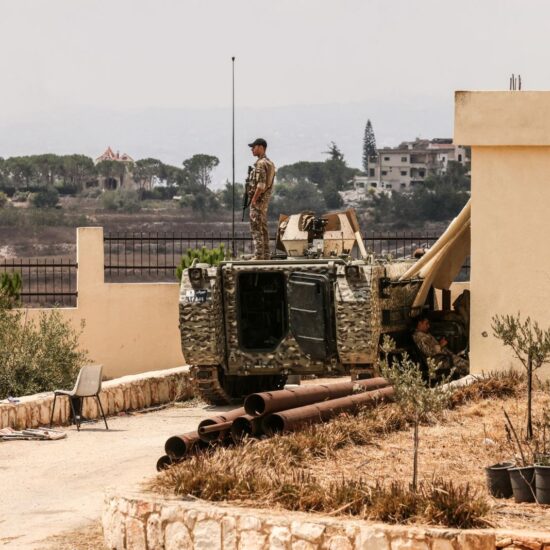
Israel’s conduct makes this question urgent. Strikes and demolitions continue across the South. On September 27, Finance Minister Bezalel Smotrich called for annexation as far as the Litani. His statement is not an adopted annexation decision, but neither is it something Lebanese citizens can afford to dismiss.
Israel remains responsible for its attacks and territorial ambitions. Hezbollah’s failures do not diminish that responsibility. But the existence of a dangerous enemy does not establish the effectiveness of the strategy pursued against it. The greater the danger, the greater a leader’s obligation to explain how his choices improve the population’s prospects.
Qassem’s answer increasingly turns inward. The authorities pursuing a different course are accused of serving the enemy’s project. The president’s legitimacy as a unifying figure appears conditional on his refusal to challenge Hezbollah’s position.
This leaves little room for an alternative to be judged on its merits. A policy can be inadequate, badly negotiated or unsuccessful without constituting collaboration. Qassem is entitled to demand results from negotiations. He cannot treat their shortcomings as sufficient proof that his own approach deserves indefinite renewal.
The deterioration of relations with the Free Patriotic Movement adds another dimension. The hostile exchange between Nawaf Moussawi and the FPM is more than an argument between former allies. Recovery requires cooperation across Lebanese communities and institutions. Turning criticism into another confrontation risks deepening the isolation of the very people Hezbollah claims to defend.
None of this proves that Lebanese Shia are abandoning Hezbollah. A community is not a single political mind, and continued support can carry different meanings: conviction, attachment, dependence, fear or distrust of those offering an alternative. We should not invent a collective change of allegiance to strengthen an argument. The separation at issue concerns interests, not an assumed collapse in loyalty.
An organization may retain supporters while pursuing priorities increasingly detached from their welfare. When acknowledging failure threatens a leadership’s authority, preserving the organization can become the measure of success. Its continued existence then supplies the justification for continuing the same course. That is a political danger, not a psychiatric diagnosis. It requires accountability rather than speculation about Qassem’s mental state.
The regional context sharpens the problem. Salam told Iran’s president that Lebanon must not remain an arena for other countries’ conflicts. Tehran’s reported proposal for reopening Hormuz, meanwhile, included a cessation of hostilities in Lebanon. Whatever relief such an agreement might bring, Lebanese recovery cannot be left waiting indefinitely for regional bargains. A displaced family’s needs do not become less urgent because its suffering has diplomatic value elsewhere.
The Lebanese government also carries responsibility. It cannot ask citizens to exchange an established network of protection and assistance for promises. Aoun and Salam must demonstrate what their alternative delivers: assistance administered transparently, support for return where safe, reconstruction and sustained pressure for Israeli withdrawal. Shia citizens should receive these as rights, regardless of their political loyalties.
The community does not owe the organization a future at the expense of its own.
Nor should Hezbollah’s opponents confuse weakening the party with humiliating its constituency. A population recovering from loss needs political choices, not demands that it renounce its history before receiving recognition or support. The community does not owe the organization a future at the expense of its own.
Qassem must therefore answer a question more demanding than whether Hezbollah can survive. What is he prepared to change so that the people he claims to represent can recover? That answer requires decisions about weapons, negotiations, alliances and the limits of regional commitments. Until he makes them, declarations of endurance offer families little guidance about when they can go home, rebuild or stop fearing another loss. A leadership that asks its people to endure must eventually offer them a way beyond endurance.
Ramzi Abou Ismail is a Political Psychologist, Researcher and Analyst.
The views in this story reflect those of the author alone and do not necessarily reflect the beliefs of NOW.