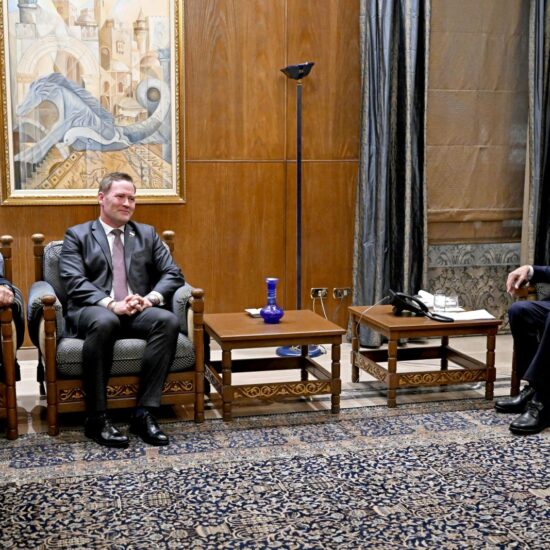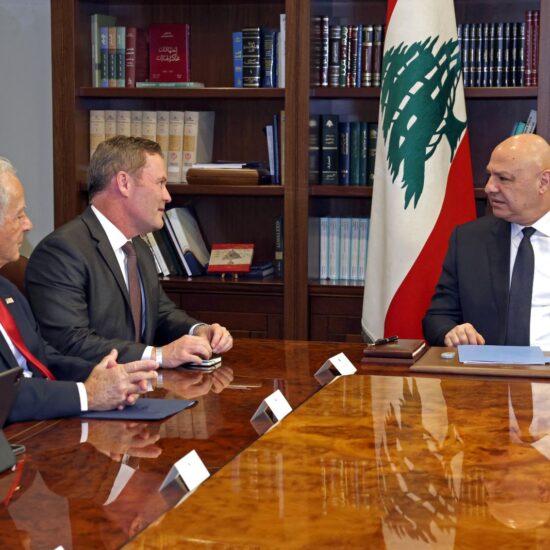
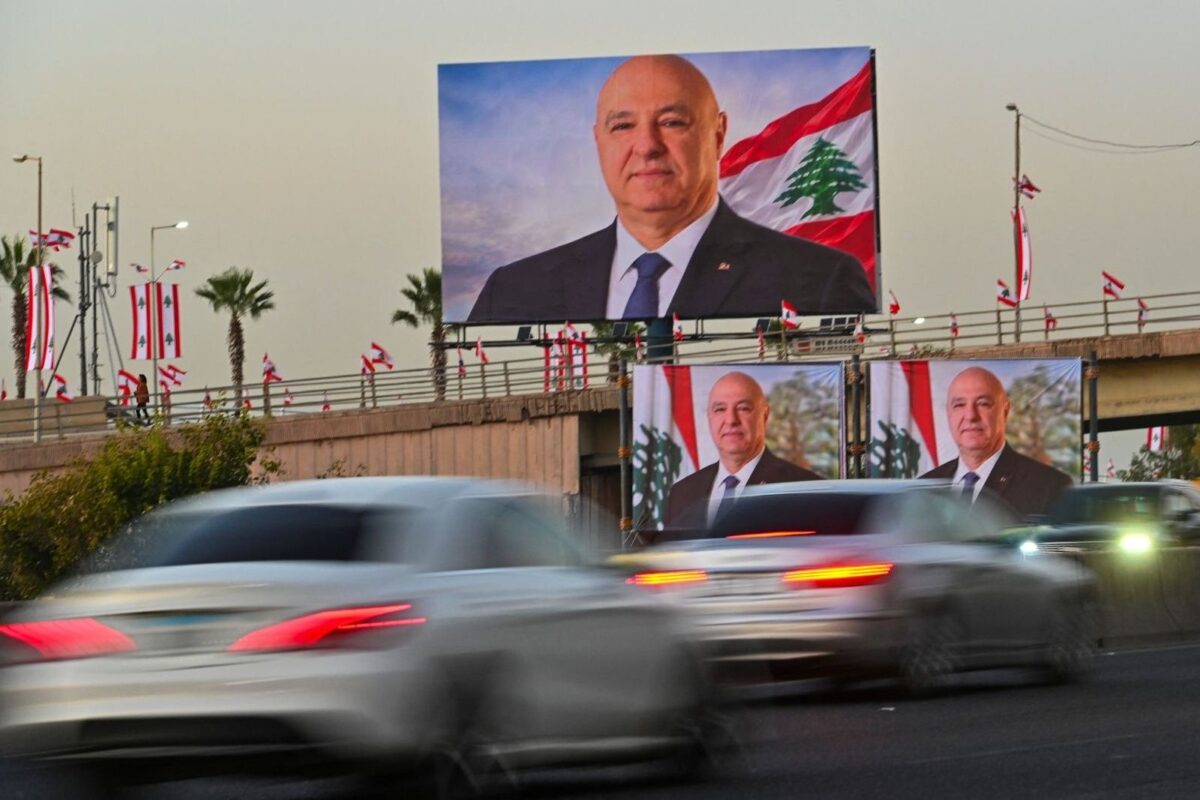
FADEL ITANI / NURPHOTO / NURPHOTO VIA AFP. Lebanese national flags and a picture of President Joseph Aoun line a highway ahead of the country's 83rd Independence Day celebrations in the Dbayeh coastal suburb, north of Beirut, Lebanon, on November 20, 2026.
On Sunday, Lebanon celebrated its 83rd Independence Day — despite parts of the country remaining occupied by Israel and Hezbollah’s military wing still operating.
Israel occupies parts of southern Lebanon — an area that has become known as the so-called “buffer zone”. In this region, Israel’s military has flattened many buildings and residents have not been able to return. On Sunday, residents of South Lebanon marched to demand the right to return to their homes.
Hezbollah, on the other hand, still maintains its military wing, despite Lebanon having declared it illegal in March, shortly after the outbreak of the war. President Joseph Aoun reiterated his demand that the group give up its weapons during his speech on Saturday — but he gave no concrete timeline or mechanism towards this end. Hezbollah in turn said that Lebanon was not independent as long as parts of the country remain under occupation.
In Lebanon
Lebanon’s army seizes explosives: On Saturday, the Lebanese military discovered 264 kilograms of explosives — including 203 kg of C4 and 61 kg of TNT. Three Lebanese citizens allegedly smuggled the material illegally from Syria into Lebanon.
Reconstruction is advancing slowly in Lebanon: According to a World Bank report, only $4.2 million had been paid for reconstruction purposes by September this year. Initially, $100 million were planned to be allocated by July — but parliament and the war delayed the payments.
In the Region
Iran wants to fight against U.S. naval blockade: The spokesperson for Iran’s Foreign Ministry, Esmaeil Baghaei, said on Monday that Tehran is ready to use all tools available against the U.S. naval blockade on oil.
COP31 fails to reach agreement over fossil fuels: The climate conference in Turkey became a battleground between countries that oppose fossil fuels and those that back them — like Saudi Arabia. The text on Sunday omitted any mention of fossil fuels, which caused backlash in several countries in the EU as well as small island states.
Syria rebuilds ties with the EU: As Brussels and Damascus are moving towards stronger political and economic ties. But some concerns remain that the EU might want to focus mostly on migration.
What We’re Reading
Independence Held Hostage. Farid Fakherddin argues that Lebanon is still not independent despite celebrating its Independence Day. The country is influenced by the decision-making of other actors such as Hezbollah, which still has its armed wing — and will remain the case until the group is demilitarized.
Independence 1943. Charles H. Al-Hayek looks back at history to examine how Lebanon gradually reached its independence from France in the last century. He argues that the citizens of Lebanon are often left out in the account about this part of history.
Lebanese apples look beyond traditional markets as export initiative opens new doors. Rodayna Raydan reports about the SADDER project by the René Moawad Foundation, which is helping Lebanon increase export opportunities to West Africa and the UK and overcome problems in the apple industry.
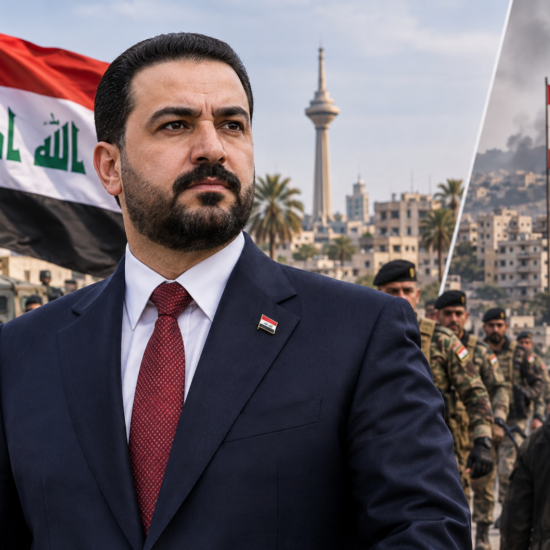
A Lesson From Iraq. Mohammad El Sahily compares Iraq and Lebanon — two countries that are trying to disarm Iranian-backed groups inside their borders. Whereas Iraqi Prime Minister Ali Al-Zaidi recently cracked down on an oil smuggling network connected to Iran, Lebanon has not sufficiently confronted Hezbollah, El Sahily argues.
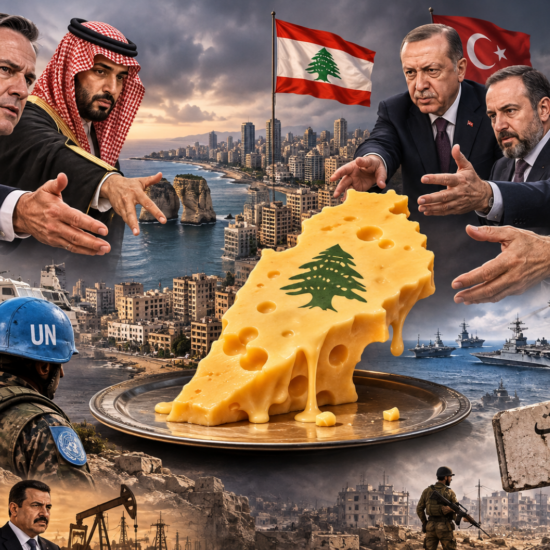
Lebanon, the Slice Everyone Wants to Snatch. Elissa El Hachem looks at the international visits Lebanon has received in the past weeks to argue that there is a battleground for different interests between countries such as Iran, U.S., Turkey, Saudi Arabia and France.