Yesterday, I received a very special gift.
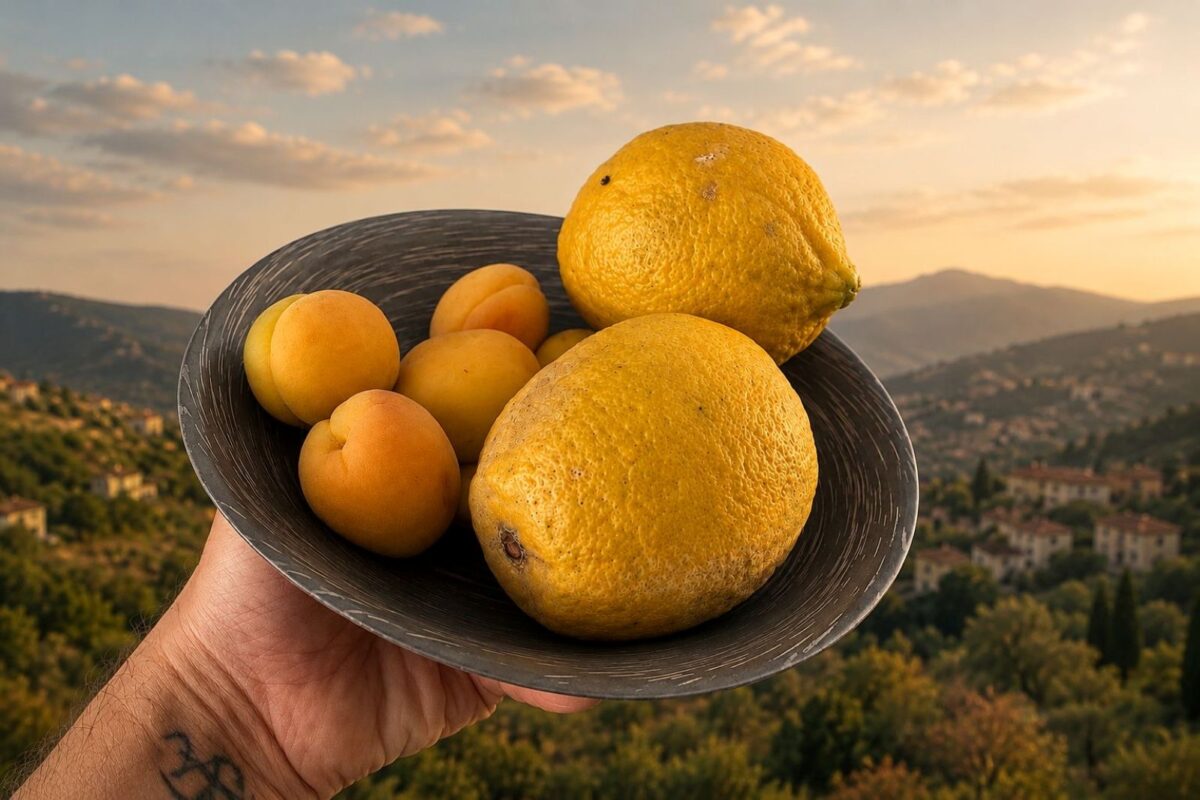
It was not expensive, nor was it wrapped in fancy paper. It did not come from a luxury store or from some distant land. It came in the form of lemons and apricots, harvested from the fields of a dear friend from the south of Lebanon.
And precisely because of where it came from, it meant everything.
In normal times, a basket of fruit is a simple gesture of friendship. In Lebanon, and especially now, it is something much deeper. These lemons and apricots were not just fruit. They were a reminder of a land that still gives life even when men with guns insist on turning it into a battlefield. They were a reminder that the south is not an abstract “front,” not a military zone, not a slogan chanted by men who hide behind the suffering of others. It is home.
My friend and her family cherish that land. They grew up on it. They know its seasons, its soil, its trees, its silences, and its stubborn generosity. They have worked hard to build their lives there, to raise their families, to plant roots that are deeper than politics and stronger than fear. Their houses were not built as military positions. They were built to shelter children, laughter, meals, arguments, weddings, grief, memory, and love.
This is what people like Hezbollah and their gangs of terrorists, along with the IRGC revolutionary guards who treat Lebanon as an extension of their regional project, will never understand. They do not care about the memories housed inside these homes. They do not care about the sound of children running through hallways, the smell of coffee in the morning, the old photographs hanging on walls, or the quiet dignity of families who only want to live in peace on their own land.
For them, a village is a position. A house is cover. A border town is a card to be played in negotiations that do not include the people who actually live there. The south is reduced to “resistance,” while the people of the south are expected to pay the price, bury the dead, rebuild the walls, and remain silent.
But yesterday, those lemons and apricots told a different story.
They told the story of a Lebanon that Hezbollah cannot fully destroy, because it is kept alive by ordinary people who continue to plant, harvest, cook, share, and remember. They told the story of families who refuse to surrender the meaning of their land to militias and foreign generals. They told the story of a south that is not owned by Tehran, not represented by those who drag it into war, and not defined by those who celebrate destruction as victory.
There is something profoundly political in a piece of fruit harvested from a threatened land. A lemon from the south today is not merely a lemon. It is an act of attachment. An apricot from a family field is not merely an apricot. It is evidence that life continues despite those who profit from death.
This is why the gift moved me.
Because it carried with it the labor of a family, the tenderness of a friend, and the tragedy of a country whose people are always asked to prove their love for Lebanon by surviving the disasters imposed on them. It reminded me that behind every headline about “escalation,” “fronts,” and “rules of engagement,” there are people who have orchards to tend, parents to care for, children to raise, and homes they fear may be lost not because they chose war, but because war was chosen for them.
The real south is not the one displayed in Hezbollah’s propaganda videos. It is not the south of masked men, rockets, tunnels, and funerals staged as political theater. The real south is my friend’s family harvesting lemons and apricots from land they love. It is families opening their homes, preserving their dignity, and refusing to let the language of death erase the language of belonging.
That gift was a small basket of fruit.
But in this Lebanon, in this moment, it felt like an act of resistance against the resistance.
Makram Rabah is the managing editor at Now Lebanon and an Assistant Professor at the American University of Beirut, Department of History. His book Conflict on Mount Lebanon: The Druze, the Maronites and Collective Memory (Edinburgh University Press) covers collective identities and the Lebanese Civil War. He tweets at @makramrabah