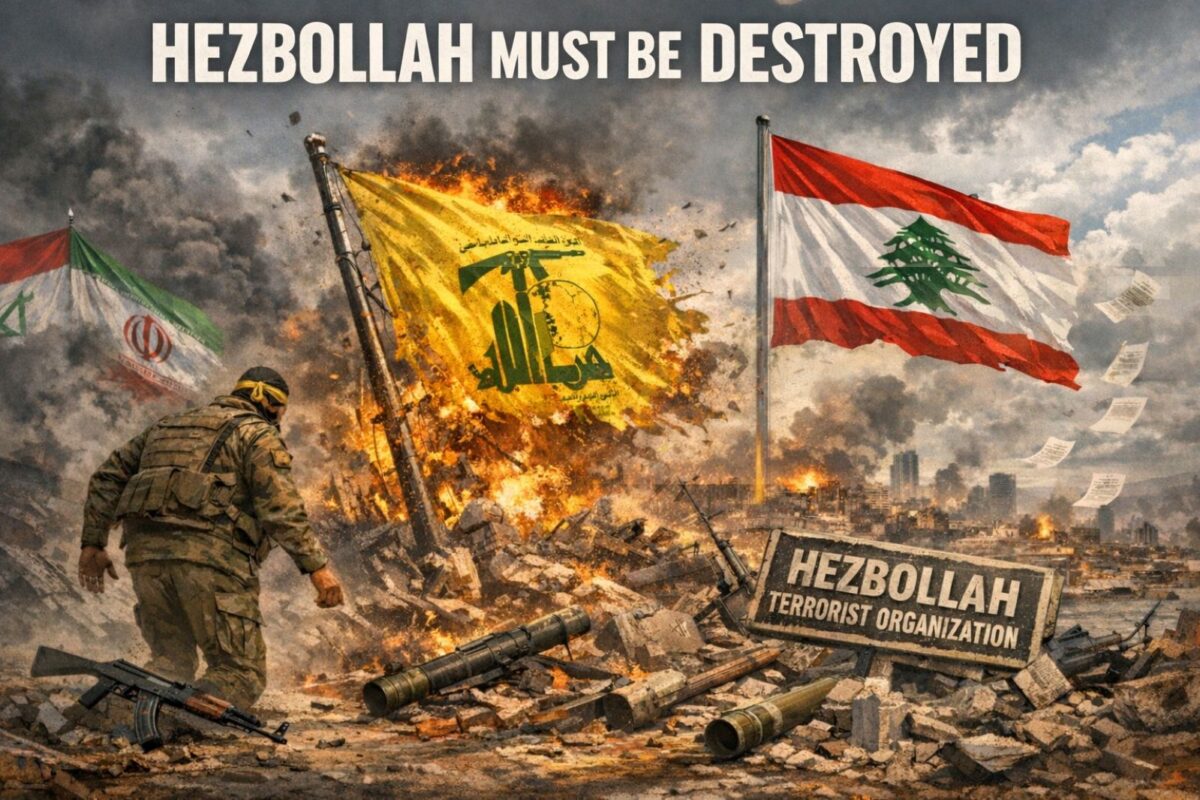
When Cato the Elder ended every speech in the Roman Senate with his famous line, Carthago delenda est — “Carthage must be destroyed” — he was not speaking from personal hatred. He was articulating a strategic conviction: that the continued existence of Carthage as a rival military power posed an existential threat to Rome. He did not propose regulating Carthage, nor did he suggest licensing its political activity. He did not call for integrating it into Rome’s system. He simply insisted, with clarity and repetition: it must be destroyed.
Lebanon today requires no rhetorical flourish to grasp the lesson.
Hezbollah is not merely a political party that strayed beyond the authority of the state. It is an armed entity that was born outside the state, expanded at its expense, and fed off Lebanese blood long before drawing strength from Iran’s Islamic Revolutionary Guard Corps. Since the 1980s, when it decided to assassinate its fellow citizens, hollow out the institutions of the republic, and monopolize the decision of war and peace, it did not apply for a license from the Ministry of Interior. It did not await a ministerial statement to legitimize its arsenal. Nor did it consult the Lebanese public when it declared itself guardian of the nation’s strategic fate.
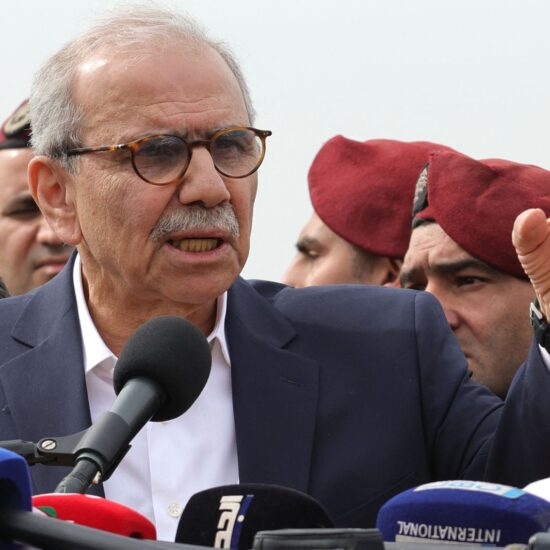
Today, Prime Minister Nawaf Salam announces a decision to “ban Hezbollah’s security and military activities” while preserving it as a political entity within constitutional frameworks. As if the problem were ever one of paperwork rather than rifles, explosives, and silenced pistols. As if weapons forged over four decades would dissolve upon the publication of a cabinet communiqué. As if a group that captured the state would suddenly submit to an administrative order.
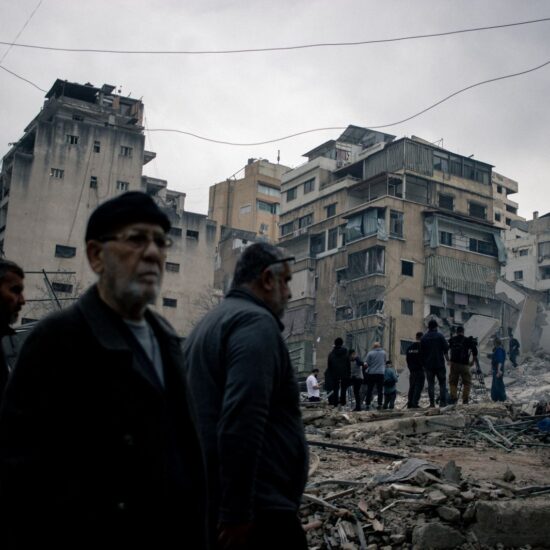
This decision is both belated and truncated. It neither respects the intelligence of the Lebanese people nor addresses their suffering. The thousands of forced to flee their homes in the middle of the night because of Hezbollah’s reckless military adventures do not need a theoretical ban. They need a state that recognizes the root of the calamity: the existence of an ideological militia tied to Iran and operating above national sovereignty.
Maintaining Hezbollah as a political party after “banning” its military wing is a legal fiction not to say hallucination.
What kind of party retains its structure, leadership, popular base, and financial networks — and is then expected to surrender its weapons voluntarily? Did it disarm after Israel withdrew in 2000? After the 2006 war? After dragging Lebanon into the battlefields of Syria, Yemen, and Iraq? Who seriously believes that a cabinet statement will undo an ideology built on exporting revolution rather than upholding the Lebanese constitution?
More dangerously, this so-called ban reframes the issue as a manageable domestic dispute rather than a cross-border security threat. Hezbollah is not a Lebanese party that miscalculated. It is an armed Iranian arm embedded within Lebanon’s body politic. Unless it is clearly declared a terrorist organization operating outside the state — and unless its entire structure is dismantled — any governmental measure will remain ink on paper.
Keeping Hezbollah as a political actor preserves its capacity for paralysis and coercion from within the institutions it has already compromised. It will sit in parliament, obstruct reform, and veto any serious path toward disarmament. Thus the “resistance” became a state within a state — and ultimately a state above the state. Those who insist that a neat separation between military and political wings is possible ignore four decades of collective self-deception.
Let us be unequivocal.
To wager that a network associated with narcotics trafficking, systematic violence, and political assassinations can suddenly behave like a rational state actor is not optimism; it is denial. To expect constitutional discipline from a movement that derives its legitimacy from extra-legal arms is not strategy; it is escapism. This structure does not survive in spite of state collapse. It survives because of it.
A system built on eliminating rivals and capturing sovereign decision-making will not morph into a civic party because the cabinet requests it. Power acquired through illicit arms is not surrendered in response to polite decrees. Doctrines forged across borders do not dissolve under constitutional ceilings.
There can be no Lebanese recovery without confronting this political–security entity with sovereign resolve. Dismantling it is not an ideological wish; it is a prerequisite for the state’s survival. Preserving it — even under the label of “political participation” — amounts to accepting that the republic is merely a façade for an authority that operates beyond it.
Hesitation disguised as “realism” is not prudence. It is complicity in prolonging the tragedy. At moments like this, evasion becomes a political position in itself — one whose cost is paid by Lebanese citizens through their security, their economy, and their children’s future.
Designating Hezbollah as a terrorist organization is not rhetorical indulgence. It is a necessary step to shield Lebanon from perpetual retaliation.
Israel does not distinguish between a “military wing” and a “political wing” when it strikes. The response targets Lebanon as a whole, because Lebanon has tolerated the persistence of this terrorist entity. Each rocket launched from the south is paid for not by Hezbollah’s leadership, but by ordinary Lebanese.
Yes, the decision of war and peace must belong exclusively to the state. But that principle is not restored by issuing statements. It is restored by dismantling the structure that has monopolized that decision for decades, and by acknowledging, plainly, that coexistence with illegal arms has yielded nothing but destruction, emigration, and economic collapse.
Cato’s words were not a call for vengeance; they were a call for finality.
Lebanon now stands at a similar juncture. Either we state clearly that this armed entity must be dismantled — politically, militarily, and financially — or we continue to rotate around the problem until what remains of the state collapses entirely.
Carthage was not defeated by a communiqué. It was defeated by a strategic decision.
Lebanon will not be saved by a partial ban. It will be saved only by an unequivocal declaration that there is no place for ideological militias inside a republic that claims sovereignty.
And as Cato insisted — and as we must now repeat in every council, every speech, and every official statement:
This armed entity must be dismantled, if Lebanon is to live.
This article originally appeared in Elaf.
Makram Rabah is the managing editor at Now Lebanon and an Assistant Professor at the American University of Beirut, Department of History. His book Conflict on Mount Lebanon: The Druze, the Maronites and Collective Memory (Edinburgh University Press) covers collective identities and the Lebanese Civil War. He tweets at @makramrabah