
Lebanon entered 2025 still facing deep economic collapse, political deadlock, and ongoing security threats. Yet the year brought notable developments, from the election of a long-awaited president and the formation of a new government, to historic diplomatic engagements with Israel, and attempts at financial and security reforms. Despite these efforts, the country continued to navigate uncertainty, reflecting a nation struggling to rebuild amid regional shifts and internal challenges.
Political breakthroughs and a new government
Lebanon’s year began in January with a long-awaited political breakthrough. On January 9, Parliament elected Army Commander Joseph Aoun as president, ending more than two years without a head of state and breaking a prolonged political deadlock.
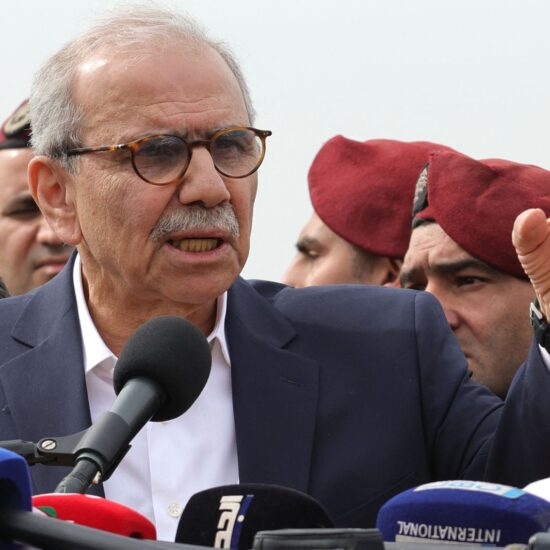
Just days later, on January 13, President Aoun tasked Nawaf Salam, an International Court of Justice judge, with forming a new government. Meanwhile, caretaker Prime Minister Najib Mikati made a historic visit to Damascus on January 11, the first official Lebanese visit in 15 years, signaling a potential shift in Lebanon-Syria relations.
The month also saw the appointment of Rodolphe Haikal as army commander, completing a significant reshuffle that would shape Lebanon’s political and security landscape in 2025.
After weeks of negotiations, Salam announced his cabinet on February 8, consisting of 24 ministers. He emphasized the government’s priorities: rebuilding state institutions, implementing reforms, rescuing the collapsing economy, and reaffirming Lebanon’s commitment to UN Security Council Resolution 1701 and the ceasefire agreement with Israel.
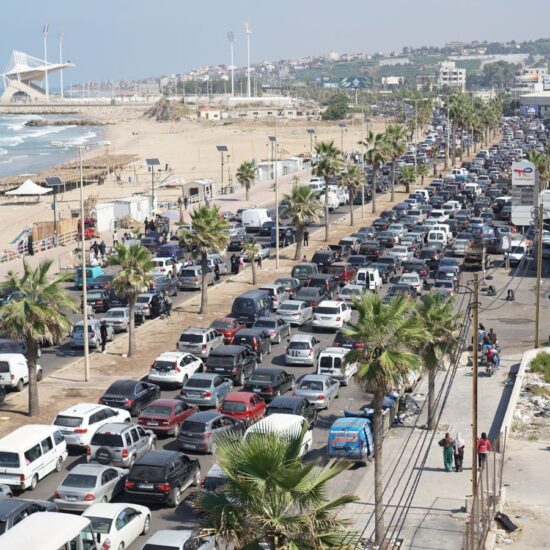
On February 14, marking the 20th anniversary of Rafik Hariri’s assassination, Saad Hariri returned to political life, pledging that the Future Movement would continue to represent citizens’ voices. The following day, protests erupted near Beirut’s airport after authorities blocked an Iranian plane from landing, with the army intervening to disperse demonstrators.
On February 23, thousands attended the funeral of former Hezbollah Secretary-General Hassan Nasrallah and his successor Hashem Safieddine, who had been killed in Israeli strikes in 2024, reflecting the deep emotional and political impact of the conflict.
Regional engagements and diplomacy
Lebanon also took steps to strengthen regional ties in 2025. In March, President Aoun made his first official foreign visit, traveling to Saudi Arabia on March 4 to meet Crown Prince Mohammed bin Salman. The talks focused on reviving political and economic cooperation, signaling Riyadh’s continued interest in Lebanon’s stability following the fall of the Assad regime in Syria.
In May, Lebanon also finally held long-awaited municipal elections after years of postponements caused by political disputes, repeated extensions of municipal councils, and the country’s ongoing crises. The vote was seen as an important step toward restoring a sense of democratic life and local governance, especially in a country where central institutions have struggled to function.
On May 23, Lebanon made a notable move on internal security when the Lebanese-Palestinian Joint Committee held its first meeting to establish a timeline for disarming Palestinian refugee camps. The initiative began in Burj Barajneh camp and is seen as a preliminary step toward addressing more complex issues, such as Hezbollah’s arsenal, which remains highly contentious both domestically and internationally.
Papal visit and symbolic moments
In late November and early December, Lebanon welcomed Pope Leo XIV, who visited the country from November 30 to December 2 in his first foreign tour since being elected pope. His visit included a silent prayer at the Beirut port explosion site and a large outdoor mass attended by over 100,000 people along the Beirut waterfront. The trip underscored Lebanon’s resilience and highlighted the pope’s message of peace and solidarity amid ongoing crises.
Banking law and financial controversies
Economic challenges remained central to Lebanon’s year. On December 26, the cabinet approved the Financial Recovery and Deposits Restoration Law, often referred to as the “financial gap law,” aimed at restructuring the banking sector and distributing financial losses following the 2019 collapse. The legislation, a key requirement for any IMF negotiations, sparked immediate protests near the Grand Serail and drew criticism from unions and depositors’ groups, highlighting deep divisions over how to address a crisis that continues to affect millions of Lebanese.
Security developments and talks with Israel
Security and regional tensions were another defining aspect of 2025. On December 3, Lebanon and Israel held their first direct civilian talks since 1983, part of the ceasefire monitoring committee that also includes France, the United States, and UNIFIL. President Aoun appointed Simon Karam to lead the Lebanese delegation, while Israel named Ori Raznik as its representative.
Later in December, Prime Minister Salam announced that the first phase of restricting weapons to south of the Litani River was near completion, with plans for northern expansion underway. International support for the Lebanese army grew, with France, the United States, and Saudi Arabia pledging to co-host a conference in February 2026 to strengthen the country’s security framework.
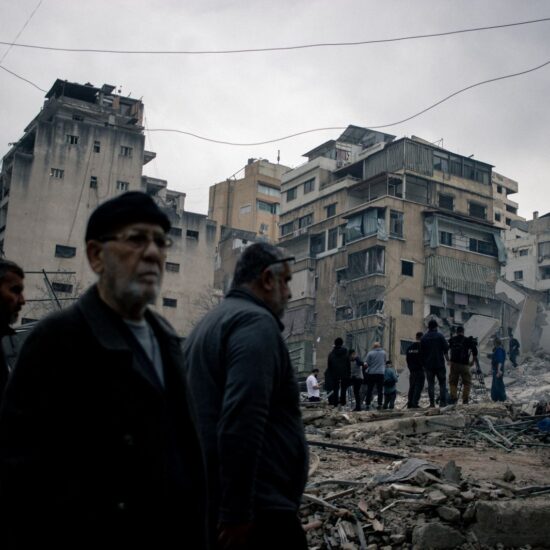
Lebanon’s 2025 was a year of limited but noticeable improvement. Some political stalemates began to ease, communication reopened between key parties, and there were early attempts to address the financial crisis and stabilize security. But the country was still heavily affected by years of economic collapse, slow post-war recovery, and regional instability.