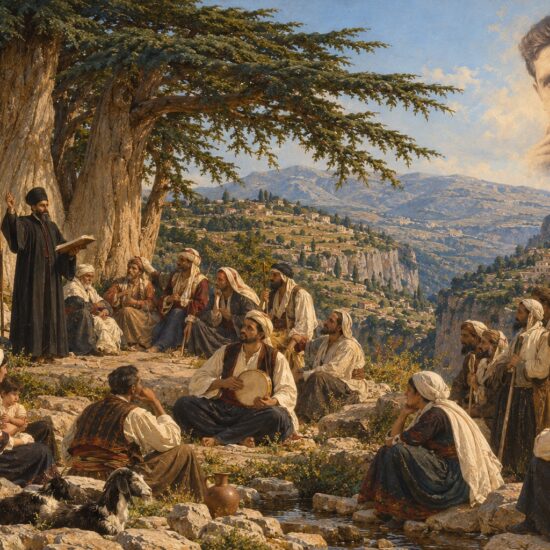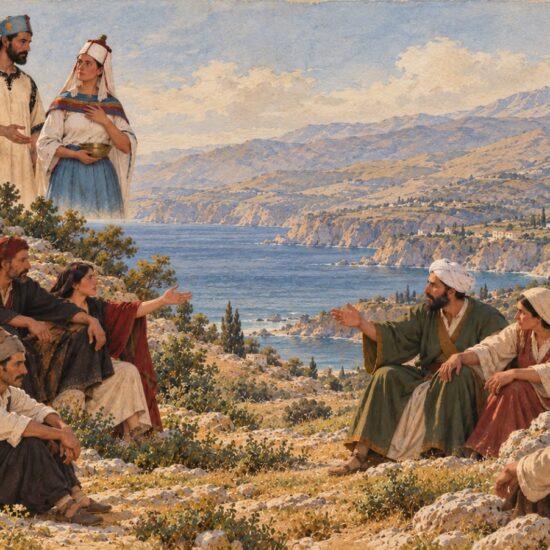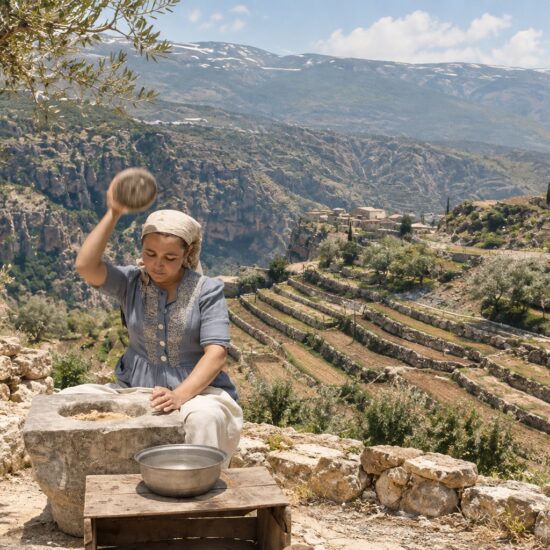
Every Lebanese school student learns some version of the national narrative. That narrative is fragmentary and often outdated in its methodology and content. It is simply incomplete. Silk is one of the clearest examples of this incompleteness, since it is almost entirely absent from the story. In the classroom, this history survives in one paragraph, sometimes none at all. Two questions follow: what is the history of this crop in Lebanon, and why is a history this consequential almost entirely missing from how Lebanon teaches itself?
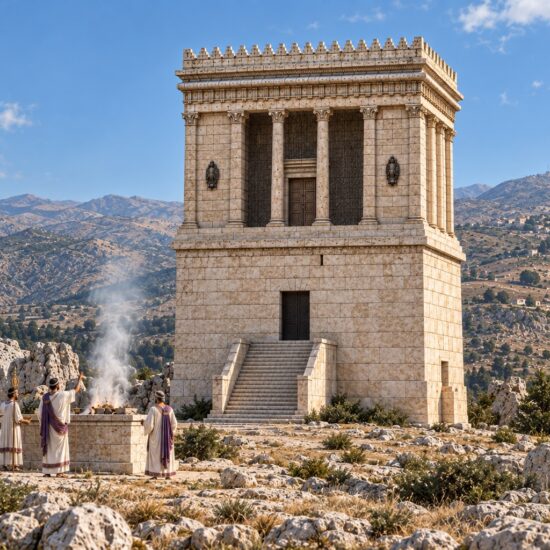
Silk production in Lebanon reaches back to Late Antiquity. Procopius, court historian to the Byzantine emperor Justinian, records in his Secret History (chapter 25-14):
“Garments made of silk had been wont from ancient times to be produced in the cities of Beirut and Tyre in Phoenicia. And the merchants and craftsmen and artisans of these stuffs had lived there from ancient times, and this merchandise was carried thence to the whole world.” (1)
The introduction of silkworms into the Levant still awaits further study. What we have, once again, comes from Procopius. In his History of the Wars (Book VIII.17), written around 552–554 AD, he explains how two Nestorian monks travelled to China and smuggled silkworm eggs back into the Empire inside hollow bamboo walking sticks, freeing Constantinople from its dependence on Persian middlemen for silk.(2)
From this period onward, the regions that would become Lebanon in 1920 produced silk of their own, and Tyre, Beirut, and Tripoli served as minor hubs on the Silk Road. By the sixteenth century, under Ottoman rule, fluctuations in supply from Persia to Europe let the Ottoman Levant build its own market with Europe.
This is the period when silk gradually became a significant element of the local economy. Ibn Sbat, Druze scribe to the Buhturid emirs from Aley (died in 1520), reports in his chronicles that in 1519, the prices of all commodities rose in the Ottoman empire, particularly silk (3). Under the reign of Emir Fakhr al-Din al-Ma’ni (1590–1632), “Baladi” (local) silk became the mountain’s most important cash-crop export, and Lebanon’s modern relationship with the European West was built on it. Fakhr al-Din invested heavily in the crop, ordering the planting of mulberry orchards and turning silk into the principal source of income for his army, above all the cost of his sekban soldiers, whom he exported the silk especially to Tuscany to help pay.
The “Silk Amensia” is one of the symptoms of how Lebanon teaches its own history: an almost abstract teleology of glorious events and victimization, arranged to justify the founding of the state in 1920.
Silk also underwrote the political arrangement on which the emir’s authority rested. The Druze-Maronite alliance that anchored Fakhr al-Din’s rule found in silk one of its practical pillars: the Maronites supplied the labor and the trading links to Catholic Europe that the silk economy needed, while the Druze emirate offered protection and a degree of freedom of movement and worship. It was, for the Maronites, the better half of the bargain available to them, since as a community they held no recognized legal status as a millet under Ottoman rule and depended on precisely this kind of local protection to operate at all. The arrangement proved durable enough to become one of the foundations on which the idea of Lebanon itself was later built.
This trade connected directly to the Florentine textile industry, a cornerstone of the city’s prosperity under Medici rule. Florentine merchants bought raw silk from the Levant to supply Florence’s booming high-end textile production. Under Grand Duke Ferdinand I (1587–1609), Tuscany took an increasingly active role in the Ottoman Levant for commercial, political, and religious reasons, securing raw silk among them. The grand duke maintained contact with the Maronites of Mount Lebanon, who stood on good terms with, and under the protection of, Emir Fakhr al-Din. His envoys were instructed to seek the emir’s support, and by 1609 he had reached a secret agreement with the emir for mutual assistance and trade.
The significance of silk in this period is documented in Priest Boulos Qara’ali’s 1938 study of the emir, which reproduced correspondence preserved in Florence (4). French traders, he shows, sought white and yellow silk from Beirut and Sidon, while Tuscan traders bought it regularly. At times, the emir dispatched his own agents to conduct this trade directly, among them the Maronite priest Ibrahim al-Haqilani, a graduate of the Maronite College of Rome, who was commissioned to sell the emir’s silk in Tuscany. Tuscany, in turn, sought grain from the emir’s territories. Wheat was scarce in Europe because of the wars underway there, and the Sublime Porte had prohibited its export from the East. The emir seized this opening, selling both wheat and silk to Tuscany. Silk also served a diplomatic purpose. The emir sent it as a gift, carried by Tuscan traders from Sidon to Florence, to Grand Duchess Christina of Lorraine, writing:
“I have delivered to your messenger two quintals of fine silk in eight bales, for him to present to Your Highness. I hope that you will accept it and enjoy it.” (5)
The silk sent as gifts came from the emir’s own estates, a detail that lent these exchanges a personal character beyond ordinary trade. The emir himself was investing directly in this booming sector, and Qara’ali’s correspondence offers evidence of as much:
“On the same date, he wrote to Cardinal Medici, thanking him for his generosity in sending him a box of books as a gift, and asking him to accept from him a bale of silk, which he had entrusted al-Haqilani to present to him, ‘for it is among the fruits of his gardens.” (6)
The fall of the emir left silk production intact, and it continued to grow through the eighteenth century. The renowned yellowish “Baladi” raw silk of Mount Lebanon, known on French and European markets as Levantine, was exported through Tripoli, Sidon, and Beirut. New centers of production emerged as well, notably in Deir al-Qamar and Bayt Chabab, two towns that came to experience, ahead of much of the rest of Mount Lebanon, the rise of a wealthy artisan class built on the silk trade.
With the creation of the Autonomous Mutasarrifiyya of Mount Lebanon in 1861, silk had already become a monoculture on the mountain, and France, above all the Lyonnais market, had emerged as its principal buyer. This integration into the French market set off a cascade of changes across Mount Lebanon’s economy, society, and landscape (7). Mulberry trees, needed to feed the silkworms, now covered close to eighty percent of its cultivable land. Modern spinning mills multiplied, from a single mill in 1840 to nearly two hundred by 1913, drawing producers further away from the household economy of silk that had preceded them. These new silk factories, like those of the Portalis or Veuve Guerin compagines, rose as imposing monuments across the landscape, the closest thing the region had to the industrial-era factories of Europe.
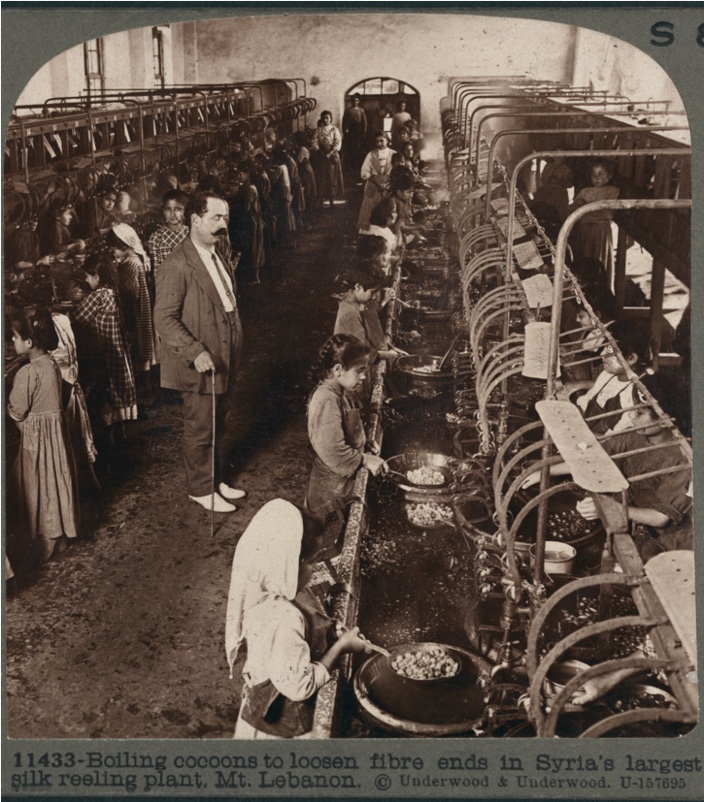
Boiling cocoons to loosen fibre ends in Syria’s largest silk reeling plant, Mt. Lebanon. Underwood & Underwood. U-157695.
This economic integration had a physical and cultural dimension as well. French investment improved the transport links that carried silk from Mount Lebanon to Marseille and Lyon: a new road between Beirut and Damascus was built in 1858, the port of Beirut was expanded, and a railway followed in 1895, to facilitate silk trade. This close economic relationship coincided with, and helped carry, an expansion of French Catholic missionary work, whose schools, administratively linked to Lyon, spread French gradually through the Lazarist and Jesuit institutions of the mountain.
Out of this system rose a new Christian merchant class in Mount Lebanon and Beirut, whose fortunes were tied directly to the silk economy, while the old muqata’ji families sank into debt, mortgaging and auctioning their land to meet obligations to these same merchants. However, The majority of peasants and landlords, meanwhile, fell into a new dependency on the merchants and brokers who now stood between them and the French market. Banks were established in Beirut to supply the capital the trade demanded, and the new bourgeoisie sent their children to the missionary schools, further expanding French influence and exposing this new generation to Western concepts such as nationalism.
Increased income from silk shifted consumption patterns across the mountain and in Beirut alike: European clothing and furniture, and foodstuffs once reserved for elites, coffee, sugar, and rice, spread more widely, alongside changes in domestic architecture such as tiled roofing. Beirut itself was transformed by this process, growing from a minor trading entrepôt into the economic center of Mount Lebanon and the wider Ottoman Levant, a rise recognized administratively when it became the seat of its own vilayet in 1888.
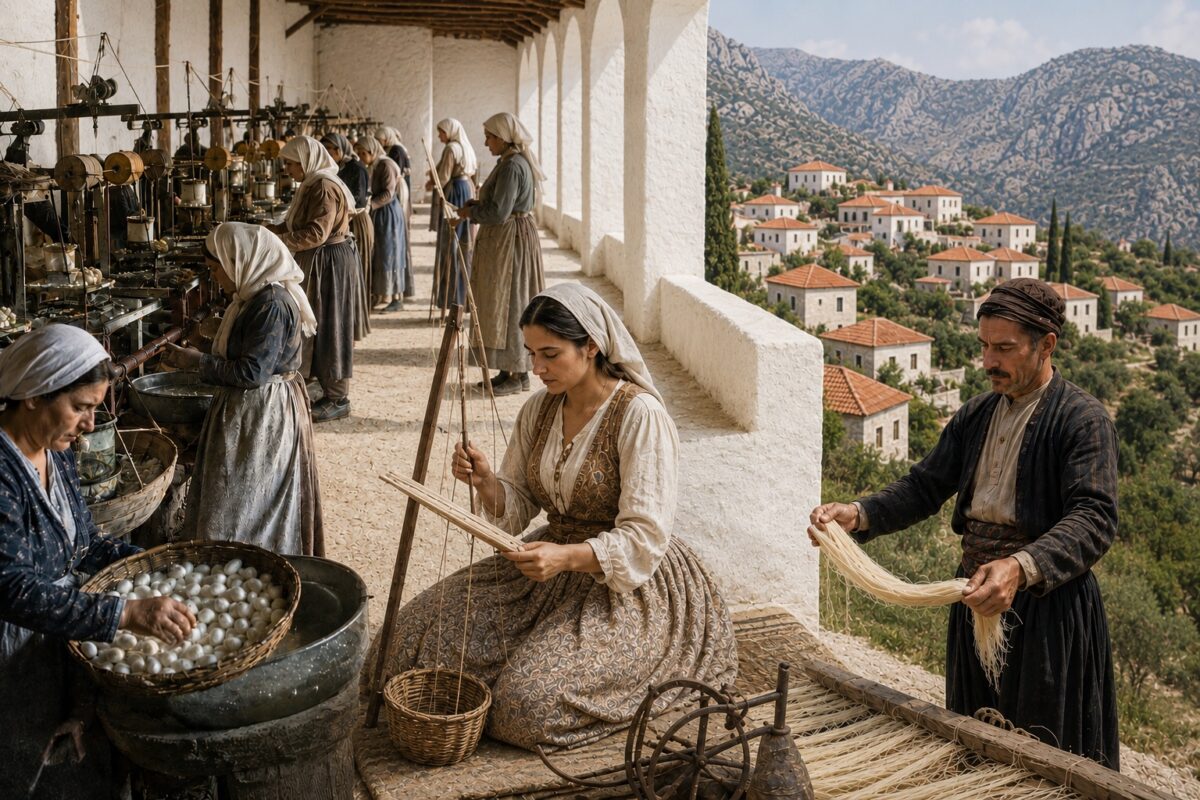
Silk production also reshaped the concepts governing gender (8). The silk-cocoon reeling factories represented the closest thing Mount Lebanon knew to the factories of industrializing Europe. By 1858, the majority of silk factory workers were women, and children, paid less than men, and a class of “female workers” emerged, drawn largely from poor families (9). This arrangement strained prevailing ideas about a woman’s proper place and about her presence outside the home among unrelated men. Women of wealthier families attended mission schools; women of poorer families became factory workers, and rumors carrying sexual insinuations circulated about their conduct, to the point that the factories acquired the name kerkhaneh, a Persian term used in Ottoman administration simply to mean “place of work,” which came instead to signify a brothel. Despite this stigma, silk production drew women into the labor market in numbers that opened the way for women to integrate the modern production market.
The fall in silk prices during the 1880s produced a massive wave of emigration from Mount Lebanon, involving roughly thirty-five percent of the total population, most of them young men and women in search of work or better prospects (10). By the 1900s, the mountain’s economy had come to depend as much on emigrant remittances as on silk exports themselves.
Given the long history and foundational role of silk in Lebanon, its near-absence from the textbooks demands an explanation. Part of the answer lies in what national curricula are built to teach: a fragmentary, often selective, sometimes fictional sequence of dramatic turning points, arranged to project the national project backward in time and furnish it with justification. Economic and social history makes different demands of a classroom, asking for an account of how ordinary people actually lived…
Returning emigrants, together with the new bourgeoisie and middle class the silk economy had produced, invested in new houses built in the red-tiled Beiruti style that would become iconic to the region. Beneath this apparent prosperity, the economy rested on a fragile balance. That fragility became starkly evident during the First World War, when the halt of the silk trade, combined with Mount Lebanon’s dependence on imported grain, Ottoman wartime policies, and allied blockade, produced severe food shortages and, ultimately, famine. The famine destroyed much of the silk labor force, and in a striking turn, with the creation of Greater Lebanon in 1920 and the advent of the French Mandate, the very industry that had driven French influence in Lebanon since the nineteenth century collapsed. Despite various attempts to revive it, the silk industry receded into folklore and is now limited to niche production of little economic weight.
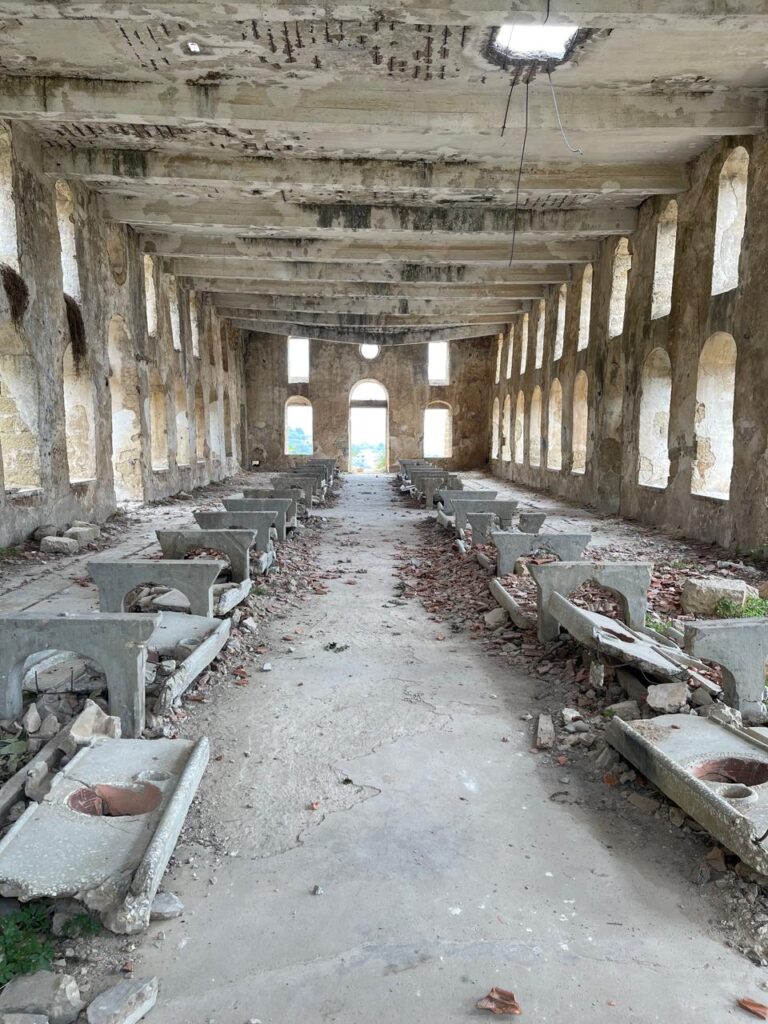
Ruined interior of the Kfarmatta Silk Factory, built in 1901.
Given the long history and foundational role of silk in Lebanon, its near-absence from the textbooks demands an explanation. Part of the answer lies in what national curricula are built to teach: a fragmentary, often selective, sometimes fictional sequence of dramatic turning points, arranged to project the national project backward in time and furnish it with justification. Economic and social history makes different demands of a classroom, asking for an account of how ordinary people actually lived: the day-to-day labor of silk producers, the cycles and diseases that governed the silkworm, the extraordinary skill required to work a silk loom. Taught this way, the story of French influence in Lebanon also loses some of its certainty, since silk restores to that influence a more mundane, commercial dimension than the language of protection and civilization usually allows. Gender history fares worse still: the integration of women into the labor market, arguably the first such integration anywhere in the Middle East, remains largely silenced in how the period is taught. And the link between the silk economy and the famine of the First World War complicates the standard narrative of victimhood, introducing local responsibility alongside Ottoman policy, the Allied blockade, and environmental strain as contributing causes.
The “Silk Amensia” is one of the symptoms of how Lebanon teaches its own history: an almost abstract teleology of glorious events and victimization, arranged to justify the founding of the state in 1920. This absence extends beyond the classroom. A handful of silk factories have been restored and repurposed as venues, while the majority stand in ruin, the country counts a single silk museum, and the National Museum devotes no space to this history at all. Given this, we need to ask ourselves why we continue teaching a national story with elements this significant missing from it. What would Lebanese students gain, in historical understanding and in appreciation of the human effort it took to make their country happen, from reading their past through more diverse lenses, ones where economic and social history stand alongside the political? They would gain the human factor that this account leaves out, and teaching the history of silk restores exactly that dimension. Imagine students learning the cycle that produces silk from the silkworm, handling a silk loom, and working through the complexity that came with sericulture. Giving local history this kind of complexity and curiosity is a duty, one that would leave students with a deeper understanding of, and a real appreciation for, the long human process that made their country.
Charles al-Hayek is a public historian and the founder of Heritage and Roots.
The views in this story reflect those of the author alone and do not necessarily reflect the beliefs of NOW.
Endnotes
(1) Procopius, Secret History, chapter 25.14.
https://penelope.uchicago.edu/Thayer/E/Roman/Texts/Procopius/Anecdota/25*.html
(2) Procopius, History of the Wars, Book VIII.17.
https://penelope.uchicago.edu/Thayer/E/Roman/Texts/Procopius/Wars/8C*.html
(3) Ḥamzah ibn Aḥmad ibn ʿUmar Ibn Sabāṭ al-Gharbī, Ṣidq al-Akhbār: Tārīkh Ibn Sabāṭ, ed. ʿUmar ʿAbd al-Salām Tadmurī (Tripoli, Lebanon: Jarrūs Press, 1993), p. 49.
(4) Būlus Qarʾalī, Fakhr al-Dīn al-Maʿnī al-Thānī, Amīr Lubnān, wa-Firdināndū al-Thānī, Amīr Tuskānā, 1621–1635 (Harissa, Lebanon: Maṭbaʿat al-Qiddīs Būlus, 1938).
(5) Ibid., p. 292.
(6) Ibid., p. 316.
(7) Kais Firro, “Silk and Agrarian Changes in Lebanon, 1860–1914,” International Journal of Middle East Studies 22, no. 2 (May 1990): 151–169.
(8) Akram Fouad Khater, Inventing Home: Emigration, Gender, and the Middle Class in Lebanon, 1870–1920 (Berkeley: University of California Press, 2001).
(9) Akram Fouad Khater, “‘House’ to ‘Goddess of the House’: Gender, Class, and Silk in 19th-Century Mount Lebanon,” International Journal of Middle East Studies 28, no. 3 (August 1996): 325–348.
(10) “Why Did They Leave? Reasons for Early Lebanese Migration,” Khayrallah Center for Lebanese Diaspora Studies, North Carolina State University.
https://lebanesestudies.ncsu.edu/news/2017/11/15/why-did-they-leave-reasons-for-early-lebanese-migration/