As Israeli strikes push deeper into civilian areas beyond Hezbollah’s traditional strongholds, a dangerous new reality is taking hold across Lebanon: the steady rise of sectarian fear and internal distrust.
From Ain Saadeh to Aisha Bakkar, and Jnah to Raouche, Bchamoun to Aley, the boundaries that once defined the war are rapidly dissolving. What many Lebanese communities saw as a war they were unwillingly dragged into is now unfolding in their own neighborhoods.
These developments are heightening fear and insecurity, as people grapple with the reality of indiscriminate Israeli attacks while increasingly questioning whether civilian spaces are being exploited in ways that put them at risk, an anxiety that is rapidly feeding sectarian tensions.
Ain Saadeh: When safety collapsed
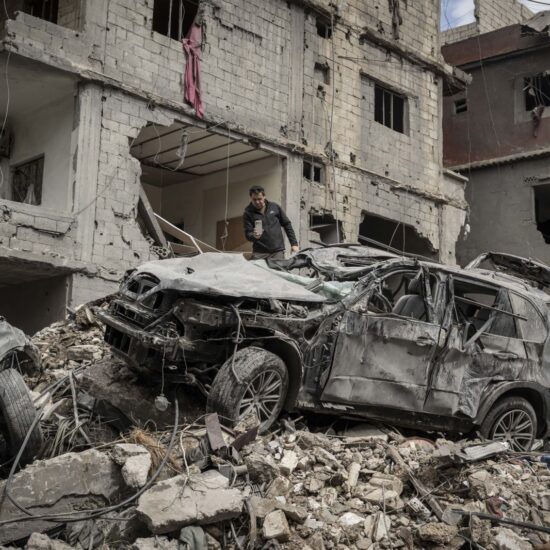
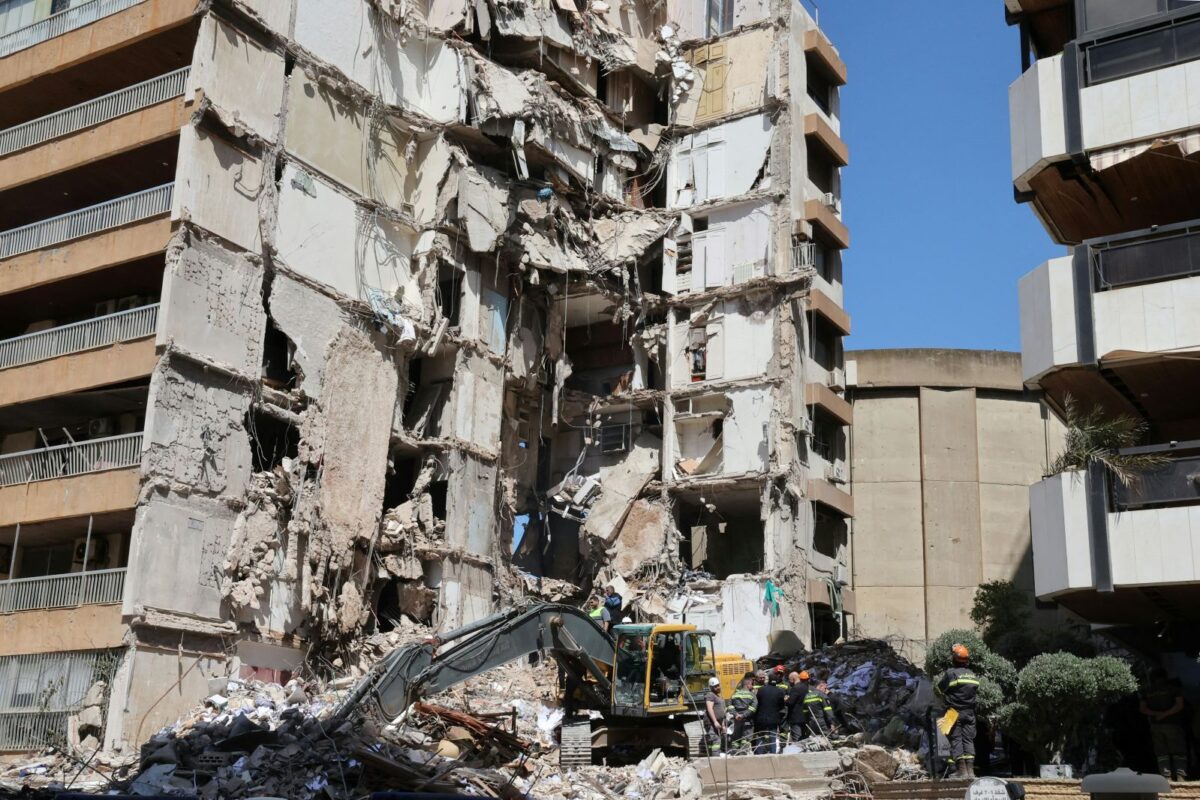
The 5th of April strike on a residential building in Ain Saadeh, a predominantly Christian suburb east of Beirut, marked a turning point. The attack killed three civilians, including Lebanese Forces official Pierre Moawad and his wife Flavia. Local officials said the targeted apartment was located on a different floor from where the victims were.
Israel stated it had struck a “terror target” and was reviewing reports of civilian casualties. But for residents, the official explanations did little to ease the shock.
Joyce, a teacher who lives in the area, described to NOW how the strike shattered all the sense of security the family had. “We always believed this area was far from danger. Suddenly, a building in front of us is hit. People we know are dead. It changes how you see everything.”
“Now, every unfamiliar tenant raises many questions. My children are terrified and they’re constantly asking if our building could be next. You don’t know how to reassure them anymore because you’re no longer sure yourself.” She added.
While there has been contradicting information about the confirmation that any Hezbollah-linked individuals were present in the building, the mere possibility has fueled suspicion and anxiety among residents.
A climate of fear
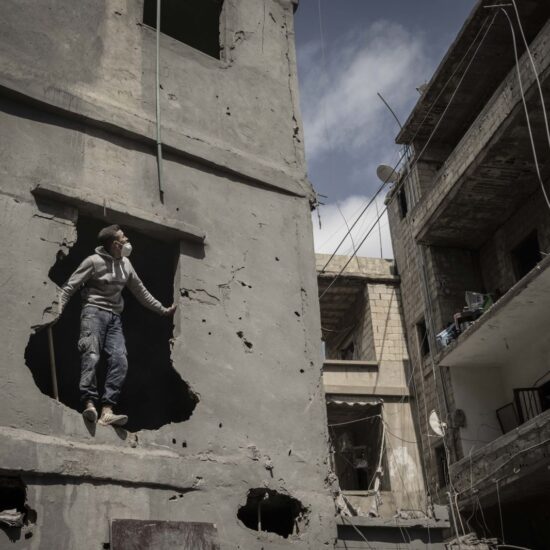
Weeks earlier, on 11 March , a similar pattern emerged in Aisha Bakkar, a predominantly Sunni neighborhood in Beirut, where an Israeli strike hit a residential block, killing civilians and damaging surrounding buildings.
A local business owner living next to the targeted building expressed deep frustration at both the attack and the lack of state control.
“What Israel is doing is criminal. But where is the state? How are they able to live among civilians without any oversight? We are the ones paying the price,” Mohamed Ayoub told NOW.
His remarks reflect a growing sentiment across multiple communities. While Israel’s actions are widely condemned, there is increasing criticism of the Lebanese state for failing to enforce basic security measures within civilian areas with those who believe that Hezbollah’s operational presence within civilian environments has effectively turned entire neighborhoods into potential targets.
This frustration has been echoed politically. MP Fouad Makhzoumi, through a statement in X called on Prime Minister Nawaf Salam to take immediate action, including convening the Higher Defense Council, strengthening security deployments, and enforcing stricter regulations on rental properties and occupancy.
Despite these calls, no concrete measures have been implemented, and proposals to monitor vacant apartments have been met with accusations of political targeting and overreach from media outlets affiliated with Hezbollah according to the statement by the MP.
Displacement, suspicion and rising tensions
The war has displaced more than a million people, or nearly 20 per cent of Lebanon’s population, most of them from southern Lebanon and Beirut’s southern suburbs and the Beqaa. Many have relocated to Mount Lebanon and other mixed areas, often renting apartments in communities that had previously been removed from direct conflict.
At least 1530 people have been killed in Lebanon since the start of the renewed war on 2nd March with an urgent call to protect civilians after Israel’s unprecedented escalation on the country, attacking 100 sites within 10 minutes with devastating consequences.
“The recent warning from the Israeli military spokesperson that Hezbollah has repositioned from the southern suburbs of Beirut to north Beirut and mixed areas of the city has raised fears of further attacks in civilian areas. Israeli forces are bound by their obligations under international law to distinguish between civilians and military objectives…” Amnesty International’s Regional Director for the Middle East and North Africa, Heba Morayef said.
While many residents initially responded with solidarity, fear is now beginning to complicate that response.
Nada, a Druze resident in the Chouf region described a growing sense of unease to NOW. “We opened our homes and schools because people needed shelter. But now there is fear. What if someone is being followed? What if our areas become targets next? Everyone is trying to stay calm and avoid tensions, but the anxiety is there.”
Such concerns highlight a dangerous shift where life is increasingly being overshadowed by security fears, raising the risk of deeper social fragmentation.
Turning to localized self-protection
Amid growing insecurity, some citizens are beginning to advocate for localized responses.
Following recent strikes, calls have circulated for municipalities to organize structured civilian defense measures, including mapping neighborhoods, installing surveillance systems, and verifying the identities of tenants.
Ralph Beydoun, founder of the research and strategic communications firm InflueAnswers, argued that the response to such attacks should shift away from reliance on the state and toward organized local resilience.
“Stop waiting for intelligence agencies to solve this. Stop waiting for the state,” he told NOW. “Municipalities need to organize civic defense structures, not political party militias, not random volunteers, but structured, municipality-led programs.”
He warned that civilians can no longer assume protection from central authorities. “The state will not protect you. Non-state actors will continue to use civilian areas, and people’s neighborhoods will increasingly become exposed,” he said, stressing that adapting to this reality is essential for survival.
At the same time, Beydoun emphasized that such measures should not be misinterpreted. “This is not a call for militia activity. It is a call for municipalities to lead community resilience,” he said, adding that “civic defense is not a substitute for reform, it is the baseline for basic community survival right now.”
A fragile balance
Lebanon’s leadership has repeatedly emphasized the importance of preserving civil peace. Yet on the ground, that balance is becoming increasingly difficult to maintain.
The expansion of Israeli strikes into civilian and mixed areas is not only widening the geographic scope of the war but also reshaping its internal dynamics. The attacks further reinforces the perception that one group’s involvement in the war is endangering others.
In a country with a long history of sectarian tension, such perceptions carry serious consequences.
For now, fear seems to be the common denominator across communities. Fear of the next strike, fear of hidden threats, and fear that a war many did not choose is steadily moving closer to their homes and regions.
And as that fear deepens, so too does the risk that the war will no longer remain external but begin to fracture Lebanon from within and this can be seen through Lebanese on social media platforms.