Ayatollah Ali Khamenei is dead.
For nearly four decades, he defined Iran’s expansionist doctrine building an axis of armed proxies stretching from Tehran to the Mediterranean. He ruled through repression at home and calibrated destabilization abroad.
He did not fade quietly.
He was removed.
And within hours, the structure he built began to shake.
Hezbollah did not hesitate. It launched missiles and drones toward Israel in what it framed as a war of support for a collapsing clerical regime in Tehran.
It did so in open defiance of the Lebanese state, a state that had just reaffirmed that the authority over war and peace lies exclusively in sovereign hands.
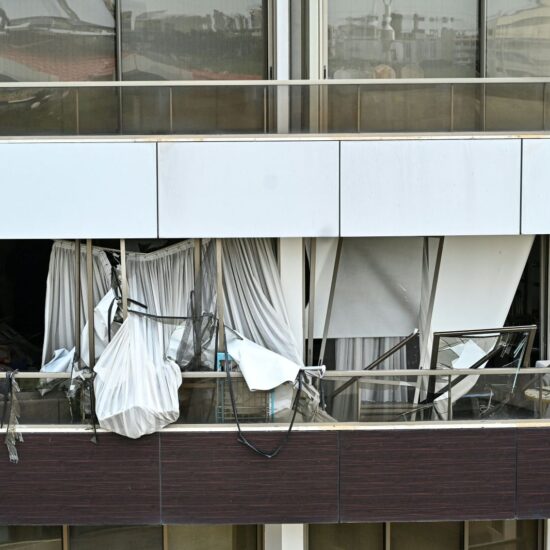
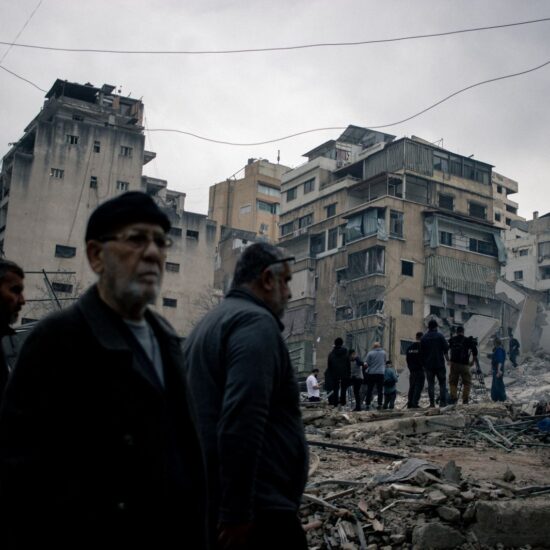
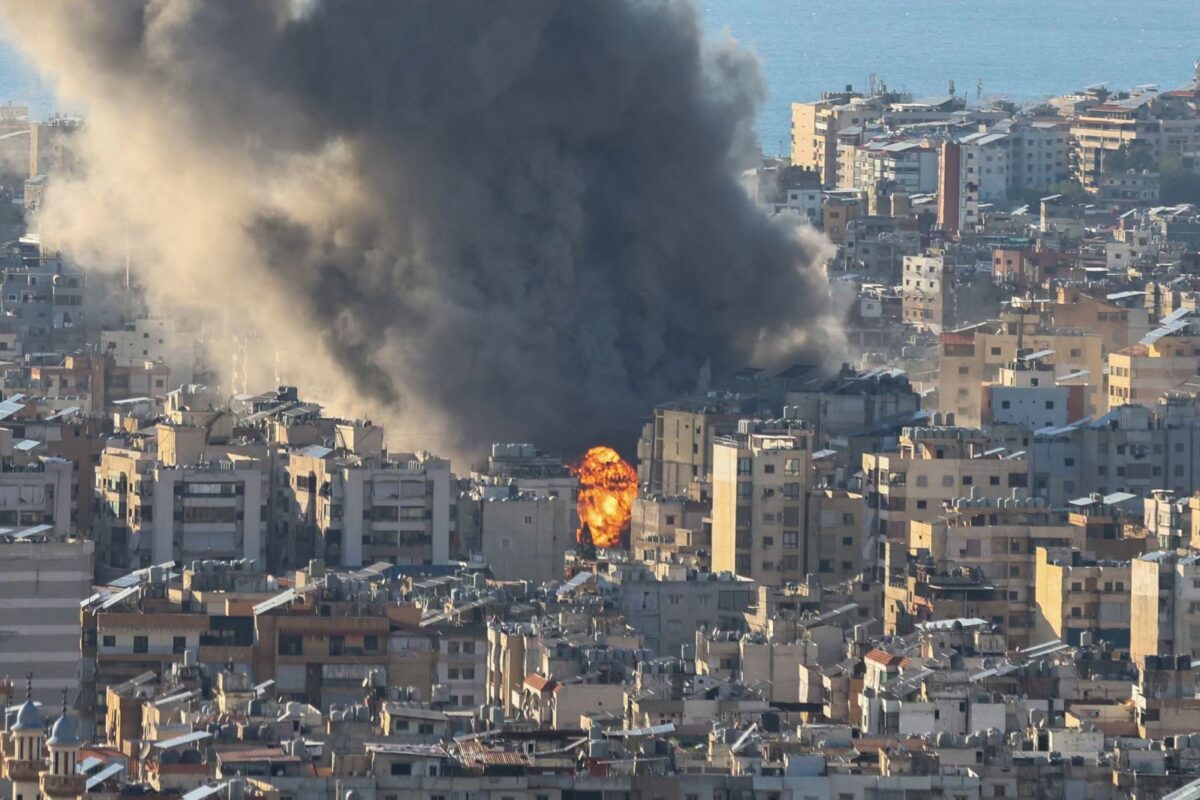
The response from the Israel Defense Forces was swift and expansive. Evacuation orders were issued across more than 50 villages and districts, including Dahiyeh in Beirut’s southern suburbs. Israeli alerts tore through the night. Phones lit up. Families were forced out of their homes before dawn.
Within two hours, more than 100,000 civilians were fleeing.
Dozens are dead. Many more are injured.
This is not another controlled exchange. This is the collapse of illusion.
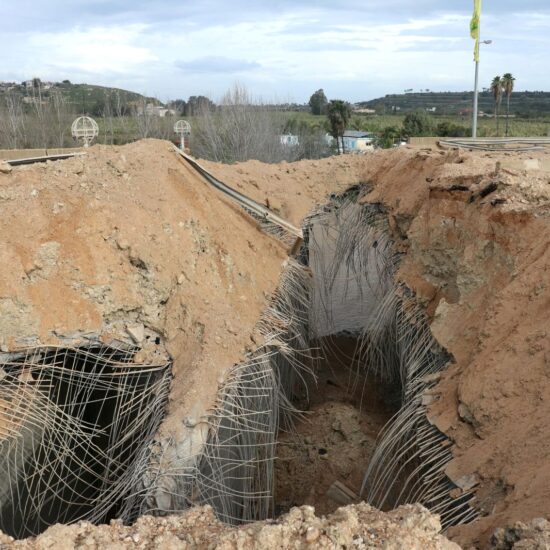
At the end of December 2025, Lebanese authorities declared that disarmament south of the Litani River had been completed.
Today, that claim stands shattered.
Hezbollah retained its arsenal. It preserved its independent chain of command. It demonstrated, unmistakably, that it alone can decide when Lebanon goes to war.
By opening a war of support for a failing regime in Tehran, Hezbollah may in fact be firing a mercy bullet at itself.
This round is not like the previous ones.
The strategic tolerance that once existed has evaporated. Israel and Washington are signaling something fundamentally different: the survival of a parallel armed structure inside Lebanon is no longer acceptable. Just as the regime in Tehran is being dismantled, Hezbollah’s permanence is now being openly challenged.
If the Lebanese presidency and cabinet cannot take decisive action- ban Hezbollah as an armed entity operating outside state authority, remove its representatives from government, and restore a monopoly over force – then resignation becomes the only honest option.
A state cannot exist in permanent contradiction with itself.
In Washington, the language hardened dramatically.
Lindsey Graham declared that Hezbollah has chosen a losing battle and will finally be held accountable for the American servicemembers it has killed. He called for what he termed Operation Semper Fi , invoking Semper Fidelis, “Always Faithful,” the 1883 motto of the United States Marine Corps, a pledge of loyalty and unfinished justice.
“With American blood on their hands,” he urged the President to unleash the full force of the United States military and to give Israel full backing for a decisive defeat of Hezbollah.
In American political terms, this is not mere rhetoric.
It signals possible Congressional action to suspend or condition U.S. assistance if Lebanon continues accepting American aid while refusing to confront Hezbollah’s parallel military structure. It implies that operational restraints on Israel could be lifted, granting it broader freedom of action against those deemed complicit, without distinction, should the Lebanese state fail to act and end this abnormal armed phenomenon embedded within its institutions.
He also issued a direct warning to the Lebanese Armed Forces, accusing them of duplicity receiving U.S. support while avoiding decisive confrontation with Hezbollah.
The message is stark: Ambiguity will be treated as complicity. Neutrality will not protect anyone.
By aligning itself openly with a destabilized regime in Tehran, Hezbollah is not defending Lebanon, it is isolating it.
In a region increasingly resistant to Iranian destabilization, this move risks pushing Lebanon into the opposite Arab camp at precisely the moment it needs regional support.
By supporting the Iranian regime, which is attacking neighboring peaceful Arab states and innocent civilians, Lebanon is being isolated from its national identity and its natural Arab axis. This choice has effectively placed the Lebanese state in confrontation with the Arab world.
Financial assistance, military aid frameworks, and international conferences designed to strengthen the Lebanese Armed Forces will inevitably be reconsidered.
Strategic alignment has consequences. When a militia decides war on behalf of a nation, the nation absorbs the retaliation.
More than one hundred thousand Lebanese civilians learned that before sunrise.
This is a decisive moment.
Lebanon now faces a clear choice: Reclaim sovereignty fully, without exception or accept that the state exists only in name while others decide its fate.
The fall of Ayatollah Ali Khamenei marks the beginning of a regional reckoning. The structures built under his doctrine are being tested simultaneously. What survives will be what can withstand direct confrontation. What cannot will be dismantled.
Hezbollah has chosen escalation.
Israel and Washington are signaling finality.
This is not another round.
This is a structural breaking point.
Red lines have dissolved. Illusions have collapsed. The era of parallel sovereignty is ending.
And Lebanon must now decide whether it will stand as a state or remain hostage to one.
Elissa E Hachem is a journalist and political writer specializing in regional affairs and governance. Former Regional Media Advisor at the U.S. State Department’s Arabic Regional Media Hub, with broad experience in strategic communication across government and private sectors.
The views in this story reflect those of the author alone and do not necessarily reflect the beliefs of NOW.