As Lebanon approaches the close of 2025, uncertainty still clouds both the financial crisis and the conflict with Israel. What will 2026 bring? Will the measures currently on the table offer genuine solutions, or will they steer the country back down the same familiar path of impunity, mismanagement, and war?
Lebanon is expected to feature prominently in talks between US President Donald Trump and Israeli Prime Minister Benjamin Netanyahu when the two meet on Monday, as Washington presses Israel on the future of the ceasefire with Hezbollah alongside discussions on Gaza and Iran.
Netanyahu is due to arrive in the United States on December 28 for his fifth visit this year and meet Trump the following day, reportedly at Trump’s Mar-a-Lago residence in Florida. Israeli media say the agenda will span several regional flashpoints, including the fragile truce along the Lebanese border, Iran’s regional role, and the next phase of the Gaza ceasefire—issues on which the Trump administration and Netanyahu’s government are said to hold differing views.
Speaking earlier this month, Netanyahu confirmed he had been invited by Trump and said the discussions would cover Lebanon, Iran and the second stage of the Gaza deal. Washington has played a central role in brokering ceasefires on all three fronts, but Israeli officials have signaled that military options remain under consideration, particularly to prevent Hezbollah and Iran from rebuilding their capabilities following months of fighting.
While Gaza remains a major focus of US diplomacy, Lebanese stability has emerged as a key concern amid fears that the ceasefire could unravel. The Trump administration is simultaneously pushing for broader regional arrangements, including transitional governance in Gaza and an international security force.
Meanwhile, in Lebanon, on Sunday, the Lebanese Army inspected four homes damaged by the war in the southern city of Bint Jbeil, following a request from the Mechanism Committee.
The Army also notified the owner of a house in Ainata ahead of an inspection. In Beit Yahoun, in the Bint Jbeil district, the Mechanism Committee requested an inspection after securing the homeowner’s consent.
Ali Bazzi, who recently returned from Venezuela, said the Army examined his house at the town’s entrance after contacting him on Friday night to request permission, which he granted by providing the key.
In addition, the Lebanese Army carried out inspections of four houses in Beit Lif.
In Lebanon
More Israeli Violations: A UN peacekeeper was injured on Friday after machine-gun fire from Israeli positions south of the Blue Line landed near a UNIFIL patrol in southern Lebanon, following a nearby grenade explosion.
The incident occurred as the patrol was inspecting a roadblock in the village of Bastarra. On the same day, another UNIFIL patrol reported gunfire from south of the Blue Line near Kfar Shouba, close to its position.
UN officials said the Israeli army had been notified in advance of the patrols’ movements, in line with standard procedures. The UN reiterated that any actions endangering peacekeepers or hindering UNIFIL’s mandate under Resolution 1701 are unacceptable.
Deadly Crossing: Late Saturday, several Syrians went missing attempting to cross the Nahr al-Kabir river from Syria into Lebanon. Of 11 people, only four survived, according to survivors.
Syrian Civil Defense teams searched the river’s strong, high waters and mined banks but found no trace of the missing. The Lebanese Army denied online claims of forced returns, saying it follows procedures to ensure safe repatriation and later helped 24 people who had entered Lebanon illegally.
On Somaliland: Lebanon’s Ministry of Foreign Affairs and Emigrants on Sunday reaffirmed its support for Somalia’s sovereignty and territorial integrity. In a statement, the ministry condemned the recognition agreement between Israel and the self-declared Republic of Somaliland, emphasizing respect for international law and the UN Charter. It warned against efforts to create parallel entities that undermine the unity of recognized states and reaffirmed Lebanon’s support for Somalia’s legitimate institutions and stability.
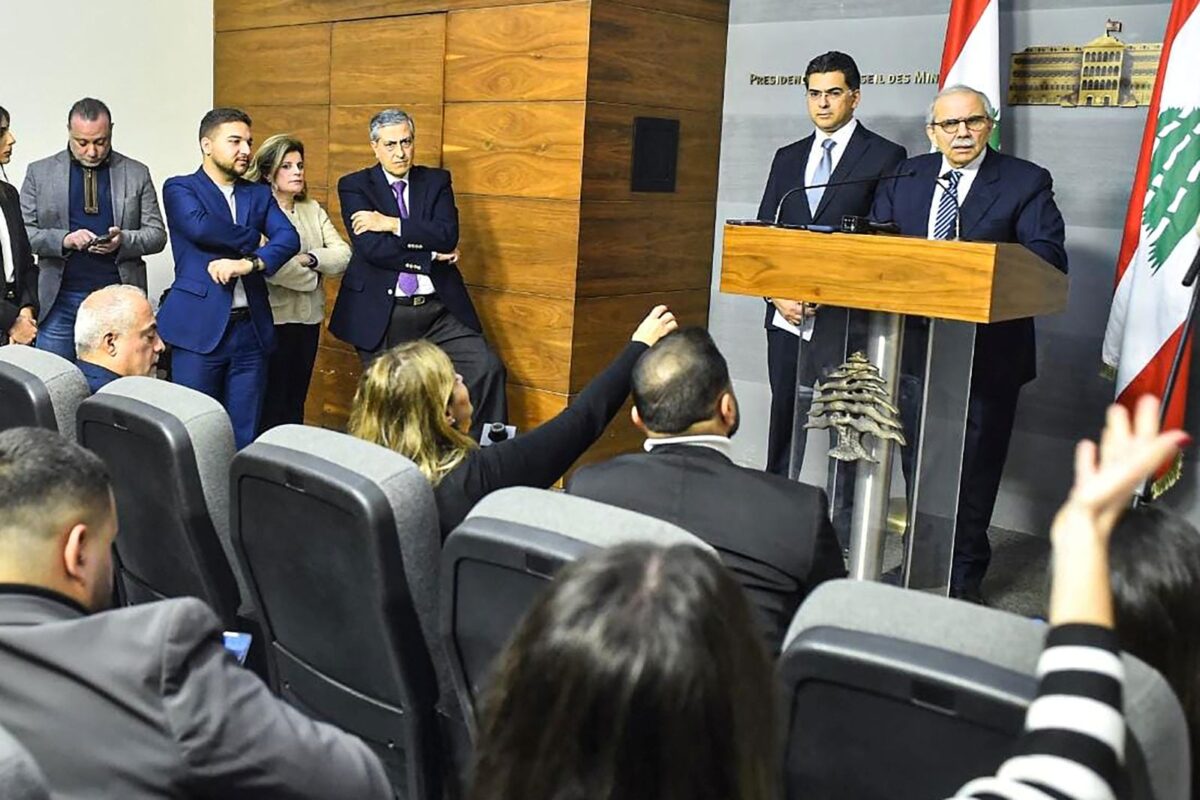
Controversial Law: Lebanon’s Cabinet on Friday approved a controversial law to recover frozen bank deposits, a key step in economic reforms long sought by the IMF. The bill passed 13-9 after extended debates over the “financial gap” law, stalled since the 2019 banking crisis. Ministers of culture and foreign affairs were absent. Opposition came from members of the Lebanese Forces, Hezbollah, Amal, and three other ministers.
In The Region
Severe floods: A severe storm in Gaza caused fatalities and widespread flooding, leaving displacement camps in dangerous conditions and creating urgent shelter needs. The humanitarian crisis comes as the next phase of the Gaza ceasefire remains uncertain, with ongoing tensions between Israel and Hamas and diplomatic efforts continuing, including discussions involving the U.S. and Israel.
More Fatalities: Three people were killed and over 40 wounded on Sunday after protests in Syria’s Alawite stronghold of Latakia turned violent, the province’s media office said. Thousands had gathered in Azhari Square to demand a decentralized political system and the release of Alawite prisoners when gunfire erupted from an unknown location, prompting security forces to fire into the air and chaos to ensue. It remains unclear whether all casualties occurred in Latakia city or in other towns where protests were also reported.
Tunisia and Saudi Arabia: Tunisia and Saudi Arabia signed five agreements on Sunday covering customs, mining, postal services, media, and news exchange during their 12th Joint Committee session in Riyadh. Tunisian Economy Minister Samir Abdelhafidh said the deals strengthen the legal framework of bilateral relations.
What We Are Reading
Mohammad Chatah and the Lebanon That Refused to Die: Now’s managing editor Makram Rabah says Mohammad Chatah’s assassination was an attack on the idea of a Lebanon governed by reason, institutions, and sovereignty. Chatah’s legacy endures as a benchmark against the country’s current collapse, exposing the failures of those who replaced governance with intimidation and law with factional interests.
When Truth Becomes a Crime—and Death an Ideology: Now’s managing editor Makram Rabah says the attack on Nadim Koteich is political, targeting his criticism of Assad, Iranian influence, and armed groups outside state control. Koteich’s real “offense” was defending Lebanon’s sovereignty and rejecting an ideology that glorifies death and martyrdom over human life.
Formalizing a Crisis: What Lebanon’s Gap Law Means for Depositors: NOW covered Lebanon’s draft “gap law,” which formalizes banking losses rather than restoring depositors’ funds. Under the law, deposits under $100,000 would be repaid gradually, while larger sums are converted into long-term bonds. Experts warn it offers no guarantees, lacks accountability, and mostly codifies losses already borne by ordinary citizens, leaving households facing prolonged financial uncertainty.
Lebanon’s pollution crisis deepens: Third highest globally, worst in the region: NOW journalist Rodayna Raydan reports that Lebanon is the third most polluted country globally and the worst in West Asia, with severe air, water, and waste crises. Experts attribute the decline to traffic, diesel generators, aging vehicles, and systemic mismanagement, which have left both urban areas and farmland exposed to pollution, threatening health, livelihoods, and food security.