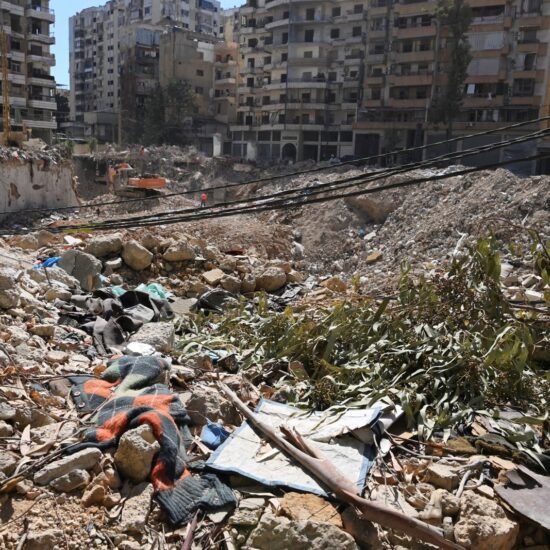
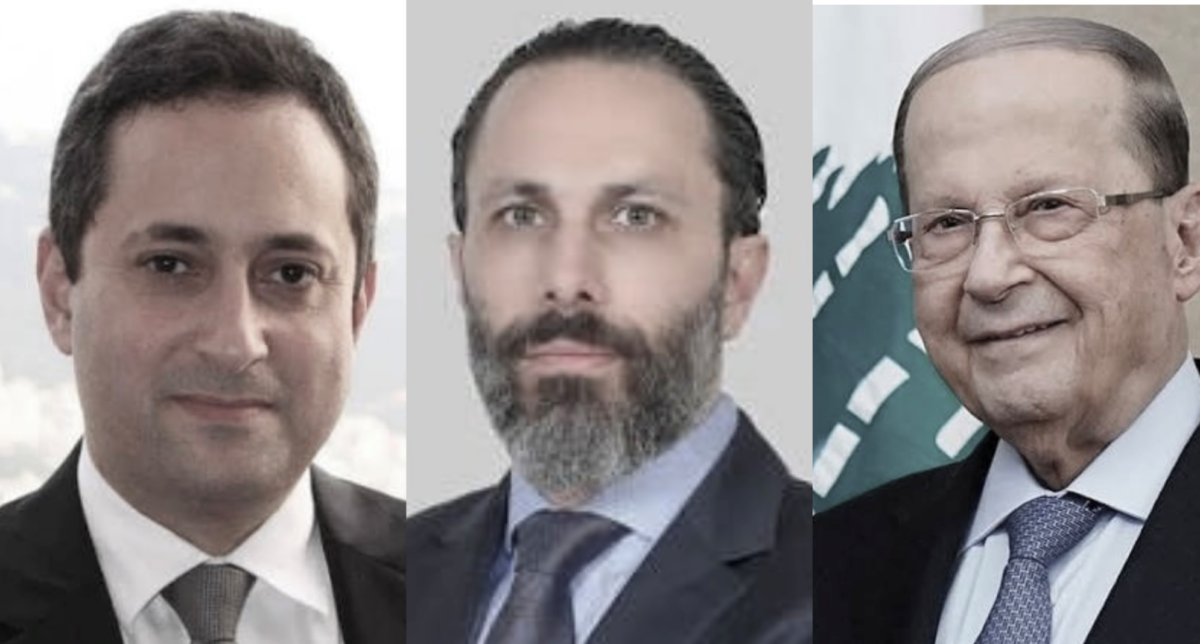
Should justice ever cost this much? Six years after the Beirut Explosion that reduced the port to a crater, killing more than two hundred people, a prosecutor has done what no one in this country had dared to do: he has asked a former president to answer for it. On Tuesday, the public prosecutor at the Court of Cassation requested that Michel Aoun be charged with criminal negligence over the explosion of 4 August 2020. This is the first time the case has reached the presidency.
We should resist calling this a victory. There is a comforting way to read this news, a prosecutor recommending charges and a file finally moving toward a courtroom may look like a state at last doing its work. Before deciding whether justice has begun to move, we ought to examine the events that moved it: a war, a two-year presidential vacancy, a retirement, and a regional order rearranged. The reality is simpler: look at what it took for him to be named. This is accountability surfaced only because power weakened, while Lebanon needs accountability that power cannot escape. The fact is nothing here was delivered by a functioning institution.
I have written before about what these institutions were designed to protect, and I will not rehearse that argument here. The question now is narrower and more uncomfortable. Can a country count on a reckoning that depends on breakage? This is accountability by accident not by rule.
Recall how the case was buried:
The first judge assigned, Fadi Sawan, was stripped of the file in February 2021, weeks after he dared to charge a caretaker prime minister and former ministers. The politicians he summoned simply petitioned to have him removed, and the court obliged.
His successor, Tarek Bitar, inherited the same wall. When he pressed, then-ministers Ali Hassan Khalil and Ghazi Zeaitir, allies of parliament speaker Nabih Berri, invoked their immunity, they refused to appear, and then filed more than ten motions to disqualify Bitar and disqualify the judges assigned to rule on those motions.
When he reached the country’s chief prosecutor, Ghassan Oueidat, the answer was reprisal. Oueidat freed the detained suspects and forbade cooperation with Bitar. Then he opened a case against the judge.
By the end of 2021 the investigation was dead. A brief attempt to revive it in 2023 was smothered within days.
Understand what that means: The parties whose officials Bitar summoned failed to deliver justice so they buried it, and then stood guard over the grave. When Bitar tried to resume in 2023, the machine stopped him a second time. It was not negligence or dysfunction, this was protection, deliberate and successful for six years.
Understand what that means: The parties whose officials Bitar summoned failed to deliver justice so they buried it, and then stood guard over the grave. When Bitar tried to resume in 2023, the machine stopped him a second time. It was not negligence or dysfunction, this was protection, deliberate and successful for six years.
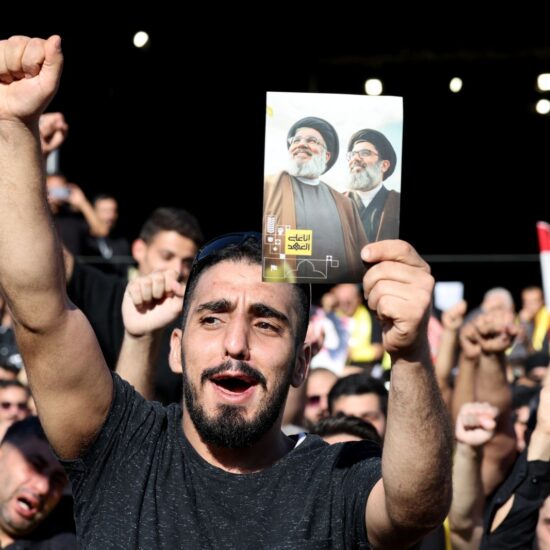
When lawsuits and immunity were not enough, the pressure left the courtroom to the streets. In October 2021, Hezbollah and Amal summoned their supporters to demand Bitar’s removal, this mobilization collapsed into the deadliest hours of gunfire Beirut had seen in years, leaving seven dead along an old civil-war fault line. Whatever the disputes over who fired that day, the meaning of the spectacle was plain and an investigating judge could be answered with the threat of a city set alight. This was a clear message to whoever might succeed him.
And the sickness is not confined to our own courts: the world once built Lebanon its own tribunal. A UN-backed court spent fifteen years and close to a billion dollars to try the murder of Prime Minister Rafic Hariri, convicted three of the men responsible, and sentenced them to life. Not a single day of those sentences has ever been served. All three remain at large, shielded by Hezbollah, whose leader would not recognize the court. The verdict hardened into a piece of paper. A lesson this country keeps refusing to absorb: a charge is not an arrest, a verdict is not a cell, and a name on a prosecutor’s page means nothing until power itself is made to answer for it.
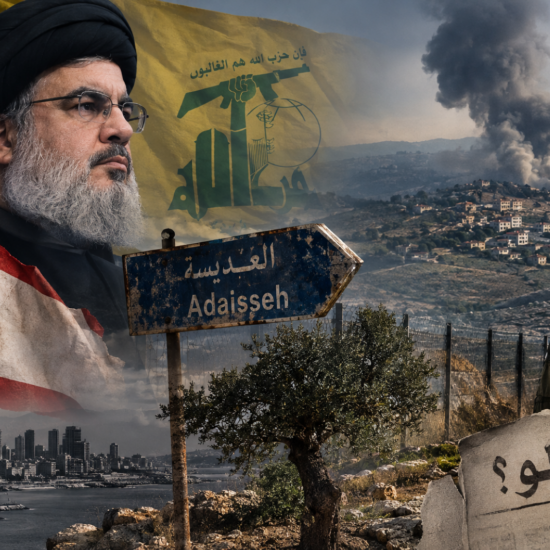
So what changed? Not the law. Not the institutions that made the burial possible. Ghassan Oueidat, the prosecutor who had shielded the file, reached retirement in 2024. His successor lifted the ban on cooperating with Bitar and let the case against the judge lapse. The two-year vacuum at the top of the state ended in January 2025 with the election of President Joseph Aoun and the appointment of Prime Minister Nawaf Salam. And, after guarding the grave so fiercely, Hezbollah emerged from a devastating war weakened, its Damascus patron fallen.
The file moved when Bitar resumed on 16 January 2025. He questioned the officials who had spent years refusing him. He then flew to Bulgaria to confront the owner of the ship that had carried the ammonium nitrate. On 30 March 2026, Bitar concluded his investigation, naming some seventy people, and sent the file to the Court of Cassation. That is the road that produced this week’s request.
The sequence shows a painful truth: Every lock that opened was a person removed, never a rule repaired. Each door opened because a man retired, lost a war, or lost a patron. Justice did not arrive. The obstacles temporarily stepped aside. None of this should be mistaken for a defense. Michel Aoun is no scapegoat. As president, he chaired the Higher Defense Council, the body responsible to act in this kind of threat. He has admitted he was told of the ammonium nitrate rotting at the port, and its danger, at least two weeks before it detonated. By his own telling he passed word to others and considered his duty discharged. Pressed, later on why he did not force the matter, he answered to none of them in particular; he insisted he bore no responsibility, that the port was not his to command. A head of state who learns that his capital sits over a bomb, gestures at the paperwork, and calls that enough, has defined his own negligence more precisely than any prosecutor could.
The Advocate General at the Court of Cassation, Judge Mohammad Saab, submitted a non-binding assessment recommending the charge. The request arrived with a bitter flourish: on the envelope, Judge Saab had written “Justice for All.” His office holds no power to indict a former president directly. The decision rests with Judge Tarek Bitar, and the justice minister, Adel Nassar, expects it in October.
Some warn that fixating on the president is a trap, that a single great name will be paraded as the whole account and everyone beneath him quietly absolved. The warning is fair, but the conclusion is backwards. The answer is not to spare him; it is to refuse to stop at him. Charge the president, yes, and with him every official who imported this death, stored it, signed for it, and buried the file that might have named them sooner. The danger was never that Lebanon would charge a president, but that it will charge one man, call it the truth, and send everyone home.
A word now to the families:
For six years you were told to be patient. Your wait was built by people with names and offices, who calculated the file could be stalled. This case has moved not by their concession, but because of you: you kept the photographs in the street, the anniversaries on the calendar, the count of the dead and their names in the country’s mouth.
For six years you were told to be patient. Your wait was built by people with names and offices, who calculated the file could be stalled. This case has moved not by their concession, but because of you: you kept the photographs in the street, the anniversaries on the calendar, the count of the dead and their names in the country’s mouth.
You have earned the right to be told the truth plainly: in the days after the blast, when your neighborhoods lay open to the sky and your wounded were still being pulled from the glass, no Lebanese leader came to walk among you. It was a foreign president who first stepped into those streets and stood with the survivors, while the men who governed this country kept their distance from the people their negligence killed. Remember that, the next time any of them asks for your gratitude because now a prosecutor has done what they would not.
And be warned, gently, by those who love this cause: a request is not a verdict, and one name is not an accounting. Do not let anyone hand you Michel Aoun and call the debt paid. You are owed all of them, and you are owed a justice that does not depend on which way the wind of power happens to blow. That is the thing worth fighting for now. No family after you should have to manufacture justice out of nothing but refusal to forget.
And be warned, gently, by those who love this cause: a request is not a verdict, and one name is not an accounting. Do not let anyone hand you Michel Aoun and call the debt paid. You are owed all of them, and you are owed a justice that does not depend on which way the wind of power happens to blow. That is the thing worth fighting for now. No family after you should have to manufacture justice out of nothing but refusal to forget.
This moment is not proof that Lebanon can deliver justice, it is proof that Lebanon can be forced to. Should justice ever cost this much? A war, a vacancy, a retirement, a regional order overturned, for the price of a single name? It is far too high. Our lesson of these six years is that accountability must not hang on accidents and the most durable cure is to prevent gathering power into a single fist that can open or close over a case at will. We should agree, as Lebanese, to spread that power across our people, our communities and our regions, so that no one party or man can ever again hold the whole machinery of the state in his hand. We should build, for Lebanon, a system in which no faction can hold its citizens hostage, monopolize institutions, or sentence its youth to exile. Call it what it is: a federal pact, chosen together, not imposed. It is an arrangement in which a file like the Beirut Explosion could never have been buried in the first place.
Let accountability be neither a miracle nor an accident. Let it be owed and paid.
Cathryn Papadopoulo is the Secretary of Foreign Affairs and The Diaspora, in Lebanon’s National Liberal Party, called Ahrar.
The views in this story reflect those of the author alone and do not necessarily reflect the beliefs of NOW.