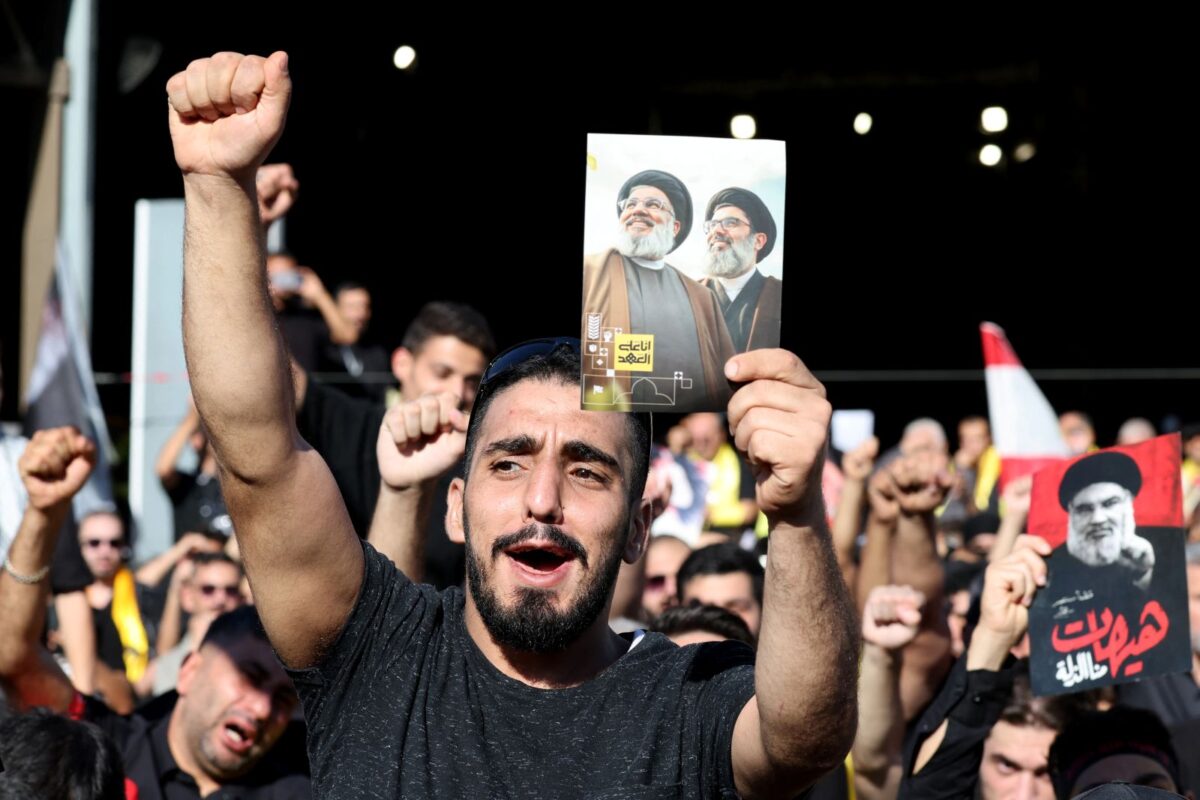
Photo by ANWAR AMRO / AFP. A supporter of Lebanese Shia movement Hezbollah shouts slogans as he holds up a portrait of slain leaders Hassan Nasrallah (L) and Hashem Safieddine during a ceremony held to mark the second anniversary of Nasrallah's killing in a strike by Israel, in Beirut's southern suburbs on September 27, 2026.
Three years ago, Hezbollah made the choice to attack Israel in “support” of Hamas, which had the day before launched an attack against Israel. The result was an Israeli campaign of destruction and occupation: almost 10% of Lebanon is now occupied, thousands of Lebanese citizens killed, and hundreds of thousands displaced across Lebanon. This has exacerbated the socioeconomic crisis which has engulfed Lebanon since 2019, and has led to a political standoff between the Lebanese government on one hand and Hezbollah on the other. To this day, no resolution to any of these catastrophes has happened, causing even greater strain.
Hezbollah and its supporters mounted a smear campaign against any public figure who questioned their involvement in the war. Over the past three years, Hezbollah has attempted to impose a culture of silence and intimidation against opponents of the war
Hezbollah and its supporters mounted a smear campaign against any public figure who questioned their involvement in the war. Over the past three years, Hezbollah has attempted to impose a culture of silence and intimidation against opponents of the war. As scenes of the carnage in Gaza spread across TV and phone screens, this campaign grew to carry a great deal of emotional weight. Any criticism of the war was deemed as an endorsement of Israel’s carnage in Gaza, and subsequently its occupation and destruction of South Lebanon. The public debate was, therefore, successfully poisoned any reckoning with the war.
This time, Hezbollah was not alone: a large number of writers, artists, and activists began their own campaign of virtue signaling in places and areas where Hezbollah was not quite normalized. Left-leaning activists began to deploy rhetoric associated with protest and liberation movements from around the world. In turn, these same people began pressuring fellow activists to make certain statements, avoid criticism of Hezbollah because “it’s sensitive”, and to “boycott” certain writers and public figures because they were critical of the war. However, this was before the ceasefire of November 2024 and Hezbollah’s entry into this war to “support” Iran.
For instance, when AUB philosophy professor Bashshar Haydar tried to host an American psychologist for a discussion about the rule of war, some AUB students and faculty members incited against him, forcing AUB to cancel the talk and accusing the professor of treason in front of his office. Politicians who criticized the war were photoshopped into Israeli army combat fatigues, practically placing a target on their backs. Anti-establishment political groups on the left were torn apart over the war, with many of them practically becoming shills for Hezbollah. Many politically active people despaired of finding community in times of war. Things became worse after Hezbollah attacked Israel last March, as the Iran war grew to become another lightning rod in Lebanon. As the government gradually began direct negotiations with Israel, the polarization would grow even further.
What have we learned? Nothing. Cultural censorship remains quite widespread in Lebanon, and it is mostly enforced by people, not the government itself.
What have we learned? Nothing. Cultural censorship remains quite widespread in Lebanon, and it is mostly enforced by people, not the government itself. The same people who have spent years advocating for free speech and liberal values found themselves justifying political violence and intimidation. Pointing out that contradiction to them no longer merits discussion on their part: your disagreement with them is grounds for ostracization, or worse. Naturally, this has led to an attitude which is increasingly cavalier with human life and dignity.
When human life stops becoming a factor in political calculations, then everything else becomes the center of a value debate. If a political party did not think twice before setting its country on fire, then free speech and expression is the least of its worries. Constitutional protections gradually erode, aided by a preexisting culture of complacency that facilitates the weakening of citizens’ freedoms. The dismissal of free expression is the first step in avoiding the accountability process that has to happen.
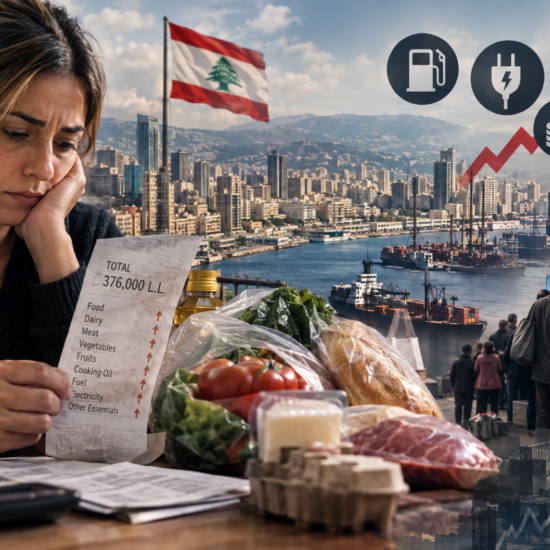
It’s hard to imagine what lies ahead. Lebanon’s prospects look bleaker than ever, and the war does not appear to be ending soon. Meanwhile, because some educated public figures stifled discussion of Hezbollah and the war from day one, there is no sense of urgency amongst them to find a way out of this hole. With winter coming amidst a global energy crisis and an economic disaster in Lebanon, the way ahead is no clearer than it was before October 8. And even if somehow the country doesn’t implode, the same people will remain unaccountable for their contribution to this horror.
Mohammad el-Sahily is a student and activist. He tweets @moesahily.
The views in this story reflect those of the author alone and do not necessarily reflect the beliefs of NOW.