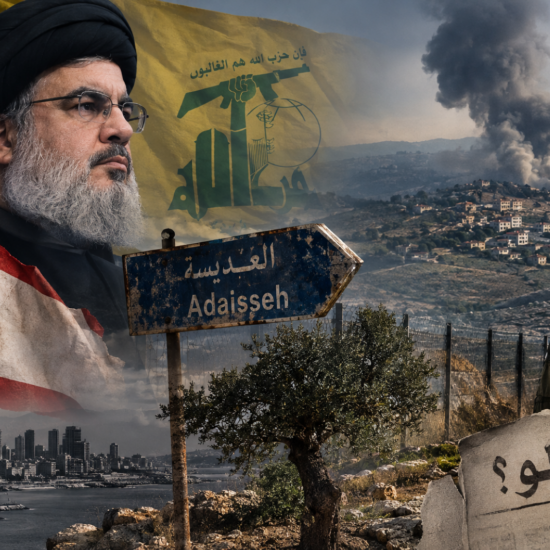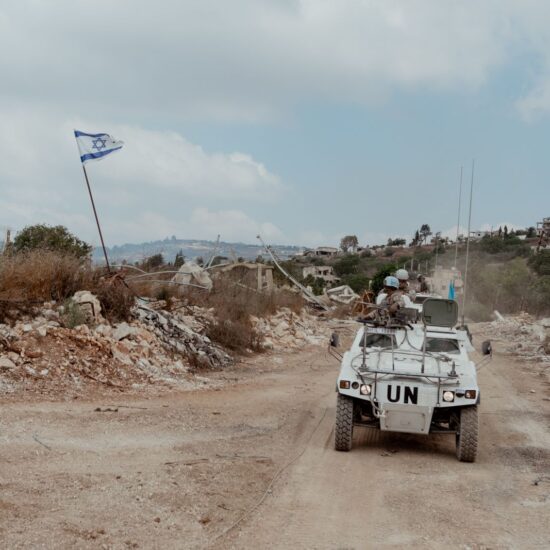
Lebanon today stands at the edge of a crisis that is neither accidental nor surprising. What is unfolding in the south, with the start of the Israeli land invasion, is not merely another round of escalation between Israel and Hezbollah. It is the predictable outcome of a long-standing failure by the Lebanese state to assert its sovereignty and implement its own commitments—most notably United Nations Security Council Resolution 1701.
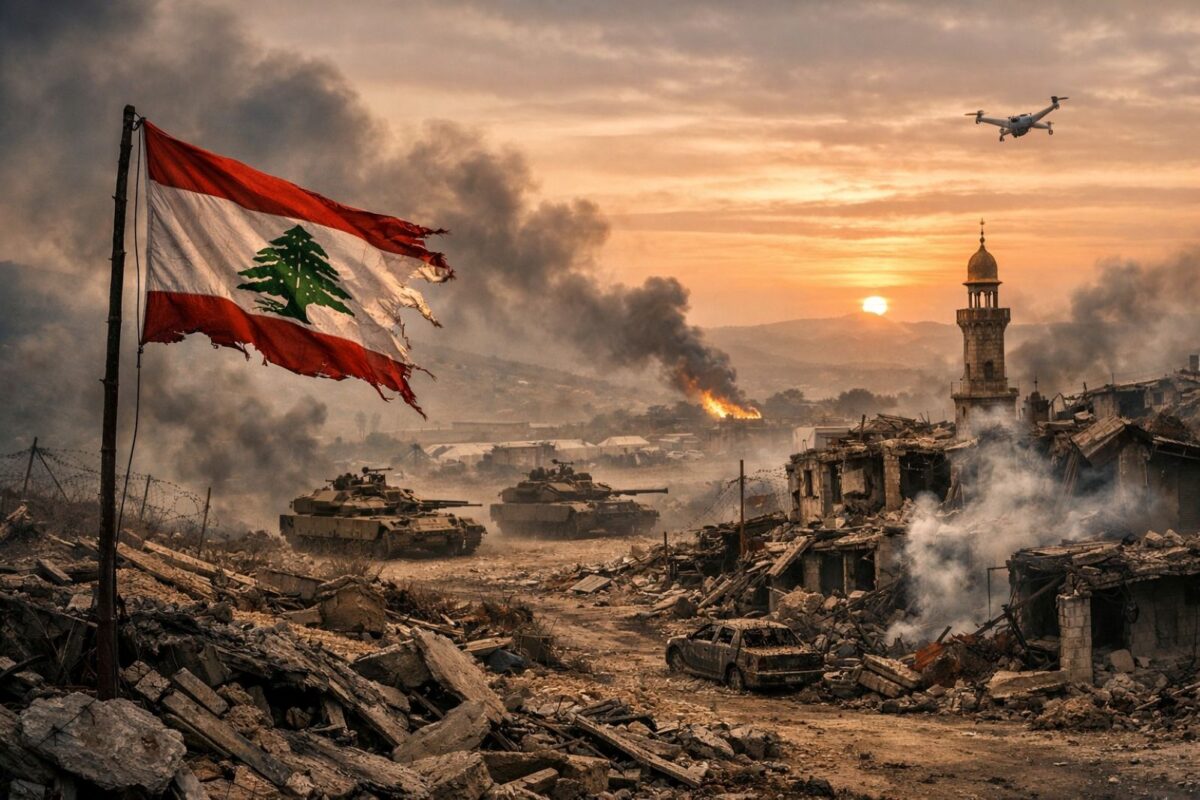
For months, Israel has signaled its intentions clearly. The logic is simple, if brutal: if the Lebanese state will not disarm Hezbollah, Israel will attempt to do so by force. What we are witnessing now is the materialization of that threat—not as a limited military operation, but as a potentially enduring transformation of southern Lebanon into a “no man’s land,” depopulated and systematically destroyed.
This is not speculation. Entire areas in the south are already emptying. Civilian and military infrastructure alike are being reduced to rubble. And the most alarming reality is this: many of the displaced may never return. The longer the question of Hezbollah’s weapons remains unresolved, the more permanent this displacement becomes.
The tragedy, however, is not only external. It is internal—and self-inflicted.
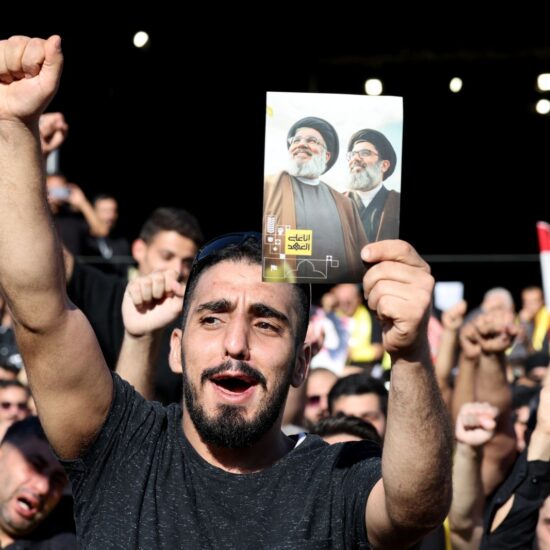
The Lebanese political class has, for years, chosen denial over responsibility. It has hidden behind the convenient fiction that Hezbollah is simply a “Lebanese faction,” rather than confronting the far more uncomfortable truth: Hezbollah operates as an extension of the Iranian Revolutionary Guard. This is not a rhetorical exaggeration; it is a strategic reality that has defined Lebanon’s regional entanglements for decades.
Nowhere has this denial been more damaging than in the role played by key political figures who have attempted to “rationalize” Hezbollah’s place within the state. The illusion that one can mediate, regulate, or domesticate an armed non-state actor tied to a regional power has proven catastrophic. Instead of containing the problem, the state has normalized it—until it became unmanageable.
The result is a country that is no longer in control of its own borders, its own war, or even its own narrative.
Hezbollah continues to claim that it acts on behalf of Lebanon, defending its people and its sovereignty. Yet the current reality exposes this claim for what it is: a justification for a broader regional agenda. Lebanon has been drawn into a war not of its choosing, at a time when the region itself is already on fire. This is not resistance; it is strategic overreach with devastating domestic consequences.
And those consequences are now visible in the humanitarian catastrophe unfolding before us.
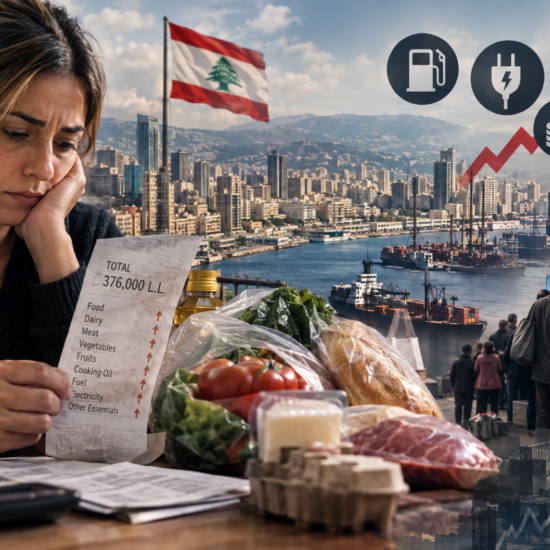
Over 800,000 people have been displaced—more than one in seven Lebanese. Entire communities have been uprooted. While the Lebanese public has, as it often does, responded with remarkable solidarity—opening homes and offering support—this is not a sustainable solution. Charity cannot substitute for policy, and resilience cannot replace governance.
The government’s response, while present, remains fundamentally reactive. It treats the symptoms of the crisis without addressing its cause. As long as weapons remain outside the control of the state, displacement will not only continue—it will become permanent.
The question, then, is not whether Lebanon can return to stability, but under what conditions.
Peace will not come through wishful thinking or rhetorical defiance. It will not come through the illusion that Lebanon can indefinitely host armed actors serving external interests without consequence. Peace requires a state that is willing to take responsibility for its territory, its borders, and its decisions.
Peace will not come through wishful thinking or rhetorical defiance. It will not come through the illusion that Lebanon can indefinitely host armed actors serving external interests without consequence. Peace requires a state that is willing to take responsibility for its territory, its borders, and its decisions.
This is not unprecedented. Lebanon has faced similar crossroads before—from the Cairo Agreement in 1969 to the post-2006 settlement that effectively legitimized Hezbollah’s arms under the guise of “resistance.” Each time, the state chose accommodation over sovereignty. Each time, the consequences were deferred—but never avoided.
Today, there is no more room for deferral.
The choice facing Lebanon is stark but unavoidable: either the state reasserts its authority and monopolizes the use of force, or it continues down a path where others—whether regional powers or foreign armies—will impose their own solutions.
No one will disarm Hezbollah on Lebanon’s behalf in a way that preserves the country’s sovereignty. And no one will rebuild Lebanon if its territory remains a platform for external conflicts.
No one will disarm Hezbollah on Lebanon’s behalf in a way that preserves the country’s sovereignty. And no one will rebuild Lebanon if its territory remains a platform for external conflicts.
In the end, the responsibility—and the cost—are Lebanese.
No one will clean Lebanon’s house except the Lebanese. And no one will bring peace to Lebanon except the Lebanese themselves.