In the midst of the ongoing war between the Islamic Republic of Iran and the U.S.-Israeli military coalition, no institution has come under greater scrutiny than the Islamic Revolutionary Guard Corps (IRGC). Long before the current conflict, the IRGC had ceased to function as a conventional military force alone. It evolved into a deeply interwoven security, intelligence, financial, industrial, and regional network. Today, it is not only one of the principal actors in the war, but also one of the main reasons the Iranian state has become more vulnerable to both external and internal pressure.
Western government documents, sanctions records, investigative reporting, and repeated U.S. Treasury statements over the years have produced a relatively coherent picture of the IRGC: an institution with sweeping influence over the economy, built on rent-seeking, front companies, opaque financial channels, sanctions evasion, and the financing of regional militant and missile programs. In this structure, military power and internal repression have long been intertwined with corruption and crony capitalism.
The Ideological Brain of the System
From a legal and security standpoint, the IRGC has come under mounting international pressure in recent years. In 2019, the United States designated the IRGC in its entirety, including the Quds Force, as a Foreign Terrorist Organization. On 19 February 2026, the European Union formally added the IRGC to its own terrorist list after months of political debate and in the wake of the bloody suppression of recent protests in Iran.
Beyond its domestic role, the IRGC has operated across Iraq, Syria, Lebanon, Yemen, and parts of Africa and Latin America. Public sanctions records and official statements describe the use of banks, exchange houses, front companies, covert shipping arrangements, and opaque trade networks to move money, evade sanctions, and sustain allied militias abroad.
Understanding the IRGC’s role in the current war is impossible without understanding its place inside the Iranian power structure. Iran has a regular army and police forces, but analysts have long argued that the IRGC is the more powerful institution in practice, and that its influence over strategic decision-making has only deepened during wartime. The Council on Foreign Relations describes the Guards as the most powerful controller of major sectors of Iran’s economy, underscoring how military, political, and economic power have become fused in a single structure.
Several military analysts inside Iran have suggested that, despite the killing of a number of senior commanders, the IRGC has become even more dominant in wartime decision-making and now appears to hold the upper hand in shaping Iran’s missile and drone strategy. Put differently, if the regular armed forces remain the state’s classical defensive pillar, the IRGC is the regime’s ideological brain, external arm, financial pillar, and engine of domestic coercion.
A War That Split the Apex of Power
The war of recent weeks has also jolted the leadership structure of the Islamic Republic. Ali Khamenei was killed in the opening phase of the conflict, according to Iranian state media and major international outlets, and his son Mojtaba Khamenei was elevated as the new supreme leader shortly afterward. Since then, however, Mojtaba’s prolonged absence from public view has prompted intense speculation about his physical condition. Reuters reported on 13 March that U.S. officials believe he is alive but wounded, and possibly badly disfigured, after the early strikes.
The available reporting therefore points, at the time of writing, more toward a scenario of a new leader who is alive but injured and largely absent from public view, rather than dead. Iranian and international reporting has also suggested that Mojtaba Khamenei’s elevation was made possible largely through pressure and backing from the IRGC itself, an indication of the Guards’ increased political weight in the post-Ali Khamenei order.
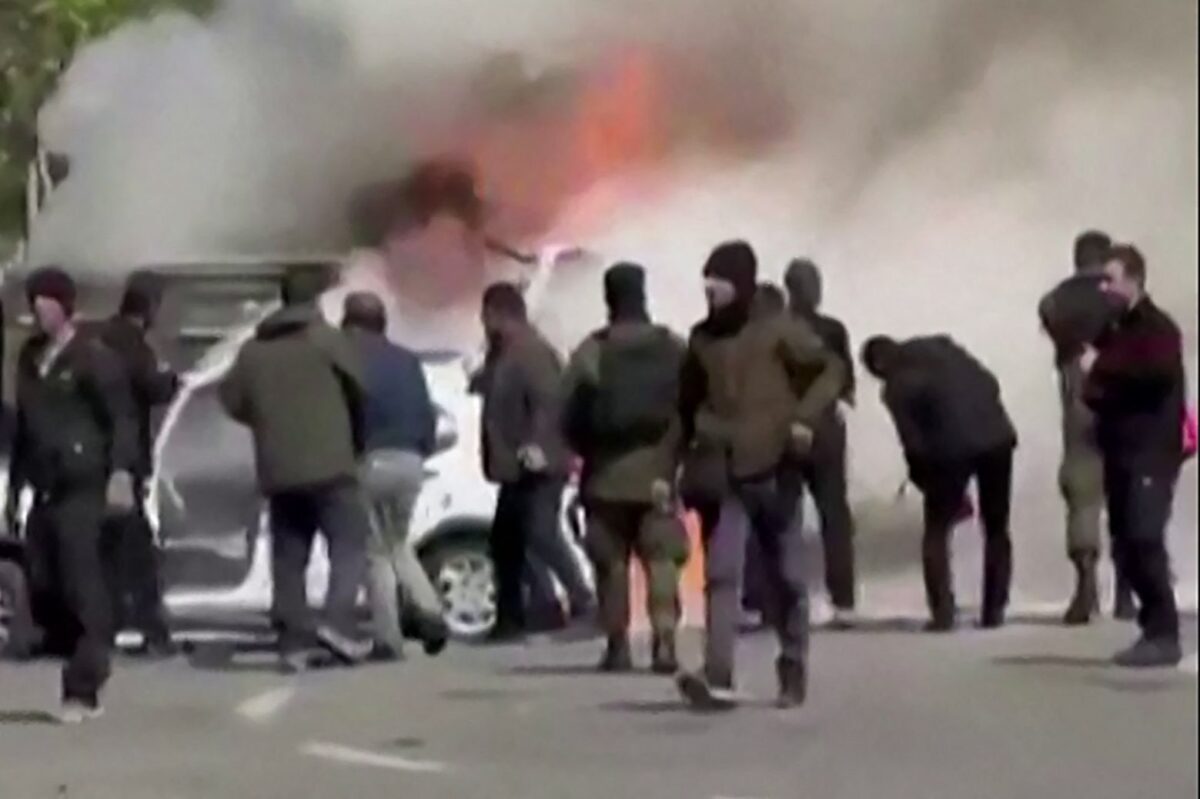
At the same time, the military confrontation has continued to escalate. Iran has launched missiles and drones toward Israel and threatened regional economic and banking interests tied to the United States and Israel. Yet the balance of damage has, so far, appeared to weigh more heavily against Iran, with Israeli and American forces striking more sensitive infrastructure and a broader range of command targets inside the country.
An Empire of Corruption: A Governing Logic
To understand how corruption affects the war, one must begin with a basic fact: the IRGC is not merely a recipient of state funds. It is itself a vast economic actor.
In this context, Khatam al-Anbiya, the IRGC Cooperative Foundation, military-linked banks, and networks tied to ports, construction, and transport are routinely cited as examples of the Guards’ penetration into key sectors. CFR’s 2026 backgrounder describes the IRGC as the most powerful controller of Iran’s major economic sectors, ranging from banking and shipping to manufacturing and consumer imports.
This economic reach is not simply about revenue generation. It has created a system in which contracts, foreign trade, banking, shipping, construction, and even imports are, in many cases, tied to entities close to the IRGC. In such a model of rule, corruption is not a marginal deviation; it becomes part of the governing logic itself: exclusive privileges, intermediaries, weak oversight, and the use of security power to eliminate competitors.
That logic was visible again in 2025, when U.S. Treasury and State Department actions repeatedly described Iran’s “shadow banking” system, large-scale money laundering, and front-company networks in jurisdictions such as the UAE and Hong Kong as channels used to move funds for Iran’s military and the Quds Force. Those designations linked sanctions evasion directly to the financing of missile programs, oil sales, and regional militant activity.
The Quds Force, the IRGC’s external branch, occupies a particularly important place in this architecture. Official U.S. sanctions documents and related reporting indicate that it has relied for years on financial networks in Iraq, illicit trade, oil smuggling, and banking intermediaries to fund its operations and allied groups. In October 2025, Washington sanctioned a network that included Iraqi-linked actors accused of using financial positions and commercial entities to generate revenue and launder money for the Quds Force and aligned militias.
These records make one point clear: the Quds Force is not merely a military arm. It is also the center of a covert financial architecture.
How Corruption Has Shaped Wartime Performance
This is the central issue: how has corruption affected the IRGC’s wartime effectiveness? Here, a distinction must be made between visible power and real efficiency. Because the IRGC controls a large share of the country’s resources, it has been able to build a vast missile and drone arsenal, cultivate regional proxies, and sustain an extensive intelligence apparatus. But the very mechanism that built this power has simultaneously eroded its quality.
Ahmad, a retired noncommissioned military officer living in southern Iran, described this as an analytical inference drawn from the pattern of available evidence. When resource allocation is driven by “loyalty and rent-seeking” rather than accountability and effectiveness, he said, the result is usually “structural inflation, expensive projects, logistical vulnerability, and poor transparency in decision-making.” The official evidence on cronyism, shadow banking, front companies, and IRGC economic domination strongly reinforces that pattern.
He argues that corruption has damaged Iran’s war-making capacity in at least five ways. First, it diverted resources away from “the real needs of society” and even from “balanced defense modernization,” toward ideological, rent-producing, and transnational projects. Second, it made supply chains heavily dependent on covert intermediaries that become easier to detect, sanction, and disrupt in wartime. Third, it tied command structures to political loyalty, lowering the probability of professional military judgment. Fourth, it eroded social legitimacy and thus reduced the state’s capacity for mass mobilization and public endurance under war. Fifth, because the IRGC is embedded in the economy, banking, and trade, any blow to financial or infrastructure networks directly damages the state’s war machine as well.
When a Collapsing Economy Meets War
It is also essential to note that the current war is unfolding on top of an already severe economic crisis. The rial fell to a record low of 1.5 million to the U.S. dollar, after losing nearly half its value in 2025; official inflation reached 42.5 percent in December. Other reporting linked that collapse to widespread hardship, recessionary pressure, internet shutdowns, damage to businesses, and a sharp deterioration in living conditions.
Under such conditions, war is not being imposed on a normal economy but on one already exhausted by sanctions, currency collapse, rent-seeking, and chronic instability.
In this context, IRGC corruption is not merely an ethical or legal issue. It is a wartime issue. When a large part of the economy is controlled by institutions tied to the security-military complex, economic breakdown translates directly into reduced capacity to sustain war.
A system that depends on shadow banking, informal financial channels, covert oil sales, and opaque transport networks for access to foreign currency, imports, and financial transfers will inevitably prove far more vulnerable in a war that targets banking, logistics, and infrastructure. This is the point at which chronic corruption becomes a strategic weakness.
The Multi-Layered Pressure of War
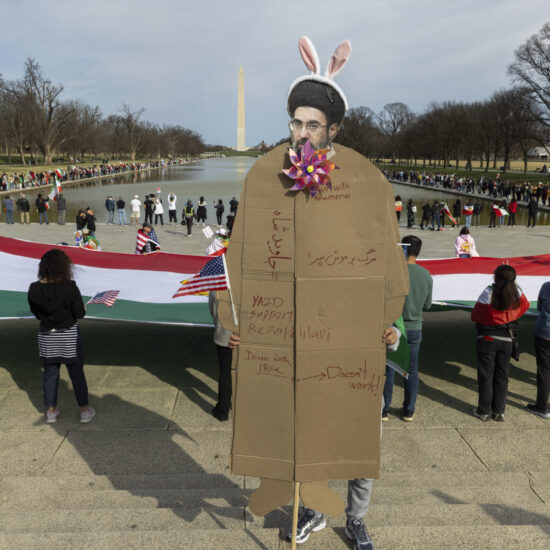
Two months before the current escalation, Iran had already been shaken by widespread protests that began with livelihood grievances and quickly adopted anti-regime slogans. Protests spreading across multiple cities, driven by the currency crisis, inflation, and anger at economic inequality and state corruption. Those reports highlighted the growing gap between ordinary Iranians and the religious-security elite.
This matters because the IRGC is simultaneously managing an external war, anchoring domestic repression, operating inside an opaque economy, and feeding regional proxy networks. When a military-security institution is forced to fight foreign enemies, suppress its own citizens, manage shadow commerce, and sustain allied militias all at once, it comes under a multi-layered strain that gradually erodes its effectiveness.
Sources familiar with the political climate in the days after Ali Khamenei’s death say that even as the IRGC has consolidated more influence, it has also come under growing wartime pressure and deeper internal political stress. The Guards remain central to Iran’s strategy, but the war has exposed how dependent that strategy is on fragile economic and financial channels.
Why It Is Still Powerful
Yet another analytical mistake must also be avoided: corruption does not necessarily mean immediate collapse. Over the years, the IRGC has turned sanctions, illicit finance, and the shadow economy into instruments of power. Opaque financial networks were not merely channels of corruption; they were also channels of survival.
Front companies, covert oil exports, shadow banking, and influence over ports and transport have helped the IRGC evade sanctions, preserve resources, and keep its missile and regional projects alive. In that sense, corruption has been both poison and fuel: poison for the country’s long-term economic health and even for sustainable military effectiveness, but fuel for the short-term survival of a security oligarchy.
The Central Challenge of IRGC-Centered Rule
If the effect of IRGC corruption on the current war had to be summarized in one sentence, it would be this: by building a security-economic empire steeped in rent-seeking, smuggling, front companies, and covert financial networks, the IRGC succeeded for years in serving as the engine of the Islamic Republic’s regional policy and domestic repression; but that same corrupt architecture has now become one of the regime’s central vulnerabilities in an all-out war.
Official Western records and credible reporting show that the IRGC is not merely a combat force. It is a choke point for the economy, politics, shadow banking, external operations, and internal repression. In the short term, that concentration of power still gives it resilience and striking capacity. But in the medium and long term, that same corruption-soaked concentration raises the cost of war for the regime, reduces economic endurance, destroys social legitimacy, and leaves the country more exposed to both external blows and internal fractures.
The key question, therefore, is not only how much firepower the IRGC still commands. The more important question is whether an institution that grew for decades through structural corruption, monopolistic privilege, and regional adventurism can simultaneously manage the country, the economy, the home front, and the external battlefield in a prolonged war. The available evidence suggests that this model of IRGC-centered rule is now under greater pressure than at any time in its history.
Armin Soleimani is a Middle East reporter.
The views in this story reflect those of the author alone and do not necessarily reflect the beliefs of NOW.