Lebanese Prime Minister Nawaf Salam told Al Arabiya on Sunday that Hezbollah’s military operations in the current war with Israel are being directed by Iran’s Islamic Revolutionary Guard Corps (IRGC).
Salam sharply criticized Hezbollah for dragging Lebanon into a war he described as imposed from outside, noting that the group’s rocket fire at Israel triggered mass displacement and civilian casualties. “This war was imposed on us,” he said, emphasizing that Lebanese civilians are paying the price for a confrontation aimed at regional actors rather than national interests.
Salam detailed the human and territorial cost of the fighting, citing over 1,000 deaths and the forced displacement of more than 1.1 million people since the war began. He highlighted the impact of Hezbollah’s early rocket attacks, noting that each launch has led to the displacement of thousands.
Prime Minister Nawaf Salam also accused members of Iran’s Islamic Revolutionary Guard Corps (IRGC) of playing an active role in directing Hezbollah’s military operations in Lebanon. He claimed that IRGC personnel have been present in the country using forged passports, and that some were involved in launching drones from Lebanese territory toward targets in Cyprus, an allegation tied to incidents earlier this month in which an Iran‑made drone struck a British military base on the island.
Salam said the Lebanese government is working to enforce its decision to ban IRGC activities and remove those operating illegally on Lebanese soil.
In Lebanon
Prime Minister Nawaf Salam on escalation: Prime Minister Nawaf Salam stated that the current war was imposed on Lebanon and warned against the country being drawn into a broader regional conflict. He added that threats from Hezbollah would not intimidate the state, reflecting growing political tensions over Lebanon’s role in the growing war.
Lebanon marks Eid al-Fitr amid escalation: Lebanese communities celebrated Eid al-Fitr this week under the shadow of Israeli strikes and ongoing border tensions. Despite the conflict, families sought to maintain religious and cultural traditions, gathering for prayers while coping with displacement, damaged infrastructure, and heightened security fears.
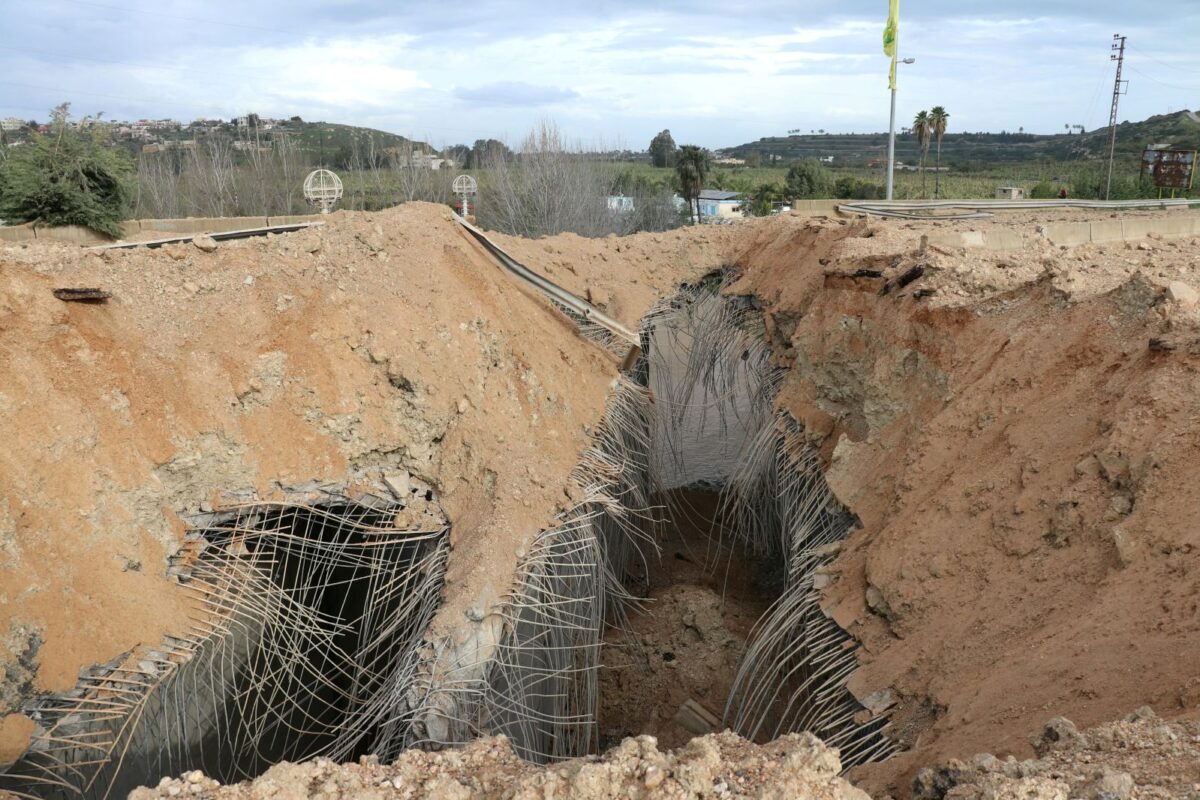
Targeting of Infrastructure: Israeli airstrikes this week hit critical infrastructure across South Lebanon, including bridges and key roads linking border villages to larger towns. The destruction has disrupted civilian movement, limited access for emergency and humanitarian services, and raised concerns about the isolation of frontline communities in the event of further escalation. The targeting of such major infrastructure marks a notable escalation in the campaign’s scale and has raised concerns about isolating entire areas south of the Litani.
Rising ground tensions: In addition to airstrikes, there have been growing signs of increased Israeli military activity along the border, fueling fears of a possible expansion beyond cross-border fire. Hezbollah has continued its military operations in response.
Government plan for displacement site in Karantina: Amid rising displacement, the Lebanese government is reportedly planning to establish a site in Karantina, Beirut, to accommodate those forced to flee from targeted areas across the country. The move reflects growing concern over the scale of displacement, but also raises serious questions about preparedness, capacity, and living conditions. It further carries significant political, demographic, and strategic implications, particularly given the sensitivities surrounding population shifts and long-term settlement patterns in Lebanon.
Civilian displacement intensifies: Ongoing Israeli strikes and renewed evacuation orders, including in Tyre, are driving increased displacement as families are forced to leave their homes under worsening conditions. Access to some areas is becoming more difficult, leaving those who remain with limited resources and fewer options for safety.
In the region
Iranian strikes across the Gulf: This week, Iran launched a series of drone and missile attacks targeting infrastructure in several Gulf states, including the UAE, Saudi Arabia, Qatar, and Kuwait. The strikes focused on energy facilities, ports, and airports, signaling Tehran’s intent to escalate pressure beyond its borders while demonstrating its ability to disrupt key economic hubs in the region.
Tensions in the Strait of Hormuz: Iran’s actions have increased the risk of instability in the Strait of Hormuz, a vital shipping route for global oil exports. Incidents involving drones and explosive devices near commercial vessels have disrupted shipping traffic and heightened fears of a sustained blockade or broader confrontation.
Jordan faces spillover threats: Jordan has experienced repeated airspace incursions from Iranian projectiles, forcing its military to intercept dozens of drones and missiles over the past week.
Israeli Airstrikes in Suwayda framed as protection for Druze: This week, the Israeli military carried out airstrikes on Syrian army positions in the Suwayda region of southern Syria after reports emerged of violent clashes and attacks affecting the local Druze community. Israel stated that its strikes targeted command centers and weapons depots linked to the Syrian government’s military, framing the operation as part of its stated intent to defend the Druze population from harm and deter further escalation across the border.
Alcohol restrictions in Damascus spark backlash: This week, authorities in Damascus introduced new limits on the sale and service of alcoholic beverages in most of the city, allowing retail-only sales in a handful of predominantly Christian neighborhoods and banning alcohol service in restaurants, bars, and nightclubs. The move triggered public protests in central Damascus, where demonstrators including Christians and Syrians from other religious communities rallied against what they see as an erosion of personal freedoms and a policy that disproportionately affects minority communities and longstanding cultural practices. Critics argue the restrictions risk deepening sectarian divides at a moment of broader social and economic anxiety in Syria.
Hezbollah-Linked Cell Arrested in Kuwait: Kuwaiti authorities this week arrested a cell of 10 individuals allegedly linked to Hezbollah, accusing them of plotting attacks on critical infrastructure. Officials said the group had attempted to recruit new members and confiscated weapons, camera drones, and communication equipment. Hezbollah has denied that any of the detainees were affiliated with the organization, highlighting the growing regional scrutiny of its activities beyond Lebanon.
What we’re reading:
“Lebanon’s War Was Not Its Own — And Nawaf Salam Just Said It Out Loud” This analysis examines Prime Minister Nawaf Salam’s recent remarks framing the current war as one imposed on Lebanon rather than a national decision. The author argues that Salam’s statement marks a rare and explicit acknowledgment from within the state that Lebanon is being drawn into a broader regional confrontation tied to Iran.
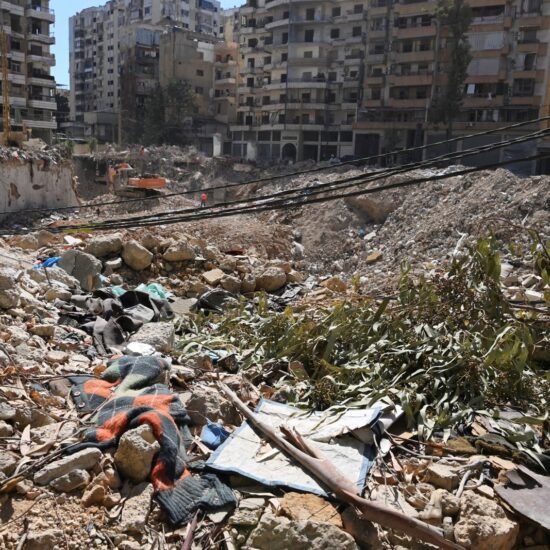
“Central Beirut Under Attack Amid War Between Hezbollah and Israel” This report by NOW’s journalist Laura Hülsemann covers a major Israeli strike on central Beirut, where a multi-story residential building in the Bachoura area collapsed following an air raid near the city center.
“The State of Breakdown: The Death & Exodus of the Second Republic” by Nasser Hafez: In this opinion column, NOW’s journalist Nasser Hafez argues that Lebanon’s ongoing crisis has exposed the deep structural failures of the post–Taif political order, which he characterizes as a “stillborn” Second Republic. Hafez traces how decades of factional politics, corruption, and institutional fragmentation left the state weak long before the current escalation, and contends that the war has now laid bare the limits of Lebanon’s sovereignty and capacity to protect its people.