The debate has resurfaced amid renewed diplomatic movement and rising internal tensions, exposing a country deeply divided not only along political lines, but also over its identity, sovereignty, and future.
A fragile diplomatic opening
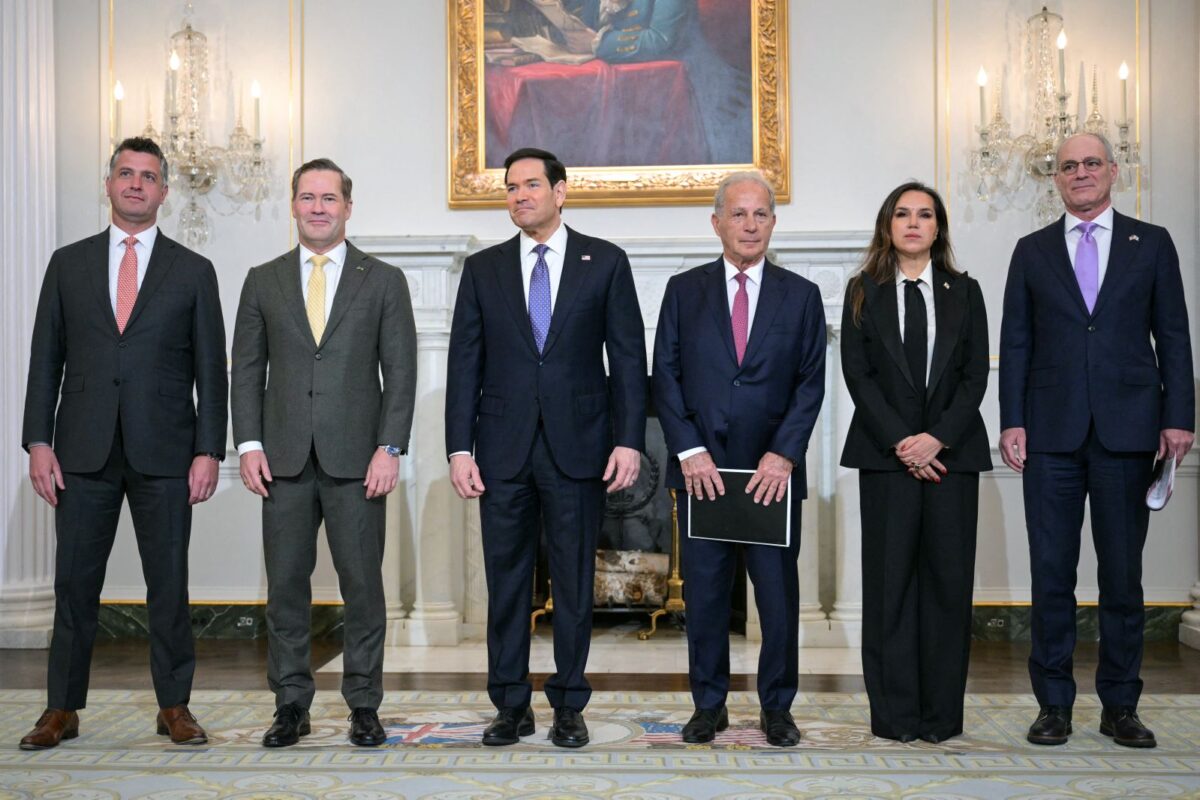
Recent days have seen a rare and significant shift, with Lebanon and Israel engaging in their first direct talks in decades during a U.S.-mediated meeting in Washington. The discussions, which brought together senior diplomats from both sides, focused on de-escalation, border security, and the possibility of a broader framework for negotiations.
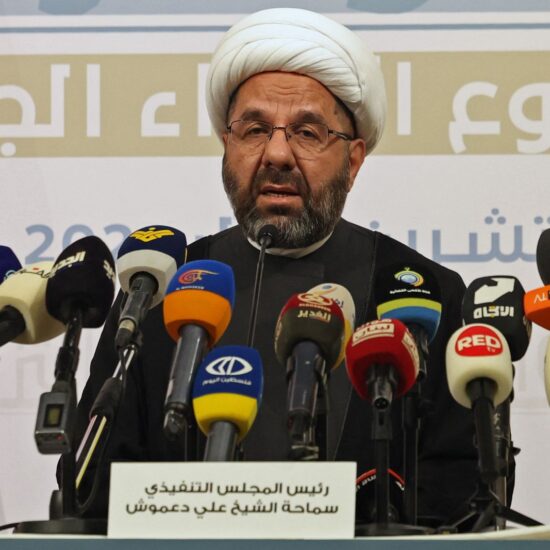
While Lebanese officials have avoided labeling them as formal “peace talks,” the meeting itself described by some as historic, signals a clear change in approach. However, reactions inside Lebanon have been sharply divided, with strong opposition from Hezbollah and its supporters, highlighting just how sensitive any move toward negotiations remains.
Protests and political backlash
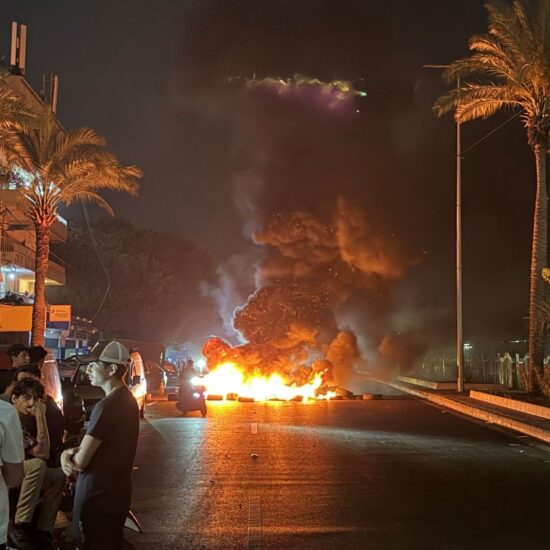
That opposition has already spilled into the streets.
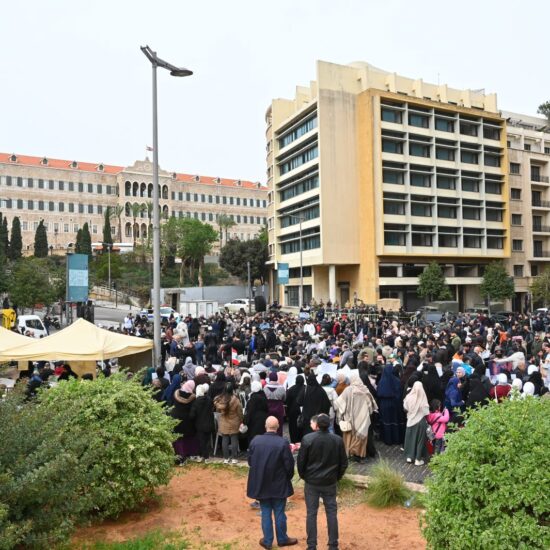
In recent weeks, protests particularly among Hezbollah supporters have pushed back against what is perceived as a softening stance by the Lebanese government. Demonstrators have framed any engagement with Israel as a betrayal of those killed in past wars and the current war, and as a surrender to foreign pressure.
The backlash has also placed Prime Minister Nawaf Salam under intense criticism from the demonstrators.
A country divided
Against this backdrop, Lebanese voices reflect a spectrum of opinion as polarized as the political scene itself.
For some, peace represents an overdue correction.
“Lebanon needs to take its destiny into its own hands,” Salmen a business owner from Baakline in the Chouf region told NOW. He argued that the country has long paid the price for conflicts not entirely its own. “This path must lead to de-escalation, sovereignty, and a better future for all Lebanese… people are fed up with being dragged into others’ wars and losing so much every time, especially to please Iran and its interests.”
Others frame the issue less as reconciliation and more as state-building.
The direct negotiations with Israel are definitely a step forward, but the real test is implementation
“The direct negotiations with Israel are definitely a step forward, but the real test is implementation,” George from Zgharta told NOW. “Lebanon needs to restore full state authority… we need protection, we need full state authority over arms.”
In this context, peace is not seen simply as a diplomatic outcome, but as a test of sovereignty.
For others still, peace is framed in regional and economic terms.
Peace is a necessity for the safety, prosperity, and future of the people on both sides
“Peace… is a necessity for the safety, prosperity, and future of the people on both sides,” Rana from Koura told NOW. She linked Lebanon’s continued hostility with Israel to external interference, particularly from Iran.
As she added, “It’s time for us to start disconnecting Palestinian problems from Lebanon, as well as Iran’s interests… We need to believe that Lebanon deserves to negotiate its own future.”
“Peace” as betrayal
Among opponents, the language is stark and emotionally charged.
“Peace with Israel is a shame,” Asia, a public school teacher from the southern village of Siddiqin told NOW, pointing to the destruction of homes and loss of life in past wars. “They have flattened our villages… this is enough to show their intentions.”
For many in the south and other areas heavily affected by repeated conflicts, the idea of normalization remains inseparable from lived trauma.
“How can we imagine peace with them when they are “butchers” of Lebanese families, secondly they do not even keep their word on anything so it is not logical or moral to go ahead with peace and most importantly they have a history of land theft.” Added Asia.
Similarly for Ahmad from Southern Beirut, “Lebanese need to wake up and stop romanticizing this idea. The resistance runs in our blood and we will never know the meaning of peace with Israel,” He told NOW.
Their eyes are on our lands and resources, and we feel betrayed by our own government
“Their eyes are on our lands and resources, and we feel betrayed by our own government…”
He added: “If there is anything legitimate in Lebanon, it is the resistance and its weapons.”
Between fear and pragmatism
Some voices attempt to navigate a middle ground, acknowledging both the risks and the necessity of change.
“I don’t think peace is a bad thing,” Imad a construction worker from Hasbaya told NOW, “but we shouldn’t be too optimistic.” He described Lebanon as caught in a broader regional struggle between Iran and Israel, warning that replacing one form of external influence with another would not amount to true sovereignty.
His solution, echoed by others, is neutrality.
“Lebanon needs to be strongly independent and neutral… only Lebanese unity will preserve its independence from outsiders,” he added.
In Barja, Saad, a nurse working on the frontline of Lebanon’s strained healthcare system, offers a more cautious reading, one shaped less by ideology and more by exhaustion.
Speaking to NOW, he describes a population that does not want to be pulled back into cycles of regional confrontation.
We don’t want to be dragged into any more wars, people here are tired and angry
“We don’t want to be dragged into any more wars, people here are tired and angry.”
But when it comes to the idea of peace with Israel, he is far less optimistic.
“I don’t see peace as something realistic right now,” he told NOW. “There is too much history, too much mistrust, and too much pain on all sides.”
“Lebanon should focus on Lebanon. Nothing else,” he said.
So, is peace a bad thing?
In Lebanon, the answer depends on who you ask and perhaps more importantly, on what “peace” actually means.
Is it a formal agreement with a long-time enemy? A reassertion of state sovereignty? An economic lifeline and opportunity? Or a dangerous illusion that ignores deeper imbalances of power on the ground?
For now, the debate itself is the story. The fact that it is being asked openly on the streets, in homes, and within political and media circles signals a significant shift.