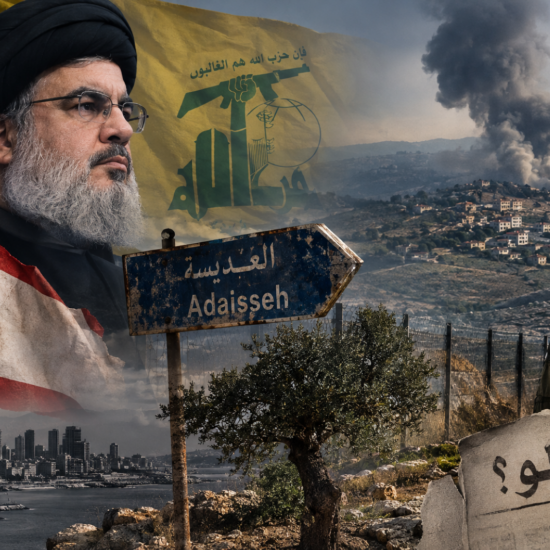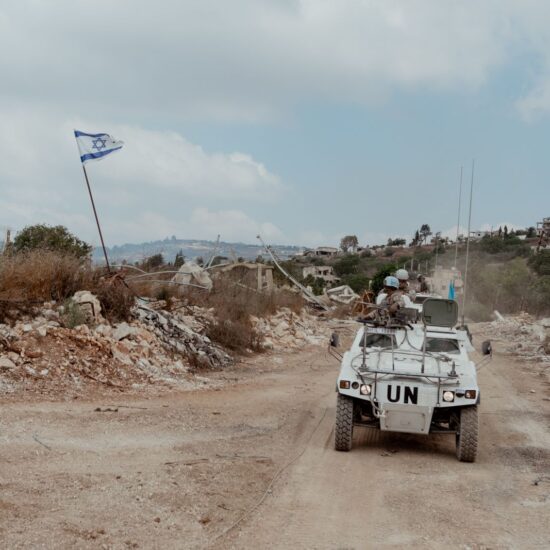
Yesterday, April 13, marked the 51st anniversary of the outbreak of the Lebanese Civil War. This date should always serve as a moment of sober reflection, an occasion not only to remember the scale of the tragedy, but to confront the uncomfortable truths behind it: how a society fragmented, how institutions collapsed, and how violence became normalized for over fifteen years. Yet, as we mark this anniversary, the destruction unfolding around us today imposes itself with urgency. For many Lebanese, the priority is no longer reflection alone, but survival, surviving Israeli rockets on one hand, and confronting what has effectively become an Iranian encroachment on our sovereignty on the other.
In my History of Lebanon class, we are wrapping up our discussions on the war and its aftermath. Each year, I am struck by the same contradiction. My students are, without question, better than those who once carried weapons and justified the disintegration of the state. They are more aware, more critical, and less willing to be mobilized by empty slogans. And yet, the toxic environment they are inheriting threatens to push them away. Faced with a collapsing economy, a hollowed-out state, and a political class that refuses accountability, many will choose to leave. This is how the war continues, not through militias and frontlines, but through slow abandonment, brain drain, and the quiet erosion of any belief in a shared future.
What is required is not reform at the margins, but a fundamental rethinking of how this country is governed and how its citizens relate to the state and to one another.
The 51st anniversary, therefore, cannot remain confined to memory. It must be a moment of reckoning with the present and a call to reimagine the future. Lebanon does not suffer from a single crisis, but from a systemic failure that cuts across every level of public and private life. What is required is not reform at the margins, but a fundamental rethinking of how this country is governed and how its citizens relate to the state and to one another. From the political structure to the most mundane expressions of collective identity, even our football fan clubs, there exists a culture of division and unaccountability that mirrors the deeper fractures of the system.
My mentors, Kamal Salibi and Abdul Rahim Abu-Husayn, believed in Lebanon not as a romantic ideal, but as a fragile and contested project. Their scholarship never shied away from confronting the contradictions at the heart of the Lebanese experiment. They reminded us that nations are often built on myths, narratives of coexistence, exceptionalism, and resilience. But myths, no matter how powerful, cannot sustain a country in the absence of institutions. Without the safety net of statehood, the rule of law, and a monopoly over violence, those myths become dangerous illusions, easily manipulated and ultimately shattered.
But myths, no matter how powerful, cannot sustain a country in the absence of institutions. Without the safety net of statehood, the rule of law, and a monopoly over violence, those myths become dangerous illusions, easily manipulated and ultimately shattered.
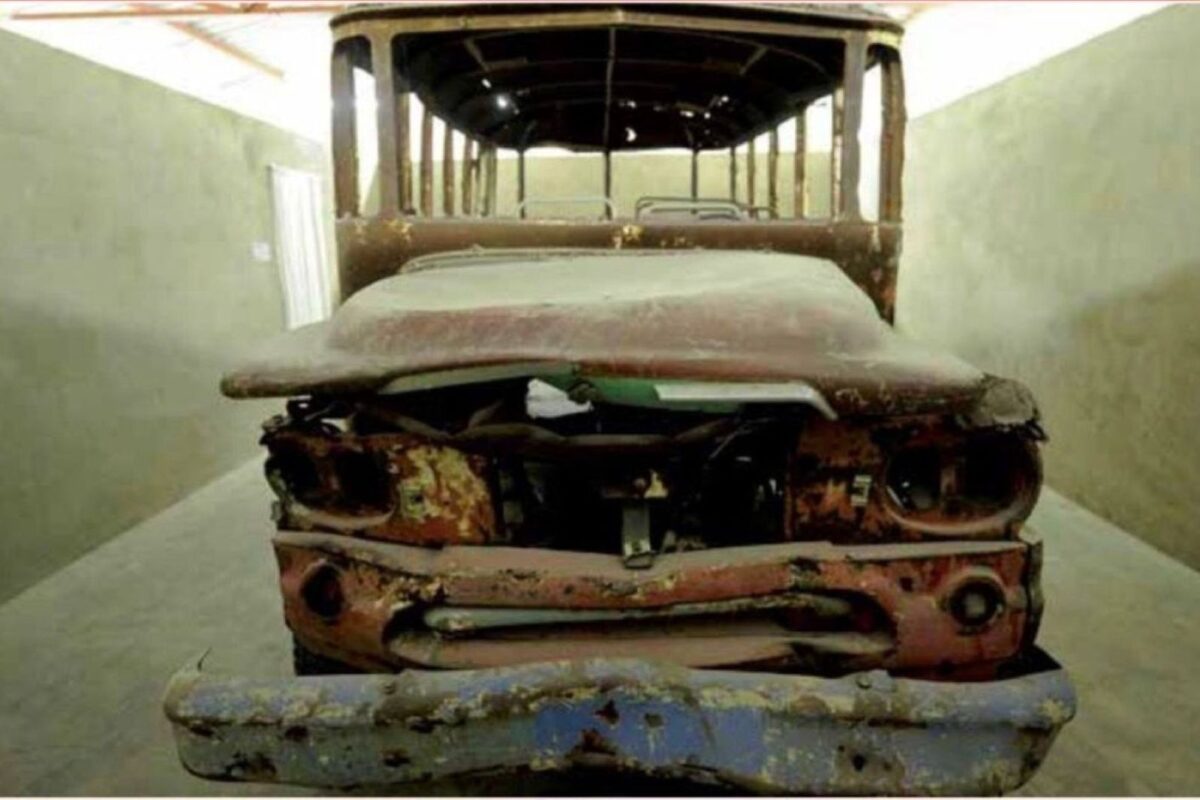
On April 13, 1975, a bus carrying Palestinians through the neighborhood of Ain el-Remmaneh became the spark that ignited the war. It was not the cause, but it became the symbol, the moment when accumulated tensions exploded into open conflict. That bus was not merely a vehicle; it was the embodiment of a state that had already failed to regulate power, to protect its citizens, and to impose a common order. Today, we must be vigilant not to repeat that history in new forms. The lesson is clear: those who choose to operate outside the framework of the state, who impose their own rules and drag the country into conflicts it did not choose, must bear that responsibility alone.
Lebanon, if it is to survive, must reclaim the idea of a shared political community. Those who wish to live within the Lebanese house must accept its rules, foremost among them the constitution, whose centennial we will soon mark.
Lebanon, if it is to survive, must reclaim the idea of a shared political community. Those who wish to live within the Lebanese house must accept its rules, foremost among them the constitution, whose centennial we will soon mark. This is not a symbolic demand; it is an existential one. A country cannot function when its laws are optional, when its sovereignty is negotiated, and when its citizens are treated as expendable.
Fifty-one years later, the memory of the war is no longer enough. What is required is the courage to break from its logic. The past is not behind us, it is embedded in our present. And unless we confront it with clarity and resolve, it will continue to define our future.
Makram Rabah is the managing editor at Now Lebanon and an Assistant Professor at the American University of Beirut, Department of History. His book Conflict on Mount Lebanon: The Druze, the Maronites and Collective Memory (Edinburgh University Press) covers collective identities and the Lebanese Civil War. He tweets at @makramrabah