Lebanon has been living a lie, and it is time to say it out loud. We were told for years that those who spoke about sovereignty, neutrality, or peace were the ones trying to divide the country. We were accused of betrayal, of conspiracy, of wanting partition. But the truth, now impossible to hide, is the exact opposite. It is Hezbollah that has already chosen separation. It is Hezbollah that has emotionally, politically, and strategically divorced itself from Lebanon, while forcing the rest of the country to live inside its contradiction.
When a group openly refers to the President as “the president of others on our land,” this is not rhetoric. This is not anger. This is not politics. This is a declaration. It is a statement that every other Lebanese is a stranger in their own country. It is a rejection of the very idea of Lebanon as a shared nation. And yet, after saying all of this, after making it clear that they do not recognize this Lebanon, they insist on staying inside it, controlling it, speaking in its name, dragging it into wars it did not choose, and then accusing it of treason when it tries to breathe.
This is no longer hypocrisy. This is something far more dangerous. This is a forced coexistence with a party that despises the country it inhabits.
Let us stop pretending this is a state collapse. It is not. It is something much worse. It is the permanent coexistence of two systems that cannot live together and cannot fully separate because one refuses to let go while simultaneously denying the legitimacy of the other. Hezbollah builds its power outside the state, against the state, in defiance of the state, but the moment pressure rises, the moment its fighters are trapped, the moment reality intrudes, it runs back to the state it insults and demands rescue, protection, legitimacy.
Today, in Bint Jbeil, under pressure and encirclement, the same force that calls the state illegitimate suddenly needs it to negotiate, to extract, to save. The state becomes a tool in moments of weakness and an enemy in moments of strength.
This is not resistance. This is dependence disguised as defiance.
And the pattern is undeniable. The law matters when it protects them and disappears when it restrains them. The constitution is sacred when it serves them and irrelevant when it limits them. The government is legitimate when it complies and treasonous when it disagrees. They sit inside institutions they do not believe in, attack leaders they expect to serve them, and threaten a society they claim to represent.
They accuse everyone else of selling out the country while tying Lebanon’s fate to the strategic ambitions of Iran and preserving a corridor that serves regional power, not national survival.
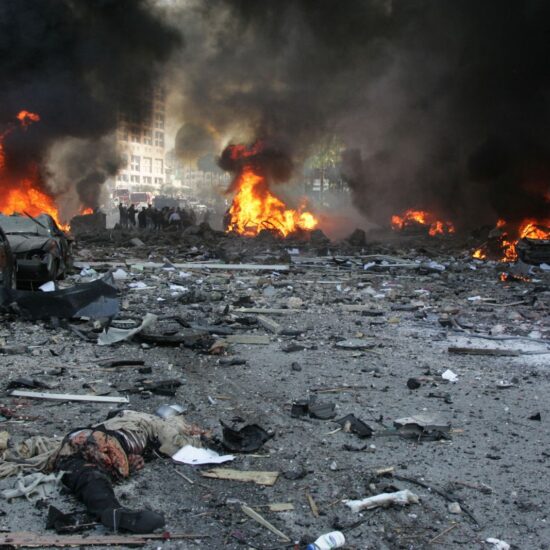
The assassination of Rafic Hariri was not just a moment of violence; it was the moment the rules became clear. A sovereign Lebanon, one that builds, negotiates, opens, and decides for itself, is intolerable to a system that requires permanent confrontation. Peace is not dangerous because of what it brings. It is dangerous because of what it takes away!
A Lebanon at peace, even the possibility of peace with Israel, threatens the entire logic that justifies an armed structure outside the state. That is why every attempt, every discussion, every whisper of diplomacy is met not with debate, but with intimidation, threats, and accusations of betrayal.
And while all of this unfolds, external influence continues to pour fuel on the fire. The role of the Embassy of Iran in Beirut no longer resembles diplomacy in any recognizable sense. It has become part of the internal conflict, amplifying ideological narratives, deepening divisions, and reinforcing the very separation that is tearing the country apart.
When a foreign mission becomes a platform for mobilization and incitement, it is no longer neutral ground. It is an active player in the fragmentation of a state.
But the most important shift is happening inside Lebanon itself. Across communities, across political lines, across generations, something is changing. People are no longer arguing about policies or governments. They are asking a much more fundamental question: do we still share the same country? Because what Hezbollah is saying- through its words, its actions, its alliances- is that it does not.
It does not want this Lebanon.
It does not believe in this Lebanon. It does not see itself as part of this Lebanon.
So let us stop lying to ourselves.
This is not a debate about coexistence. This is a one-sided insistence on domination by a party that has already checked out of the national project.
And here is the unavoidable conclusion, the one everyone has been afraid to say clearly: if Hezbollah wants a different path, a different identity, a different destiny- then it should take it! Fully. Completely. Without dragging the rest of the country with it.
This is not us calling for division. This is us finally hearing what has been said for years and responding to it with clarity.
You want separation? Then say it openly.
You want a different Lebanon? Then build it elsewhere.
But you do not get to declare that we are strangers in our own land and still rule that land in our name.
Lebanon cannot continue like this, suspended between a state that is never fully allowed to exist and a force that refuses to either fully take responsibility or fully let go. This is not stability. This is paralysis enforced by intimidation.
So let us call things by their name.
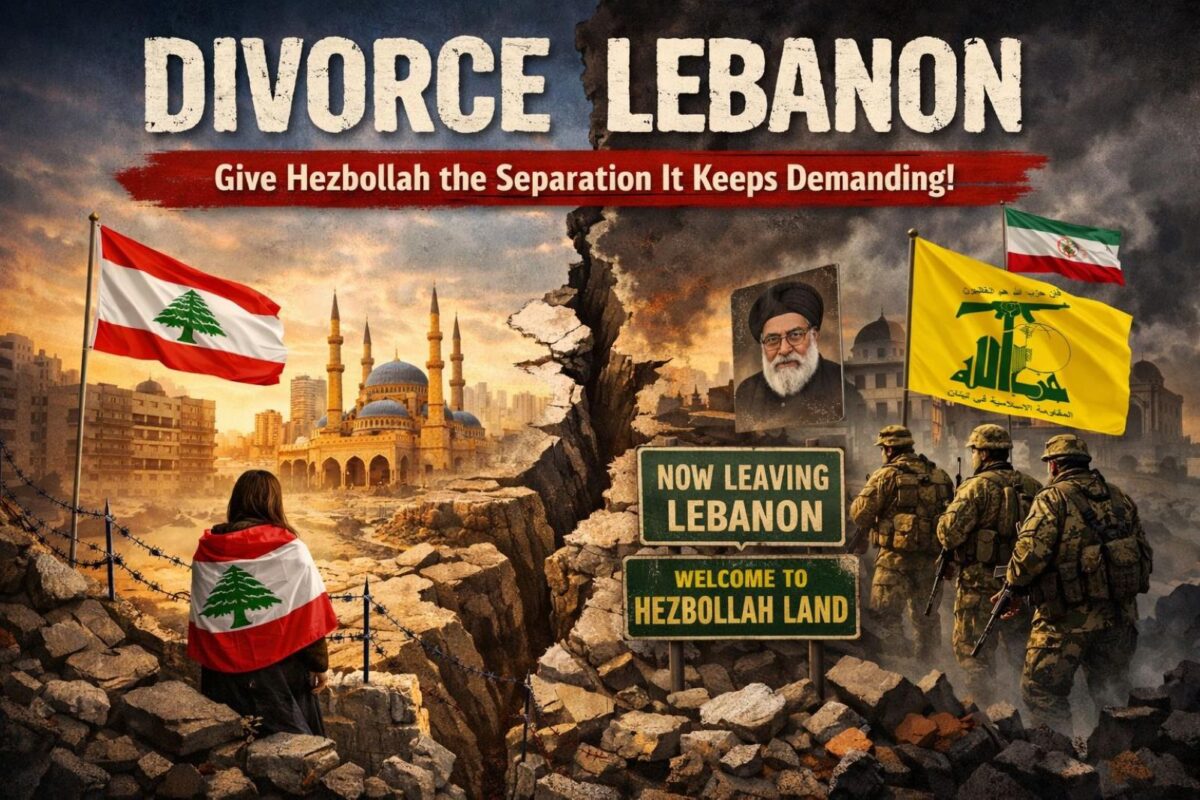
This is a divorce.
And if one side has been demanding it all along, then the other side has every right to finally accept it.
Elissa E Hachem is a journalist and political writer specializing in regional affairs and governance. Former Regional Media Advisor at the U.S. State Department’s Arabic Regional Media Hub, with broad experience in strategic communication across government and private sectors.
The views in this story reflect those of the author alone and do not necessarily reflect the beliefs of NOW.