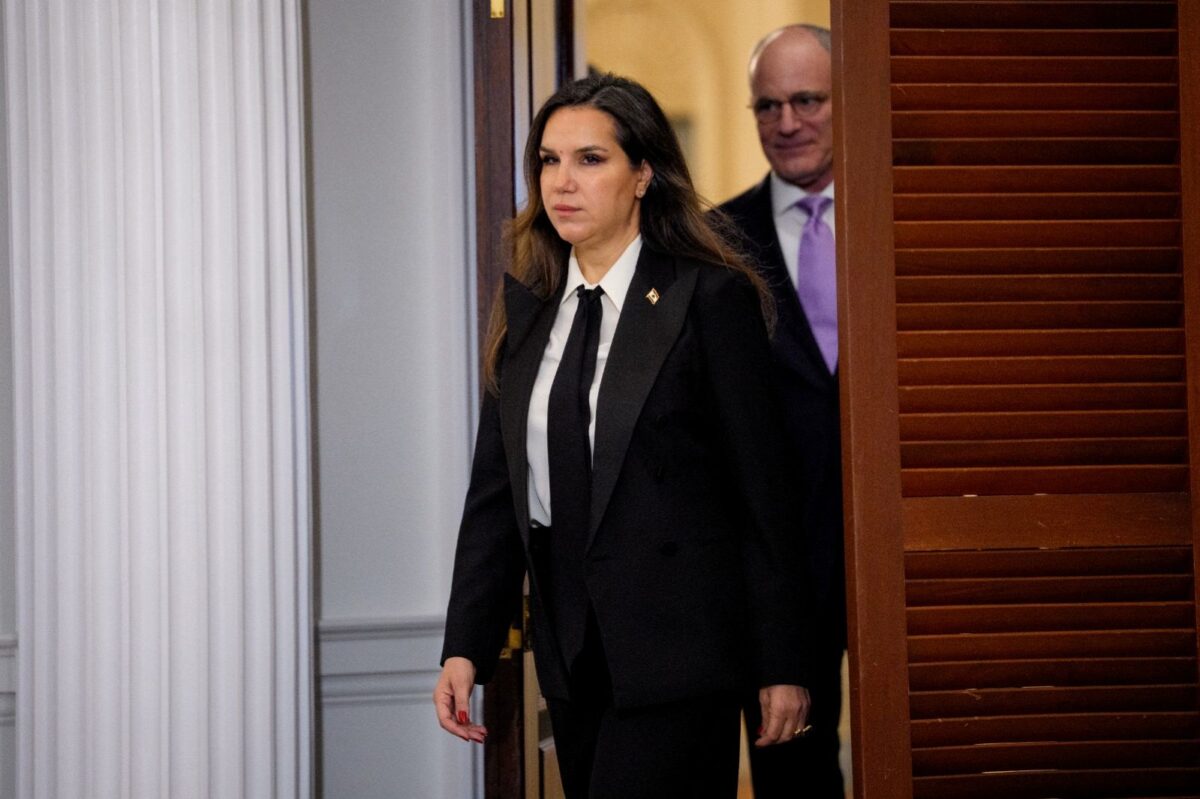
For the first time in years, Lebanon showed up to the negotiating table not as a battlefield, but as a state.
The talks held in Washington this week between Lebanese, American, and Israeli officials may not have produced an immediate ceasefire. They were never meant to. But their significance lies elsewhere, in what they revealed about Lebanon’s political trajectory and, more importantly, in what they quietly dismantled.
What emerged from Washington is not a peace agreement, nor even a framework for one. It is something more foundational: a clear political demarcation between the Lebanese state and the Iranian project that has long claimed to act in its name.
For decades, Hezbollah has blurred this distinction, presenting itself as both a “resistance” movement and a legitimate arm of the Lebanese political system. This ambiguity has been the cornerstone of its power. It allowed Iran to project influence into the Levant while shielding itself behind the façade of Lebanese sovereignty. It also provided Israel with a convenient justification: Lebanon, the argument went, is indistinguishable from Hezbollah.
The Washington talks disrupt this equation.
By engaging directly, under American auspices, the Lebanese government has asserted something simple yet long contested—that it, and not Hezbollah, speaks for Lebanon. This is not merely a diplomatic gesture. It is a political repositioning with profound consequences.
By engaging directly, under American auspices, the Lebanese government has asserted something simple yet long contested—that it, and not Hezbollah, speaks for Lebanon. This is not merely a diplomatic gesture. It is a political repositioning with profound consequences.
Critics will point out that Lebanon entered these talks without leverage, that negotiations under fire are inherently unequal, and that Israel’s insistence on continuing military operations undermines the very premise of diplomacy. These concerns are not unfounded. Lebanon today lacks the conventional tools of pressure that states typically wield in such negotiations.
But this critique misses the point.
Lebanon’s most valuable asset at this moment is not military power—it is political clarity.
Lebanon’s most valuable asset at this moment is not military power—it is political clarity.
The decision to negotiate, even under adverse conditions, signals a break from the logic that has governed the country for years: that war and peace are determined outside the institutions of the state. By sitting across the table from Israel, Lebanon is reclaiming a role it had effectively ceded—however imperfectly—to an armed non-state actor.
This is why the talks matter.
Equally significant is the separation of tracks that these negotiations reinforce. For years, Iran has sought to bind Lebanon’s fate to its broader regional agenda, using Hezbollah as both proxy and bargaining chip. Whether in nuclear negotiations or regional de-escalation efforts, Lebanon has often been treated as an extension of Iranian policy rather than a sovereign actor.
Washington has now drawn a line.
The Lebanese file, as these talks suggest, will not be subsumed under Iran’s negotiations. This deprives Tehran of one of its most effective tools: the ability to escalate or de-escalate on the Lebanese front in service of its own strategic objectives. It also places the responsibility for Lebanon’s future squarely back where it belongs; with the Lebanese state.
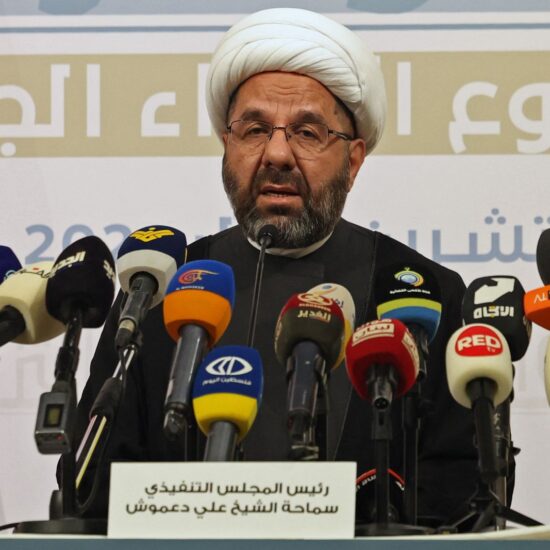
Hezbollah’s rejection of the talks must be understood in this context. It is not merely a disagreement over tactics or timing. It is a rejection of the very premise that the Lebanese state has the authority to negotiate on behalf of the country.
And therein lies the crux of the crisis.
Hezbollah cannot accept a process that sidelines its military role because that role is the foundation of its political relevance. Its arsenal—supplied, financed, and directed by Iran—is not designed to defend Lebanon in any conventional sense. It is designed to serve a regional strategy that often comes at Lebanon’s expense.
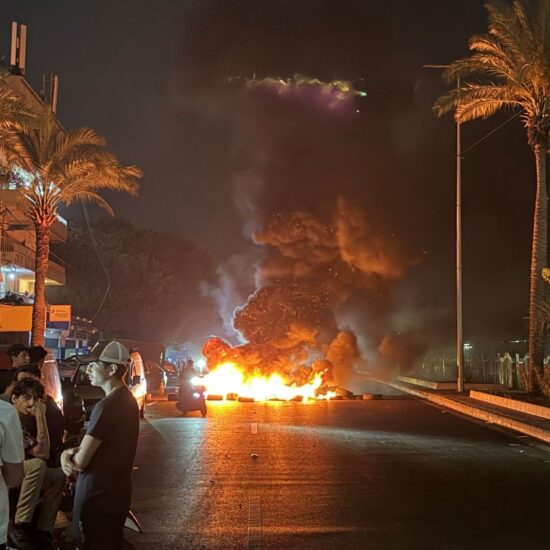
The consequences are visible today. Israeli strikes across Lebanese territory are not occurring in a vacuum. They are part of a broader confrontation with Iran, one in which Lebanon has been involuntarily enlisted. The presence of Hezbollah fighters and infrastructure within civilian areas only deepens this tragedy, exposing ordinary Lebanese to devastating consequences.
This is not resistance. It is entanglement.
The Washington talks do not resolve this reality. They do not guarantee an end to the violence, nor do they offer a quick path to disarmament or reconstruction. What they offer instead is a framework—a starting point for a long and difficult process of reasserting state authority.
The Washington talks do not resolve this reality. They do not guarantee an end to the violence, nor do they offer a quick path to disarmament or reconstruction. What they offer instead is a framework—a starting point for a long and difficult process of reasserting state authority.
There will be no “magic potion,” no single agreement that restores Lebanon overnight. But there can be a trajectory.
If sustained, this diplomatic track can open the door to what Lebanon desperately needs: a ceasefire anchored in state institutions, an eventual disarmament process tied to political reform, and a reconstruction effort supported by regional and international partners, particularly Arab states that have long been willing to assist, but only when Lebanon demonstrates that it is governed as a state, not as a proxy battleground.
In Washington, Lebanon took a small but decisive step in that direction.
It chose diplomacy over denial, statehood over ambiguity, and the difficult path of sovereignty over the false comfort of armed “protection.”
For a country long held hostage by blurred lines, that choice alone is significant.