France has historically held major influence over Lebanon. In Beirut, criticism arises of France’s failure to support Lebanon’s sovereignty, particularly on the question of disarming Hezbollah. Paris is also increasingly losing power as negotiations over Lebanon’s future shift to Washington under the U.S. President Donald Trump.
Dismantling Hezbollah’s armed wing is Lebanon’s central political challenge. The militia has dragged the country into another war, causing displacement and destruction. One concern raised internally and internationally regarding disarming the militia is the risk of a civil war. France’s Defense Minister Catherine Vautrin reinforced this rhetoric last week, saying that Lebanon is at the brink of civil war. However, this claim is widely debated inside Lebanon. Prime Minister Nawaf Salam has called the threat of civil war “unacceptable”, as it is often raised by Hezbollah amid their objections to giving up its arms.
NOW spoke to experts and politicians who criticize Paris for not acting strongly against Hezbollah’s influence inside Lebanon. This comes amid a shifting regional and international balance of power, in which France has largely been sidelined.
France’s approach toward Hezbollah
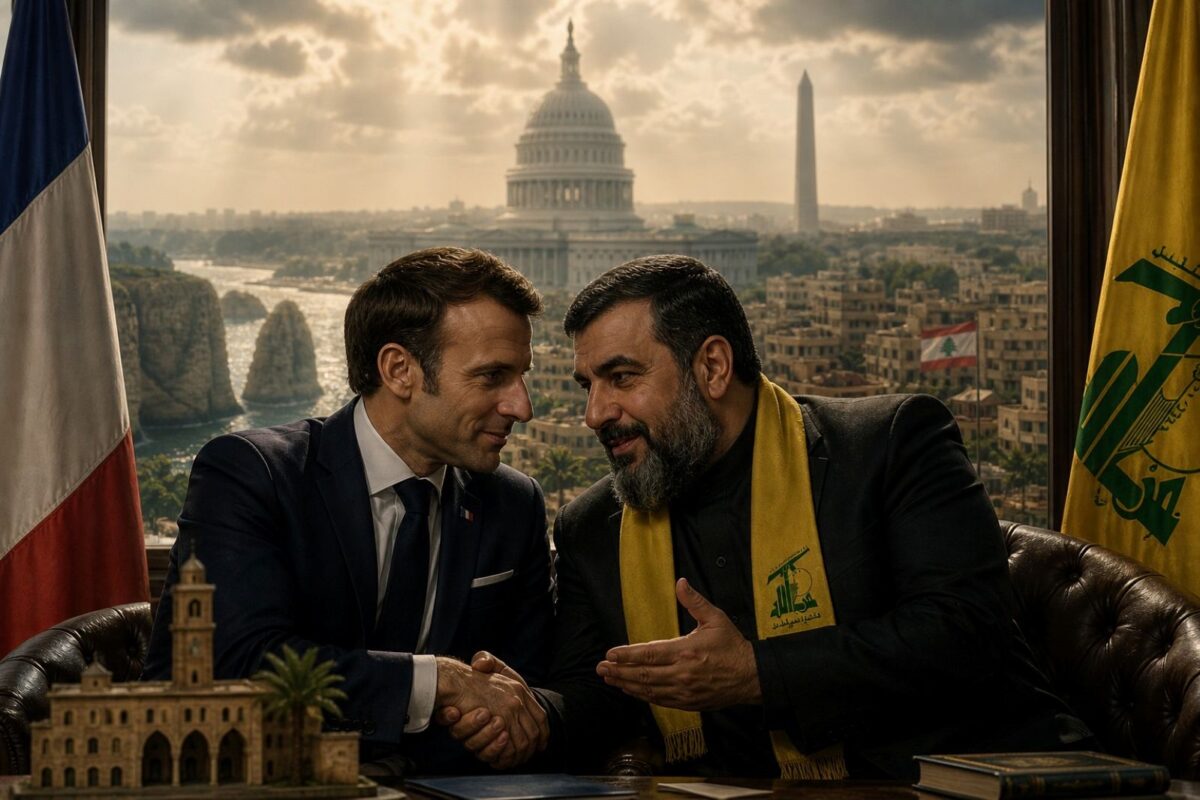
French President Emmanuel Macron and the Foreign Minister Jean-Noël Barrot have verbally opposed Hezbollah, Michel Helou, Secretary-General of the National Bloc, said. France has supported Lebanon’s decision to ban Hezbollah’s military wing and also stands behind Lebanon’s efforts to disarm the militia. “But the problem is that it’s not being translated into action,” Helou said. To help Lebanon regain control over its own territory, France “should be fighting Hezbollah in a much more aggressive way”, he argued.
At the moment, France is distinguishing between Hezbollah’s banned military wing and the political wing. To Helou, this is a major problem. Its political arm works as window dressing for the military wing, and cannot be separated from it, he said. “This strategy is not useful for Lebanon, we need to have a maximum pressure strategy against Hezbollah and Iran.”
“This strategy is not useful for Lebanon, we need to have a maximum pressure strategy against Hezbollah and Iran.”
France, as a democratic state, should be supporting institution-building, Maya Khadra, French-Lebanese journalist based in Paris, told NOW. But Hezbollah’s military wing is essentially an anti-institutional entity, which exerts control over Lebanese politics. France has for too long “played the card of appeasement or containment of the arms, whereas in Lebanon today we need to confront the weapons”, Khadra said.
Another issue, Khadra argued, is that “France is frightened of terror attacks”. In mid-April, two French UNIFIL soldiers were attacked near Ghandourieh in Lebanon — Macron suggested that Hezbollah was responsible for the attack and demanded the arrest of those responsible. After the attacks, Salam traveled to Paris. During a meeting with Macron, they discussed Lebanon’s territorial integrity amid Israeli presence in southern Lebanon as well as the question of Hezbollah’s disarmament. Macron promised humanitarian aid and also asked Salam and President Joseph Aoun to ensure the security of UNIFIL troops.
It is not the first time France has come under attack by Iran and its proxies. During Lebanon’s civil war, a suicide truck bomb killed 58 French soldiers and Lebanese civilians in the Beirut-based Drakkar building. In 1986, Paris suffered two bombing attacks carried out by Hezbollah commanders trained by the IRGC. The recent attack on French UNIFIL soldiers has again put France at odds with Hezbollah, but Paris has yet to significantly step up its response.
Paris is losing power as the U.S. moves to the forefront
France’s relationship with Lebanon is rooted in its mandate period after World War I until Lebanon’s independence in 1943. “France is eager to play a key role in Lebanon, as it seeks to keep its political and historical power,” said Khadra. But Paris’ approach is static — “it is outdated, because Lebanon is in another regional dynamic”, she added.
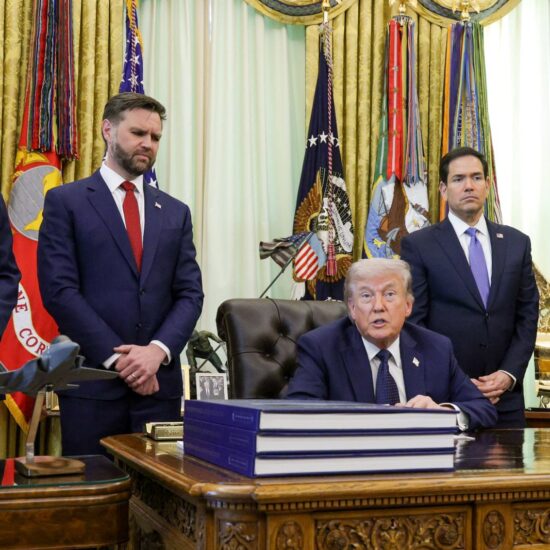
Washington now leads the talks between Israel and Lebanon — a historic step between the two countries which have long been at odds with each other. The U.S. has brokered a temporary yet fragile ceasefire and a three-week extension.
“They want a seat at the table, even if it means being less aggressive on Hezbollah.”
In recent weeks, France has positioned itself as an alternative to the U.S., which fully opposes Iran’s influence in Lebanon. “Paris wants to differentiate itself from the U.S. and find this third way between Tehran and Washington”, said Helou. “They want a seat at the table, even if it means being less aggressive on Hezbollah.”
U.S. President Donald Trump wants to decrease Iran’s influence in the world — which also means dismantling Hezbollah’s arms and its control over the Lebanese state. “Now the Lebanese government is closer to Washington than to Paris,” argued Khadra. France, however, “does not want to learn the new diplomatic pragmatic vocabulary of today”.
The U.S. and Europe have experienced diplomatic tensions in recent years — driven by Washington’s hesitancy to support Ukraine, Trump’s territorial ambitions in Greenland, tariff policies targeting European manufacturers, and reluctance toward NATO. The U.S.-Israeli war against Iran has further widened the rift. European countries have faced economic fallout from rising oil prices amid disruptions in the Strait of Hormuz. Trump has also urged European navies to help secure the strait.
“Sometimes France’s disagreements with the U.S. are playing out in the Middle East,” said Helou. From a European perspective, this might make sense. “But this is not what matters for us Lebanese — we need a strong stance against Iran and Hezbollah”, he argued. Instead, “France is defending its interests more than Lebanese interests” — with Lebanon paying the price for French decisions.