Why Lebanon Matters
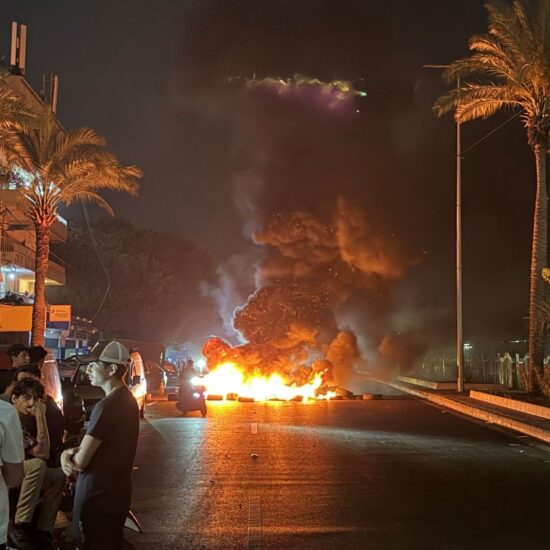
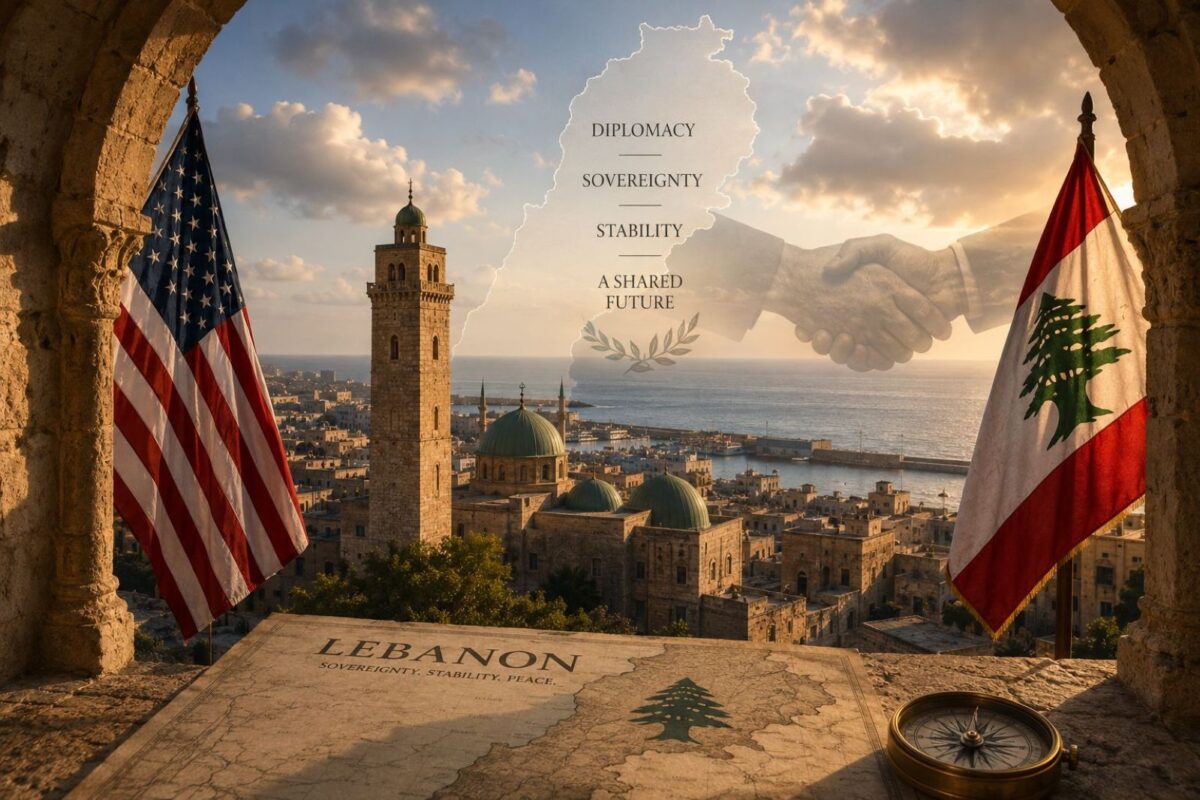
The perennial question often asked by policymakers in Washington is: Why should we care about Lebanon and how is it a vital national security interest? This is a question I have sought to answer in my professional capacity where I dedicated years maintaining oversight on Lebanon in the United States (U.S.) Congress and from within the non-profit sector working to support governance accountability and institution building. Moreover, the recent U.S. effort to pursue a peace agreement between Lebanon and Israel is not only a strategic development, but one that resonates on a personal level. For me, the question of peace between both countries is not abstract. It is shaped by a personal reality rooted in my Lebanese and Jewish heritage and lived experiences navigating complex identities and histories that remain deeply divided by war. The prospect of peace represents a reality where I can have lunch with my Lebanese family in Beirut and then take a southbound train and share dinner with the Jewish side of my family in Tel Aviv and Gush Etzion. I believe the human side of my personal narrative is a valuable component that informs how I address the policy-debate about why Lebanon matters.
Historically, the United States– Lebanon bilateral relationship has rarely been driven by matters intrinsic to Lebanon itself, but rather by broader geopolitical forces playing out on its soil. Lebanon has consistently served as a frontline for external actors, representing a microcosm of regional threats and a landscape of superpower competition.
Lebanon is important because it is where U.S. adversaries project power and Donald Trump understands this. As long as the war in the Islamic Republic captures his attention, Lebanon will remain a critical theatre for U.S. leadership in its quest to reverse the expansion of rival multipolar spheres of influence that years of drift by previous administrations caused. It is also an integral part of our counterterrorism strategy, serving as an important front in disrupting the operational capabilities and global influence of Hezbollah and its transnational networks.
In addition to its strategic importance, Lebanon also matters for historic domestic reasons that shape U.S. foreign policy. Lebanon benefits from the support of a large and well-established diaspora community, whose waves of immigration date back to the nineteenth century. The depth and organization of these connections are reflected across all sectors of American society from religious and cultural institutions to innovations in health and science, and leadership in business and government. Finally, there is a strong American impulse to protect religious minorities and pluralistic societies, principles that have shaped American democracy and U.S. engagement in the region on both government and non-governmental levels.
The Value of U.S. Leadership
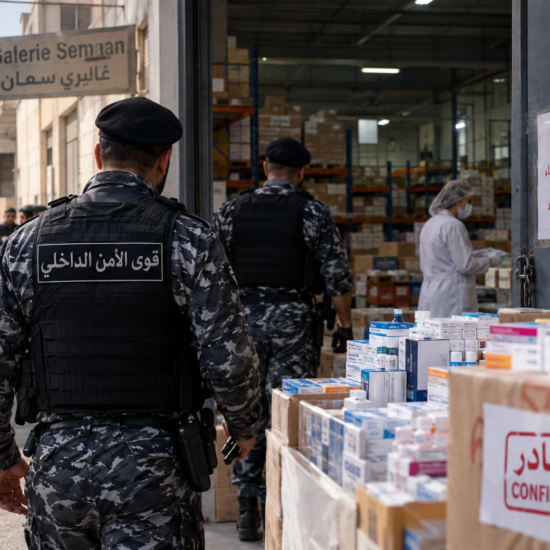
Despite these strong and longstanding ties between the U.S. and Lebanon, there are reasonable concerns that must be addressed regarding continued U.S. leadership, particularly in light of growing policy fatigue and diminishing returns on the American investment in Lebanon, which has fallen short in the eyes of many on Capitol Hill. The challenge remains how to change the model of aid to support desired outcomes that can transform the status quo rather than reinforce it. The U.S. has provided Lebanon with more than three billion dollars in security assistance since 2006, primarily to bolster the capabilities of the Lebanese Armed Forces (LAF), with the central objective of strengthening the country’s premier national state institution, so it can serve as the sole defender of Lebanese sovereignty. Yet this investment has not translated into greater state authority over the use of force. Hezbollah continues to operate outside the writ of the national government, launching Fwars from Lebanese territory against Israel and using its arsenal to advance the interests of the Islamic Revolutionary Guard Corps (IRGC) while intimidating Lebanese communities.
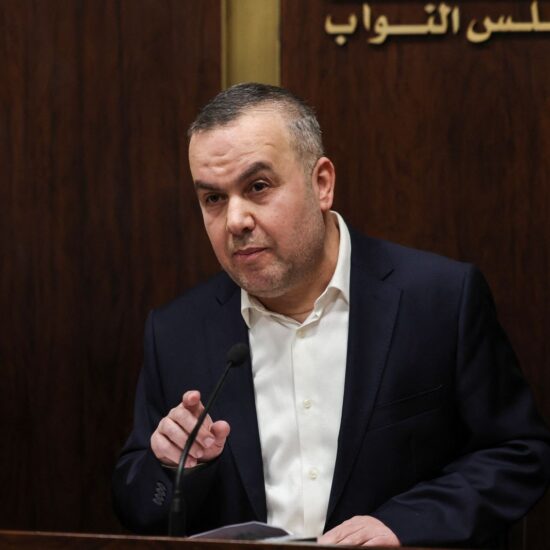
What if anything should the United States do differently at this point, to achieve its long-standing objective of a demilitarized Hezbollah? If the U.S. seeks to reduce its military footprint in the region while protecting Americans from terrorism, it must do so through a long-term strategy that addresses the undisputed link between corruption, illicit activities, and the operational resilience of terrorist networks. This cannot be achieved through military power alone, and requires a sustained investment in governance, financial oversight, and institutional accountability. Previous efforts to undertake an integrated approach toward Lebanon have failed in the shadow of a hegemonic Islamic Republic. But now the incentives have shifted the deterrence dynamic in a post-October 7th (and post-Assad) regional environment. Hezbollah and the regime it serves have been significantly degraded and face growing constraints. A comprehensive approach emphasizing institutional reform and state accountability – work I have focused on for years as a means of eroding Hezbollah’s capture of state institutions – may have fallen on deaf ears in the past and even been misunderstood by some as an effort to preserve the status-quo. That calculus has now changed. External threats no longer suffice as excuses for domestic inaction by Lebanese leaders.
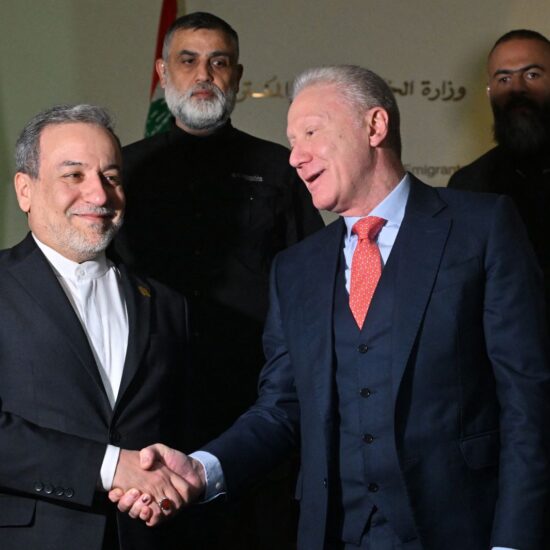
More importantly, policymakers must explore how peace between Lebanon and Israel can fundamentally change the security environment in ways that make disarmament possible and not merely aspirational. With the upcoming expiration of UNIFIL’s mandate in Lebanon, peace talks with Israel offer a strategic opportunity to establish clearer security arrangements along the southern border, create enforceable conditions to address the issue of Hezbollah’s weapons, and empower the LAF as the sole legitimate authority south of the Litani River.
Why Lebanon’s Institutional Framework Matters
Part of the way forward requires an approach that strengthens an institutional governance framework restoring the authority of the Lebanese state as a cohesive national narrative. The ability of institutions to mediate diversity and sustain civil peace in a divided society depends on the conditions that shape their formation and evolution. Lebanon’s historical experience provides insight into those conditions, revealing the persistent absence of a cohesive national identity and the enduring influence of competing actors and narratives that have shaped the country’s institutional development over time. Consequently, modern Lebanese nationalism has been defined less by what is shared among competing narratives and more by opposition to external shocks to the country. Whether it was the Cedar Revolution in response to Syrian hegemony, public protests against corruption and economic collapse, or periods of confrontation with Israel, moments of national unity have often been reactionary. In many cases, these dynamics have not resolved institutional weaknesses but instead exposed the political and sectarian cleavages within Lebanon’s governing system.
The challenge, therefore, is to build institutions resilient enough to withstand it and pave the way for the country’s long-term security. The Ta’if Agreement failed to fully achieve this task. Negotiated by warlords and sectarian leaders under regional and international sponsorship to bring an end to the civil war, the agreement was never fully implemented. Moreover, it removed incentives to address the underlying grievances that contributed to political paralysis and instead reinforced patron-client networks that undermined the authority of the civic state. Addressing the visible symptoms of conflict without confronting the structural conditions that enabled them increases the likelihood that instability will reemerge, or in the case of Lebanon, place power in the hands of those that wield a monopoly of force, effectively displacing the authority of the state. As Secretary Rubio recently noted “Hezbollah is at war with the Lebanese state,” reinforcing that the core conflict is not external, but internal to Lebanon’s sovereignty. Therefore, peace with Israel is not just about normalization, it is fundamentally about rebuilding the legitimate authority of the state.
A Critical Juncture
The U.S. cannot afford to disengage, but it also cannot afford to continue policies that sustain the status quo without producing measurable results on the ground. Otherwise, the chimerical peace train is almost certain to derail. This is also a moment that Lebanon cannot afford to squander. There has never been a moment like this in history where the convergence of U.S. leadership, Israeli deterrence, and growing Lebanese domestic demand for peace with Israel have aligned in this way. For much of the U.S. -Lebanon bilateral relationship, Lebanon operated with limited accountability or sticks from Washington as it relied on longstanding diaspora advocacy networks that prioritized continued support over real change and by legitimizing a cast of characters that provide political cover for Hezbollah. That must end.
To seize this opportunity, the Lebanese Cabinet must take immediate steps to demonstrate that state authority is not symbolic, but real. A solid direction that will send positive signals to all stakeholders is to begin with leadership accountability within the LAF. The current Chief, General Rodolphe Haykal, has failed to meet established benchmarks. For example, he had previously stated that the LAF had completed the first phase of disarmament and had full operational control south of the Litani River. However, only two-days after the launch of joint U.S. – Israeli strikes on the Islamic Republic, Hezbollah launched a full-scale war against Israel from territory that was supposed to be within LAF control. He clearly has not demonstrated the actionable political will necessary to confront the country’s core security challenges. In addition, earlier this year he refused to characterize Hezbollah as a terrorist organization during a meeting with Senator Lindsey Graham, prompting the Senator to abruptly end the meeting. This matters as continued U.S. support to the LAF by Congress is contingent on taking concrete steps to disarm Hezbollah and Haykal has failed at this task. Furthermore, the Cabinet must show that its decrees are enforceable. For instance, earlier this year in March, the Iranian Ambassador to Lebanon was declared “persona non grata” and ordered to leave the country. He is still there. When government decisions are announced but not executed, it erodes the credibility of the state and emboldens Hezbollah.
The Benefits of Peace
Pursuing peace with Israel is a strategic objective for Lebanon, and one that will serve vital U.S. national security interests by reshaping the Levant in ways that strengthen regional stability and American influence. While a fully negotiated peace agreement that guarantees Israel the security it seeks may seem unrealistic, there are nevertheless significant payoffs in the process itself.
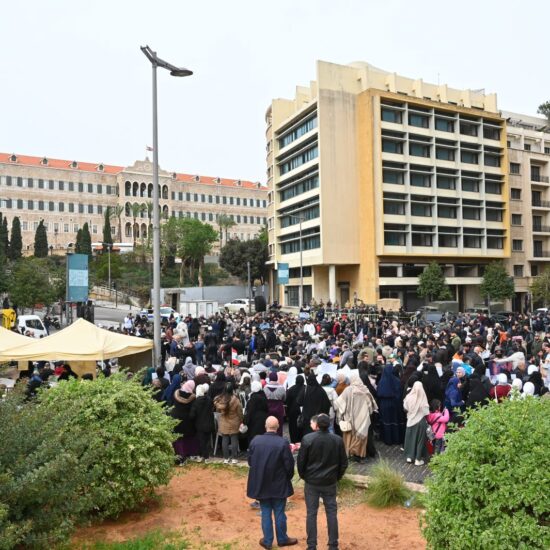
One area of synergy between restoring Lebanese sovereignty and pursuing peace is the repeal of the antiquated, pan-Arab inspired 1955 boycott law that prohibits normalization with Israel. At first glance, it may seem trivial, as it does not directly address the elephant in the room—stopping rockets from being launched into Israeli population centers. However, the long-term payoff lies in building a culture of peace and cooperation within civil society. Unofficial dialogue can shift societal attitudes by cultivating space for economic ties, professional exchanges, and people-to-people engagement to take root. As Lebanese citizens begin to see the tangible benefits of regional cooperation, the grip of Hezbollah weakens not only through force, but through growing irrelevance.
Lebanese artists, media figures, intellectuals, and sports figures, can play a critical role in accelerating this shift. Historically, Lebanon has served as a cultural and intellectual hub for the Arab world, shaping regional trends. The 2005 Cedar Revolution inspired waves of protests across the region, so too today, a wave of more freedom-yearning and media savvy artists have strong appeal that can help reframe the conversation around state authority and peace. While there is growing opposition and anger toward Hezbollah, entrenched and resistant attitudes toward Israel remain a barrier. Leveraging the regional networks and normalization pathways created by the Abraham Accords can begin to shift perceptions by highlighting tangible economic opportunities and shared interests.
My old boss, former Congressman Henry J. Hyde, always said that true leadership is about making unpopular decisions. True power lies not within fanciful declarations, but in the ability to charter a course that simultaneously meets the consequential moments of time with the velocity of great courage. To the skeptics, I say talks are not an end in itself, but rather a mechanism that opens the door to the framework of diplomacy where the next generation has the tools to free themselves from the wars their parents survived and instead gives them the courage to build the peace they deserve.
Lara Alameh is a governance and international affairs professional with over two-decades of experience spanning the U.S. Congress, political campaigns, and international policy initiatives, with a focus on the Middle East and institutional reform. Her work has centered on legislative oversight, foreign assistance policy, and advancing governance and anti-corruption frameworks, including leadership on initiatives related to Lebanon and the broader region.
The views in this story reflect those of the author alone and do not necessarily reflect the beliefs of NOW.
Follow NowLebanon on social media: X , Instagram and Facebook