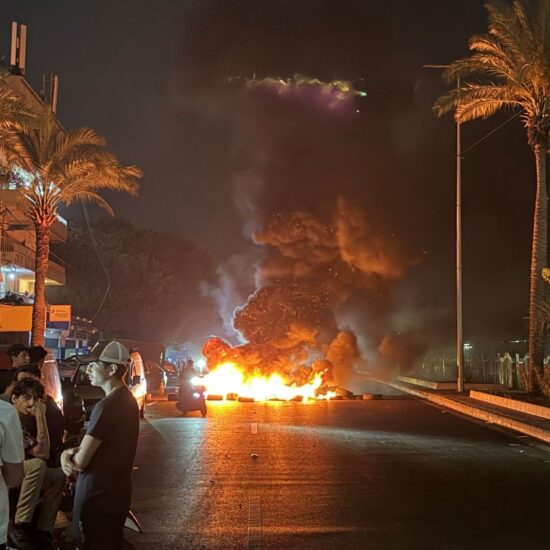
Beirut, Lebanon. Photo by JOSEPH EID / AFP
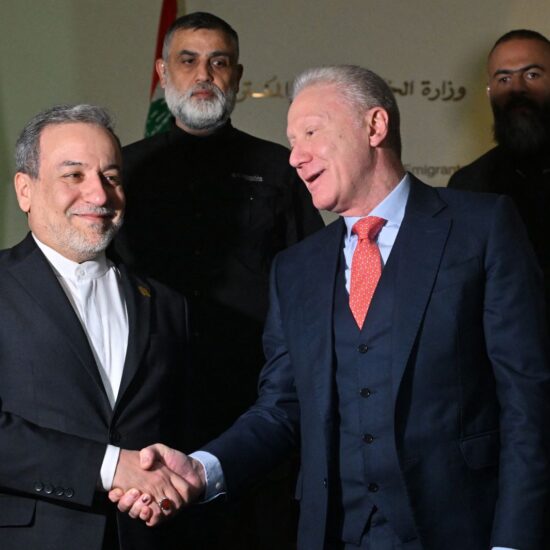
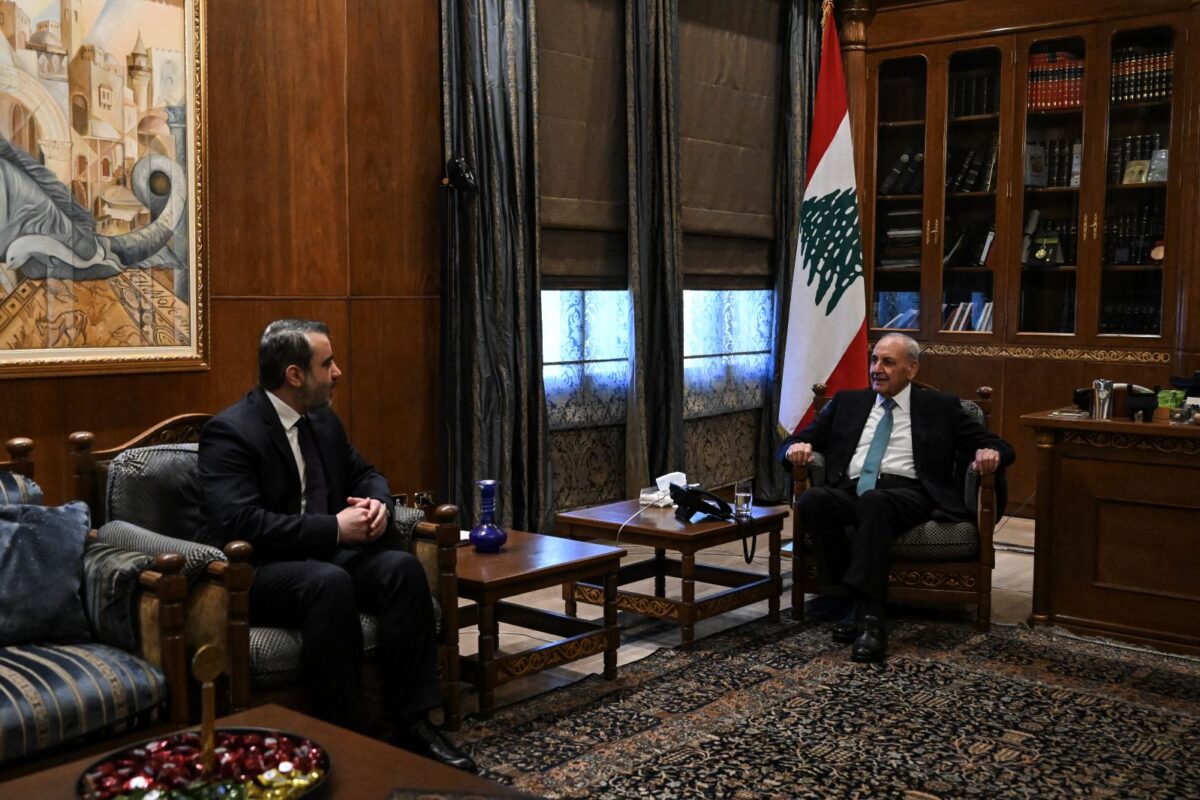
Syrian Foreign Minister Asaad al-Shaibani (L) meets with Lebanese Parliament Speaker Nabih Berri at the speaker's residence in Beirut on July 2, 2026. (Photo by JOSEPH EID / AFP)
Days after Lebanon’s framework agreement with Israel, Syrian Foreign Minister Asaad al-Shaibani arrived in Beirut with a carefully calibrated message: Syria wants a new relationship with Lebanon, one built on state institutions rather than political influence.
The timing of Syrian Foreign Minister Asaad al-Shaibani’s visit to Beirut was no coincidence.
Coming just days after Lebanon signed the US-brokered framework agreement with Israel and amid renewed debate over Hezbollah’s future role, the visit represented more than a routine diplomatic exchange. It was an opportunity for Damascus to position itself within Lebanon’s evolving political landscape while attempting to redefine a relationship long overshadowed by decades of Syrian dominance.
Throughout the day, al-Shaibani met President Joseph Aoun, Prime Minister Nawaf Salam, Parliament Speaker Nabih Berri, Druze leader Walid Jumblatt, Lebanese Forces leader Samir Geagea, religious authorities, and other political figures.
His meetings with leaders from across Lebanon’s political and religious spectrum was just as significant as the visit.
Rather than engaging only with traditional allies, Damascus sought to project an image of openness to all of Lebanon’s political and sectarian components.
Hence Syria wants to deal with Lebanon as a sovereign state, not through individual factions.
That theme was echoed by President Joseph Aoun, who revealed that Syrian President Ahmed al-Sharaa had repeatedly assured him that Syria “will not play the role it played in the past” and would stand “with all Lebanese rather than with one side against another.”
Why now?
The visit comes at a particularly sensitive moment.
The framework agreement between Lebanon and Israel has reignited discussions over state sovereignty and the long-standing question of Hezbollah’s weapons.
The Lebanese government has increasingly emphasized that security decisions should ultimately fall under the authority of the state, while international actors continue to press Beirut to strengthen state institutions.
Against this backdrop, recent remarks by US President Donald Trump suggesting that Syria could potentially play a role in addressing Hezbollah’s military presence generated speculation over Damascus’ future intentions.
Al-Shaibani appeared keen to dispel those concerns.
During his meetings in Beirut, Syrian officials stressed that Damascus has no intention of intervening militarily in Lebanon, framing Syria’s role instead as one of political coordination, economic cooperation, and support for Lebanese stability.
Having spent decades exercising direct influence over Lebanese affairs, Syria appears aware that any suggestion of renewed intervention would undermine its broader effort to rebuild regional credibility.
From influence to institutions
Perhaps the most tangible outcome of the visit was the signing of an agreement establishing a new Lebanese-Syrian Higher Joint Committee.
On the surface, the committee is designed to coordinate cooperation in areas including trade, transportation, border management, electricity, investment, and security coordination. Politically, however, its significance runs much deeper.
The new body replaces the Higher Lebanese-Syrian Council established in 1991 under Hafez al-Assad, an institution widely viewed by many Lebanese as one of the principal mechanisms through which Damascus exercised influence over Lebanese decision-making during the years of Syrian dominance.
Its replacement is therefore more than an administrative reform. It reflects an attempt at least symbolically to replace a model based on political oversight with one centered on cooperation between two sovereign states.
The principles underpinning the new committee reinforce that message. They emphasize respect for sovereignty, territorial integrity, equality between both countries, non-interference in internal affairs, peaceful dispute resolution, and cooperation through official state institutions.
Speaking to every audience
Al-Shaibani’s carefully planned visit also reflected Damascus’ effort to speak to multiple audiences simultaneously.
His meeting with Nabih Berri reassured Lebanon’s Shiite political establishment that Syria remains open to dialogue with all parties. Yet his subsequent remark that any future engagement with Hezbollah would depend solely on whether it served “the interests of both countries” suggested that Damascus is no longer defining its relationship with Lebanon primarily through the group.
Equally significant were meetings with long-time opponents of Syrian influence, including Samir Geagea and Walid Jumblatt, alongside senior Sunni and Christian religious leaders.
Even al-Shaibani’s visit to Tripoli carried symbolic weight. The predominantly Sunni city became one of the strongest centres of support for the Syrian opposition after 2011 and endured years of tension linked to the Assad regime. By ending his visit in Tripoli, Damascus appeared to be reaching out to communities that had long opposed Syrian rule.
Collectively, these meetings projected an image of a Syria seeking engagement with Lebanon in its entirety rather than through a select group of allies.
The emphasis on institutional cooperation, the rejection of military intervention, the outreach to political rivals, and the creation of a new bilateral framework all point toward the same objective: persuading both Lebanon and the wider international community that Syria wishes to be viewed as a partner rather than a patron.
Whether that ambition translates into a genuine transformation of Lebanese-Syrian relations will depend not on Thursday’s carefully worded statements, but on whether both governments can sustain this approach when faced with the inevitable political and security challenges that lie ahead.