AI GENERATED IMAGE
There are moments in the life of a country when a single decision reveals more than a thousand speeches ever could.
Lebanon cancelling its official exams this year is one of those moments.
On paper, it is an administrative decision. A cabinet decree. A response to an academic year so battered by instability that holding national exams became, apparently, impossible. But beneath the surface, it is something far more painful. It is a mirror held up to the country, and what it reflects is not flattering.
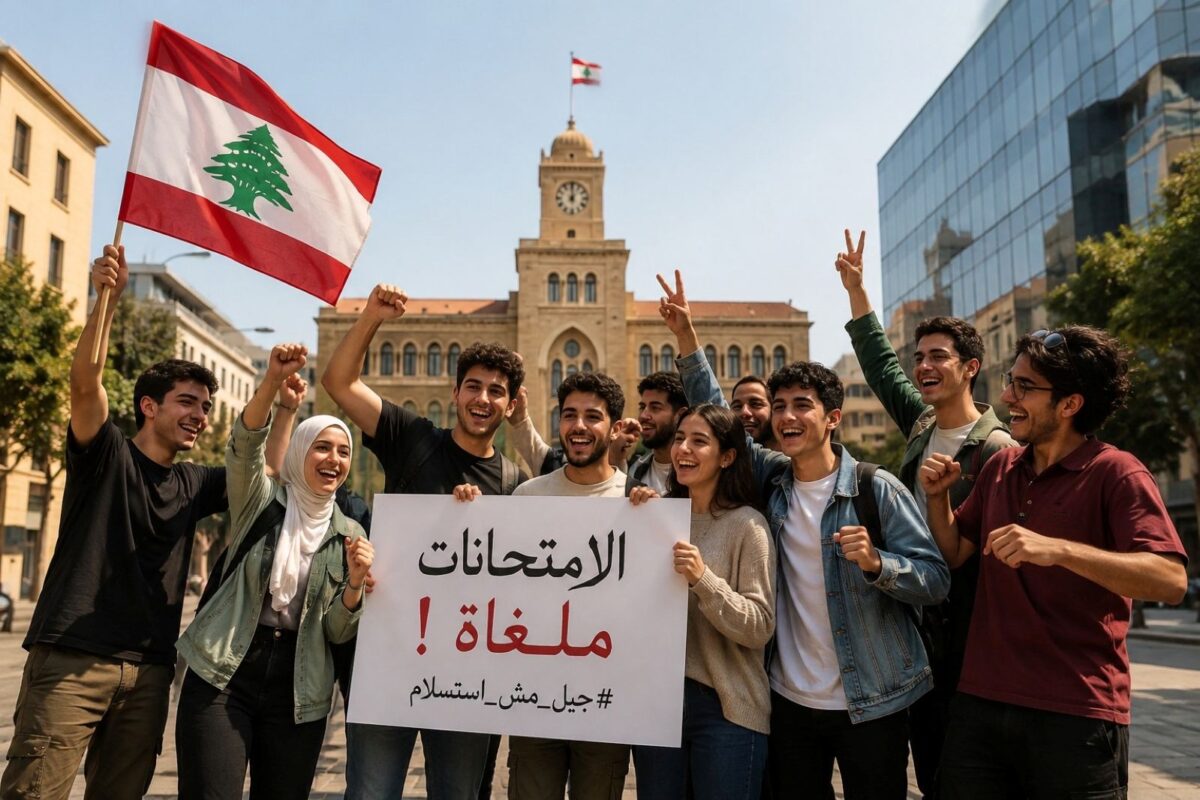
What is perhaps most striking is not only that the exams were cancelled. It is the reaction. Across parts of the country, among students who had spent months preparing for the General Secondary Certificate and Technical Baccalaureate, there was relief. In some places, even celebration.
A nation once proud of its schools is now producing a generation that cheers the disappearance of assessment.
A nation once proud of its schools is now producing a generation that cheers the disappearance of assessment.
There is irony here, but it is not funny. Lebanon has long sold itself, to itself and to others, as a land of education. We were told, again and again, that this country’s true wealth was not oil, gas, or industry, but its people: educated, multilingual, adaptable, ambitious. Beirut was spoken of as a center of learning. Lebanese universities attracted students from across the region. Lebanese teachers, doctors, engineers, writers, and scholars carried the country’s name far beyond its borders.
Education was not merely a sector. It was part of the national mythology.
And yet here we are.
The Brevet had already been cancelled. International exams were disrupted or scrapped for Lebanese students. Now the last official national milestone of the school year has been removed as well. The academic calendar did not simply end. It dissolved.
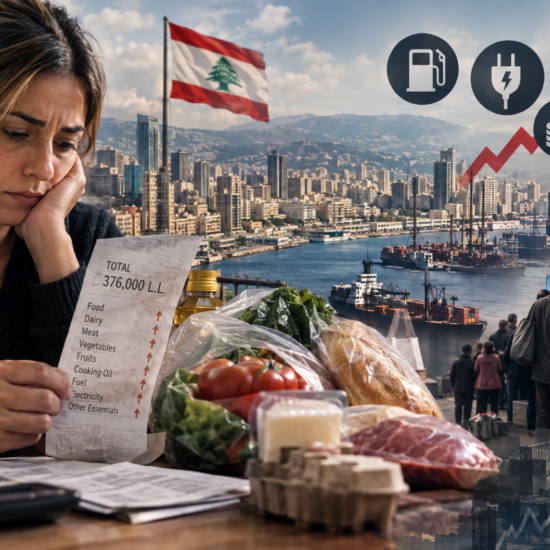
Of course, one can understand the students’ reaction. Many of them have not lived through a normal year in a long time. They have studied through electricity cuts, strikes, displacement, fear, inflation, war, institutional paralysis, and the quiet humiliation of watching adults fail them at every level. For many families, education has become an act of endurance rather than promise. For many teachers, it has become a sacrifice rather than a profession.
So yes, when the exam disappears, some students feel freed.
But freedom from what?
From pressure? From uncertainty? From a system that no longer guarantees fairness? Perhaps. But also, dangerously, from the idea that knowledge must be tested, earned, measured, and taken seriously. That is where the national wound begins to show.
An exam is not sacred. Lebanon’s official exams have never been perfect. They have often been unfair, stressful, outdated, bureaucratic, and poorly adapted to the realities students face. But they still represented something: a common standard, a national threshold, a shared rite of passage. They told students, teachers, parents, and the state that learning mattered enough to be evaluated.
An exam is not sacred. Lebanon’s official exams have never been perfect. They have often been unfair, stressful, outdated, bureaucratic, and poorly adapted to the realities students face. But they still represented something: a common standard, a national threshold, a shared rite of passage. They told students, teachers, parents, and the state that learning mattered enough to be evaluated.
When that disappears with no clear alternative, the message is devastating.
It tells students that the system can collapse at the finish line. It tells teachers that their work may be suspended by politics. It tells parents that planning is useless. It tells universities and employers that the state itself cannot certify what its young people know. Most of all, it tells the youth that Lebanon is no longer able to keep even the most basic promises.
This is not just an educational crisis. It is political. It is economic. It is moral.
Politically, it shows a state that reacts late, changes direction suddenly, and leaves families to interpret uncertainty on their own. Economically, it deepens the divide between those who can escape into private systems, foreign curricula, and universities abroad, and those who remain trapped in a broken national framework. Morally, it confirms something even darker: we have normalized collapse so thoroughly that the cancellation of a national exam can be received like good news.
That is the tragedy.
Lebanon has become a country where relief often comes from the failure of institutions rather than their success. We celebrate when the burden is lifted, even when the burden was supposed to prepare us for life. We applaud the cancellation because the system around the exam has become unbearable. But in doing so, we risk forgetting that a country cannot build a future by removing every difficult test from the path of its children.
Lebanon has become a country where relief often comes from the failure of institutions rather than their success. We celebrate when the burden is lifted, even when the burden was supposed to prepare us for life. We applaud the cancellation because the system around the exam has become unbearable. But in doing so, we risk forgetting that a country cannot build a future by removing every difficult test from the path of its children.
The youth are not to blame for celebrating. They are responding to the world we gave them. Their reaction is not a cause of Lebanon’s decline; it is a symptom of it.
The responsibility belongs to the adults, the politicians, the administrators, the leaders, and the society that allowed education to become another casualty of national decay. A country that once exported talent is now exporting its students’ hopes. A country that once measured itself by its classrooms is now measuring itself by what it can no longer hold together.
The cancelled exam is not the scandal.
The scandal is that we expected anything different.
And the deeper scandal is that, somewhere in Lebanon today, a student is celebrating not because the future looks brighter, but because one more demand has disappeared from a future already stripped of certainty.
Makram Rabah is the managing editor at Now Lebanon and an Assistant Professor at the American University of Beirut, Department of History. His book Conflict on Mount Lebanon: The Druze, the Maronites and Collective Memory (Edinburgh University Press) covers collective identities and the Lebanese Civil War. He tweets at @makramrabah