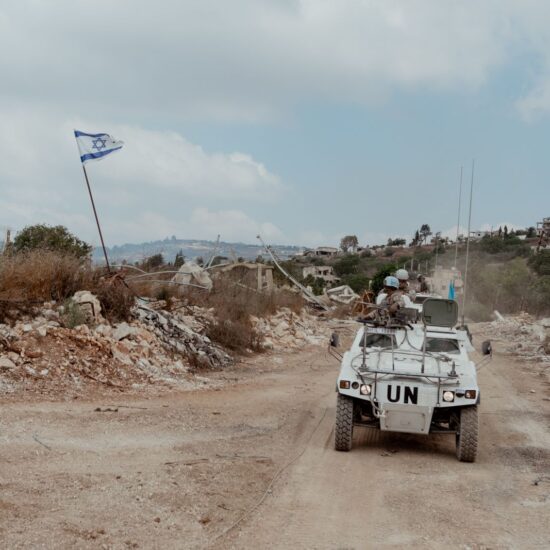

A motorcade delegation arrives for a new round of talks between the Lebanese and Israeli delegations at the US Embassy in Rome on August 4, 2026. (Photo by Tiziana FABI / AFP)
Something strange is happening in Rome. Lebanon and Israel keep announcing progress without answering the most basic question: what happens next? The seventh round ended with President Joseph Aoun speaking of “positive progress” on borders and prisoners. The Americans called the discussions fruitful. Yet there was no new Israeli withdrawal zone, no timetable for complete withdrawal and no comprehensive ceasefire. Israeli attacks continued during the negotiations.
It reveals what these negotiations have become: a waiting room in which every actor manages the present until regional conditions make an agreement possible.
This is more than the familiar distance between diplomatic language and political reality. It reveals what these negotiations have become: a waiting room in which every actor manages the present until regional conditions make an agreement possible.
The circle
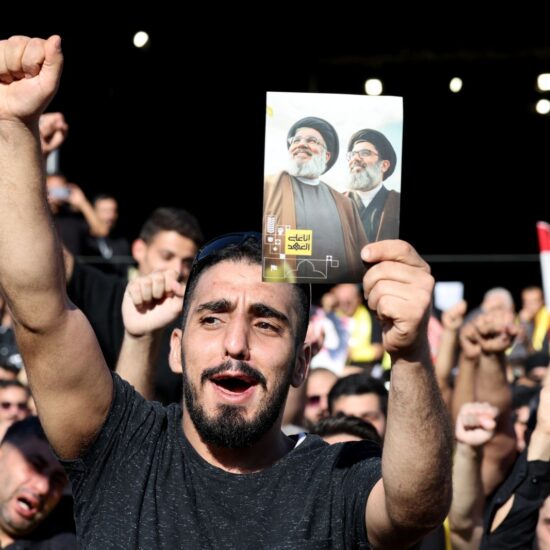
Lebanon argues that Israel must stop its attacks and withdraw so the state can reclaim sovereignty and address Hezbollah’s weapons. Israel argues that Hezbollah must be disarmed before it will withdraw. Hezbollah then points to the occupation and continuing attacks as proof that Lebanon still needs its weapons.
Each position validates the next. Israel’s presence sustains Hezbollah’s argument. Hezbollah’s weapons sustain Israel’s presence. The weakness of the Lebanese state sustains both. The world is not confused by this circle. The diplomats sitting in Rome understand it perfectly well. The negotiations continue because, for the moment, ambiguity serves almost everybody.
Israel retains territory and military leverage while presenting withdrawal as something Lebanon must earn. Hezbollah avoids confronting its military future while occupation preserves the logic of resistance. The Lebanese government keeps diplomacy alive and reassures the public that movement remains possible. Washington prevents collapse without paying the political price of forcing either side into a reciprocal arrangement. What Lebanon receives is time. Unfortunately, it is the actor least able to afford it.
A process without conditions
None of this makes the negotiations useless. A holding process can facilitate prisoner releases, clarify borders and reduce miscalculation. Lebanon and Israel have reportedly agreed on countries that could help verify Hezbollah’s disarmament. That is movement, but it also exposes the limitation: a foreign force can verify disarmament; it cannot create the Lebanese political decision required to produce it.
That decision will not emerge from a technical working group in Rome. It requires an internal Lebanese settlement over state sovereignty, Hezbollah’s political future and the security of the Shia community. It also depends on whether Iran is prepared to accept a transformation of Hezbollah’s regional role, whether Israel is prepared to exchange occupation for verified security rather than demand capitulation before withdrawal, and whether Washington is prepared to guarantee obligations on both sides. Rome can design the mechanism. It cannot manufacture the political conditions.
The larger settlement may not arrive as one dramatic regional agreement. It may emerge through connected bargains
The larger settlement may not arrive as one dramatic regional agreement. It may emerge through connected bargains: US-Iranian de-escalation, a Lebanese agreement over weapons, phased Israeli withdrawals, Lebanese Army deployment and eventually a border and non-aggression arrangement. But until these separate tracks begin reinforcing one another, Rome will continue negotiating details around a decision nobody is yet prepared to take.
The September Test
The next round should therefore be judged by a very simple standard. Not by whether the atmosphere was positive or the discussions were constructive, but by whether something happens that cannot be interpreted away. Is a new pilot zone mapped? Is there a withdrawal date? Does Israel stop attacking and demolishing homes inside it? Does the Lebanese Army deploy as Israel withdraws? Are Hezbollah’s weapons and military personnel removed from that area? Does an independent party verify both sides’ obligations? Can residents return? And does successful implementation automatically activate the next zone? Anything less leaves the original circle untouched.
The danger is that time is not standing still while diplomacy waits. Israel can consolidate facts on the ground. Hezbollah can preserve the argument that its weapons remain necessary. Displaced Lebanese remain away from their villages. The state loses credibility each time it announces progress that citizens cannot see. At some point, negotiations that prevent collapse can also begin normalizing paralysis. Every round can be called successful because success has been reduced to the continuation of the process itself.
Rome is negotiating the mechanics of a settlement whose political conditions do not yet exist.
The negotiations are not failing. They are succeeding at postponing the moment when every actor must make a decision. Rome is negotiating the mechanics of a settlement whose political conditions do not yet exist.
Ramzi Abou Ismail is a Political Psychologist, Researcher and Analyst.
The views in this story reflect those of the author alone and do not necessarily reflect the beliefs of NOW.