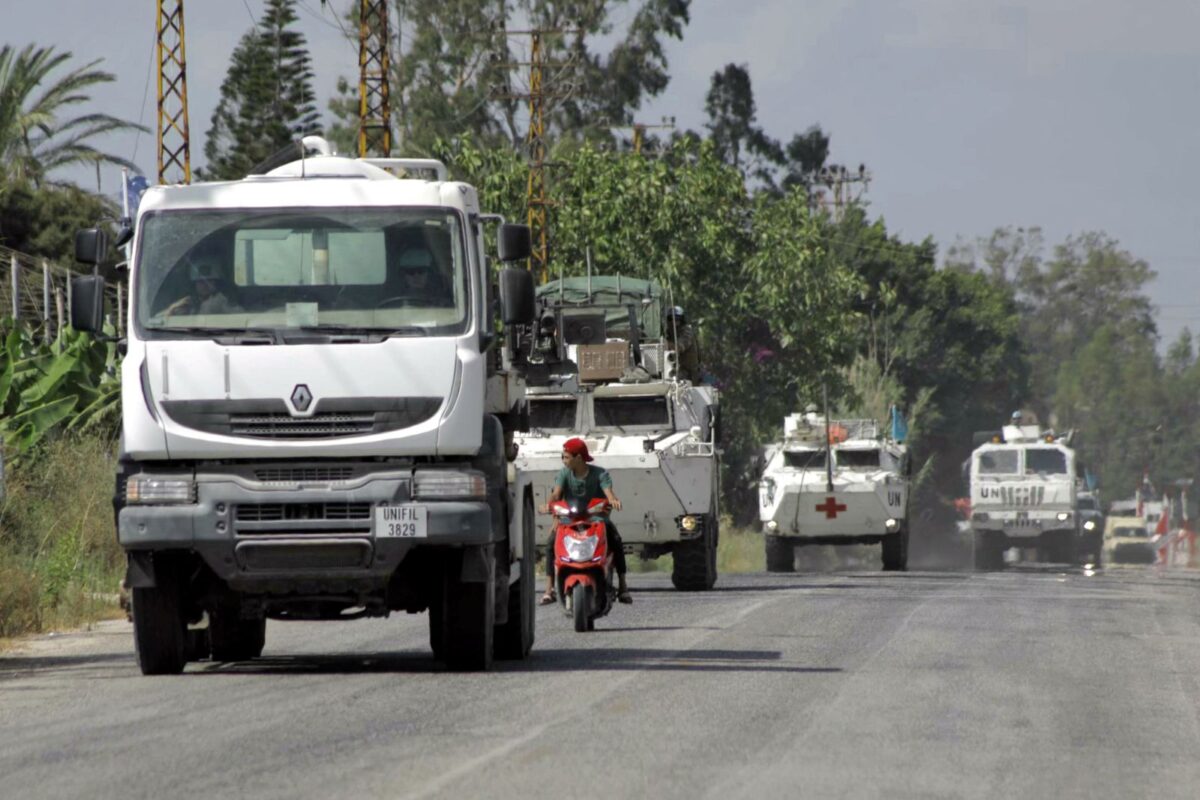
Photo by KAWNAT HAJU / AFP. A United Nations Peacekeeping Force in Lebanon (UNIFIL) convoy drives through the southern Lebanese area of Al-Mansouri on July 2, 2026.
Before UNIFIL arrived in southern Lebanon In 1978, some villages reportedly had no dry-cleaning services not even basic urgent care units. The international force brought foreign soldiers, salaries, rental income, restaurants, supermarkets and, yes, cleaner suits.
This may be a charming footnote in the history of rural development, but it is hardly a compelling doctrine of national security. A country does not recover its sovereignty one pressed shirt at a time.
Yet much of the current campaign to extend UNIFIL’s mandate rests on this same confusion between economic convenience and strategic necessity. Lebanon’s political establishment speaks as though the departure of the peacekeepers would create an intolerable void. President Joseph Aoun has described extending UNIFIL as the preferred option, while preparing to request an alternative international force should the current mission end. Prime Minister Nawaf Salam has likewise emphasized Lebanon’s need for an international presence capable of monitoring, reporting, coordinating and maintaining liaison.
But after almost half a century, the question is no longer what UNIFIL is supposed to do. It is what UNIFIL has actually done—and what Lebanon has avoided doing because UNIFIL was there.
But after almost half a century, the question is no longer what UNIFIL is supposed to do. It is what UNIFIL has actually done—and what Lebanon has avoided doing because UNIFIL was there.
The force did not prevent southern Lebanon from becoming a vast military infrastructure for Hezbollah. It did not stop the construction of tunnels, the accumulation of weapons or the transformation of villages into forward operating positions for Iran’s regional project. Hezbollah and other components of the Iranian axis operated throughout its area of deployment while an international force mandated to assist the Lebanese state in restoring its authority watched the landscape around it change.
UNIFIL became a witness unwilling—or unable—to testify.
UNIFIL became a witness unwilling—or unable—to testify.
The murder of Lokman Slim offered a particularly disturbing illustration. Slim, a publisher, researcher and outspoken critic of Hezbollah, was abducted and murdered in February 2021 only a short distance from one of UNIFIL’s positions in southern Lebanon. Yet the force did not meaningfully cooperate with his family’s effort to uncover what had happened in territory supposedly monitored by thousands of international peacekeepers.
The symbolism was difficult to miss. A prominent Lebanese citizen could be assassinated virtually within sight of a United Nations presence, while that presence behaved as though proximity created no corresponding responsibility—not even a responsibility to help establish the truth.
Then came the murder of Irish peacekeeper Private Seán Rooney in December 2022. His UN-marked vehicle was surrounded and fired upon in an area under Hezbollah’s influence. The Lebanese military court eventually convicted six defendants in 2025, but the principal defendant, Mohammad Ayyad, was sentenced to death in absentia after having been released on bail and subsequently failing to appear. Other defendants received comparatively minor sentences or fines, while the senior leadership of Hizballah were never put on trial .
UNIFIL welcomed the conclusion of the trial and praised the Lebanese government’s commitment to accountability. Rooney’s family was considerably less impressed. His mother described the proceedings as a “sham” and insisted that justice had neither been done nor seen to be done.
The contrast was revealing. If UNIFIL cannot stand its ground and insist on credible, transparent accountability when one of its own soldiers is killed, what exactly should the Lebanese population expect it to do when Hezbollah intimidates, abducts or kills Lebanese citizens? Expressions of concern are not accountability, and a conviction in absentia means little if the main perpetrator remains beyond the reach—or protection—of the state.
This is not primarily an indictment of the individual soldiers serving beneath the blue flag. Many have performed difficult duties under dangerous conditions, and some, like Rooney, have paid with their lives. The failure is political and structural. UNIFIL was asked to operate in territory where the Lebanese state declined to exercise real sovereignty and where Hezbollah dictated the boundaries of what international personnel could see, inspect or report. The mission remained present, but presence was repeatedly mistaken for effectiveness.
Worse, UNIFIL provided the Lebanese establishment with the perfect alibi. Whenever violence erupted, officials demanded that the international community act. Whenever Hezbollah expanded its military infrastructure, the state explained that it lacked the capacity to confront the problem. Whenever the question of sovereignty arose, responsibility was divided among the United Nations, the army, local “sensitivities,” regional circumstances and an endlessly postponed national dialogue.
Everyone was responsible, which meant that no one was.
The Lebanese state now resembles a child refusing to remove the training wheels from his bicycle. The child insists that he wants to ride independently but panics whenever an adult reaches for the wrench.
The Lebanese state now resembles a child refusing to remove the training wheels from his bicycle. The child insists that he wants to ride independently but panics whenever an adult reaches for the wrench. Nearly five decades after UNIFIL’s establishment, Lebanon’s leaders continue to demand sovereignty while subcontracting the risks and duties that sovereignty entails.
The south does not need another international formula designed to protect the state from its own responsibilities. It needs the Lebanese Armed Forces to become the sole military authority on Lebanese territory.
This requires money, equipment, training and political backing. UNIFIL operates with thousands of personnel and a substantial annual budget. Redirecting a meaningful portion of the international resources currently devoted to sustaining this indefinite mission toward strengthening the Lebanese Armed Forces would have a more lasting impact. Lebanon does not need parallel structures that manage instability. It needs a national institution capable of ending it.
Funding alone, however, will not solve the problem. The army must receive an unambiguous political mandate to deploy throughout the south, inspect suspected military sites, prevent the reconstruction of Hezbollah’s infrastructure and enforce the state’s monopoly over arms. An underfunded army is a serious problem; an army denied the authority to act is an even greater one.
Ending UNIFIL’s mission would also send a necessary message to European governments, whose troops and taxpayers have carried much of its burden: the Lebanese people do not wish to remain permanently trapped beneath Hezbollah’s hegemony.
Ending UNIFIL’s mission would also send a necessary message to European governments, whose troops and taxpayers have carried much of its burden: the Lebanese people do not wish to remain permanently trapped beneath Hezbollah’s hegemony. The international community should help Lebanon escape that condition, not finance the arrangements that make it sustainable.
Hezbollah has benefited from UNIFIL’s presence more than it admits. The blue helmets provide a buffer against Israel while Hezbollah retains the weapons, tunnels and operational freedom that repeatedly expose the south to war. In this arrangement, international troops become involuntary shields, the inhabitants of southern Lebanon become hostages, and Hezbollah preserves the right to decide when the battlefield will reopen.
Israel must withdraw from Lebanese territory and cease its attacks. But Lebanon cannot make Israeli compliance a precondition for exercising sovereignty over its own land. Nor can it indefinitely link the dismantling of an Iranian-backed armed organization to the goodwill of the Israeli government. A sovereign state fulfils its obligations because they are sovereign obligations, not bargaining chips.
Extending UNIFIL would not resolve the crisis. It would merely kick the can farther down a road already littered with destroyed villages, abandoned resolutions and recycled promises.
UNIFIL was created as a temporary instrument. Its longevity has become evidence not of success, but of Lebanon’s prolonged refusal to graduate from international supervision.
The dry cleaners may survive its departure. The more important question is whether the Lebanese state is finally prepared to clean house.
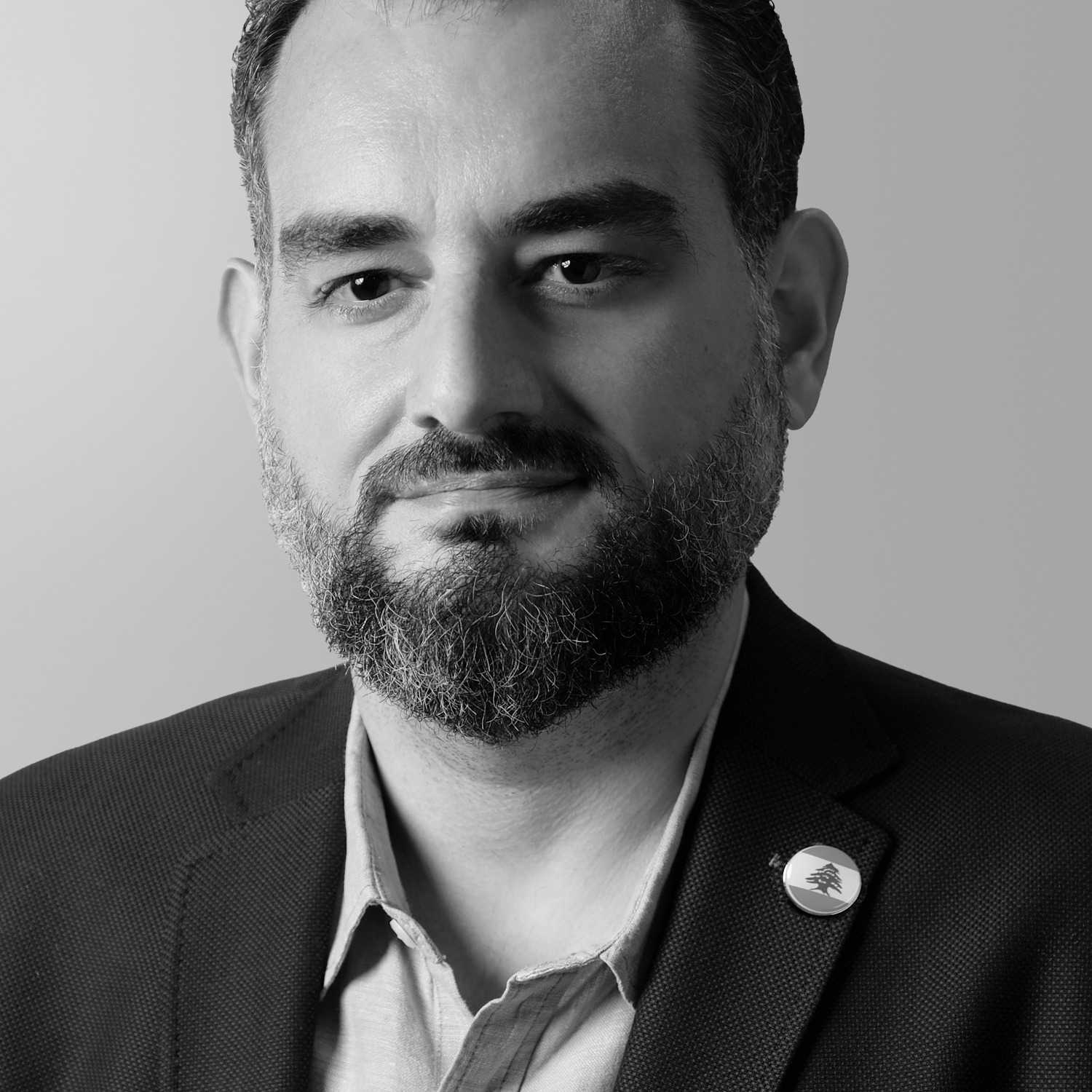
Makram Rabah is the managing editor at Now Lebanon and an Assistant Professor at the American University of Beirut, Department of History. His book Conflict on Mount Lebanon: The Druze, the Maronites and Collective Memory (Edinburgh University Press) covers collective identities and the Lebanese Civil War. He tweets at @makramrabah