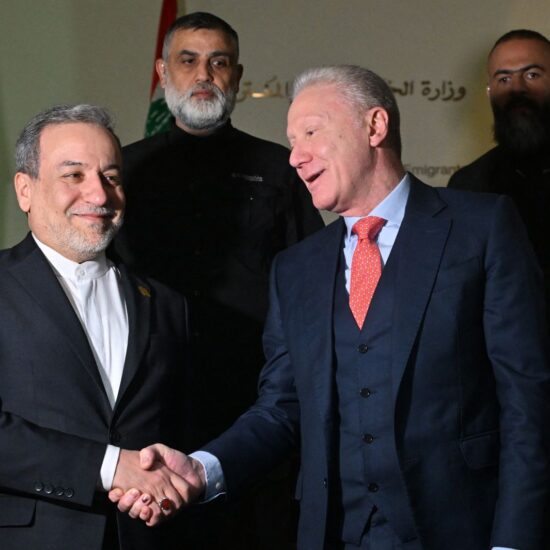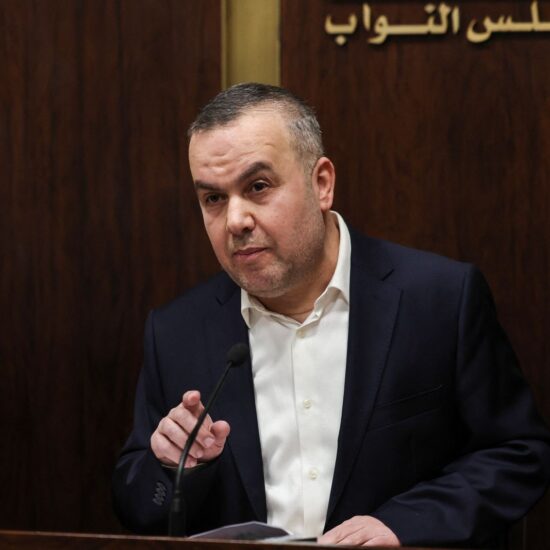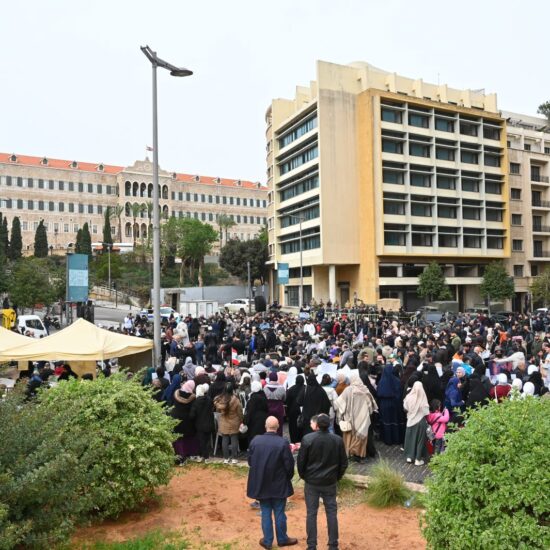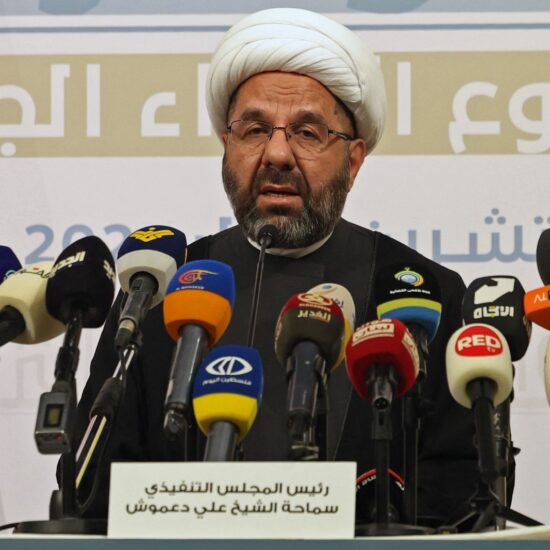

In its July 3, 2026 Universal Periodic Review response, Lebanon officially supported recommendations on journalist safety, civil society protection, torture prevention, and refugee safeguards, while noting or partially addressing proposals concerning criminal defamation, military courts, Article 534, and Palestinian property and labor rights (HuMENA Regional Center for Human Rights, 2026). Watching these diplomatic negotiations unfold brings me back to a broader intellectual-historical question I have long considered:
Where do human rights actually come from? This is the question at the heart of this piece. Two serious answers compete, and both merit consideration before examining the implications of “rights language” for a place like Lebanon. The first traces rights to Christian, largely scholastic, legal and moral thought: canon law, natural law, and medieval and early-modern arguments that developed the vocabulary of individual rights centuries before the Enlightenment claimed it. The second locates their origins in a rupture with that Christian tradition: a materialist, monist philosophy that rejects transcendent foundations and grounds rights on entirely different premises. Although I am personally closer to the Christian genealogy, what follows treats both genealogies as working hypotheses before turning to Lebanon. The aim is to examine the relationship between European rights-language, constitutional political influence, and local political traditions, asking whether rights and constitutions represent continuities with those traditions or ruptures from them.
A Christian genealogy
Brian Tierney’s research reshaped this debate by locating the language of subjective rights, ius as something a person possesses rather than merely what is objectively right, in the writings of twelfth- and thirteenth-century canon lawyers, well before Grotius or Locke. Francis Oakley extended this argument by tracing conciliarist theories of consent-based authority within the Church itself, a template later secularized into constitutional theories of consent. Larry Siedentop’s Inventing the Individual pushes the origins further back, to Paul’s theology of moral equality before God, which he argues gradually undermined ancient hierarchies of household, tribe, and status from within.
Jacques Maritain offered a particularly clear account of how this tradition accommodates modern pluralism: people can agree practically on a rights charter (he helped draft the UDHR) without agreeing on its theoretical or theological foundations, an argument developed in Man and the State. John Courtney Murray applied a similar distinction to democracy itself, contrasting an Anglo-American constitutional tradition compatible with religious foundations with a French/Jacobin tradition that asserted rights against religion. Tom Holland’s Dominion advances the broadest version of this argument: even secular Western moral intuitions concerning dignity, equality, and conscience remain recognizably Christian in form, whether or not anyone still recognizes their origins.
On this reading, democracy does not generate rights; it is simply one political form particularly suited to protecting rights that exist independently of it.
A materialist counter-hypothesis
Jonathan Israel’s Radical Enlightenment advances the opposite starting point. For Israel, the decisive break was Spinoza’s monism: a single substance, no soul-body dualism, and no transcendent lawgiver standing outside nature to issue commands. Rights, on this account, are not discovered as already given by God or nature; they are constructed through reason once theological hierarchy has been dismantled. Israel places Spinoza, Bayle, Diderot, and d’Holbach at the center of this “Radical” Enlightenment, crediting it with the decisive advances toward modern egalitarianism. He contrasts it with the “moderate” Enlightenment of Locke and Newton, which he considers constrained by residual theological assumptions that justified inequality through established churches, monarchy, and women’s subordination rather than overcoming them.
Israel’s account remains contested: critics argue that he understates religious contributions to toleration and exaggerates Spinoza’s direct influence on revolutionary politics. Nevertheless, the underlying claim is philosophically distinct from the Christian genealogy, not merely a variation of it. In Israel’s account, democracy and rights emerge together as a single secular achievement, forged through substantive tension with the Christian tradition rather than developing out of it.
Lebanon, held open
Lebanon’s constitutional landmarks are readily identified: the Tanzimat, the 1861 Règlement Organique, the 1926 constitution, and the 1943 National Pact.
Accepting the Christian genealogy of rights, which traces a developmental trajectory from natural law through natural rights to modern human rights, the central question becomes how this trajectory intersected with Lebanon’s Catholic political imagination. Through centuries of Latin ecclesiastical influence and communion with Rome, did European scholasticism permeate Maronite political thought, fostering an internal evolution toward the rights-bearing individual comparable to that found in Latin Catholicism? If so, when the 1926 constitution introduced explicit individual rights, did Maronite institutions, with their canon law and synodal, consent-based structures, experience it as an organic continuation of an already internalized tradition, or did they receive it as an external institutional innovation?
Extending the historiographical lens beyond Catholics raises a parallel set of questions: Did Lebanon’s diverse religious communities actively embrace constitutionalism as their own project, shaping its terms and treating it as something worth building, or did they merely accommodate it, preserving communal authority beneath a formal constitutional structure? Whether Lebanese Catholics and their neighbors ultimately understood rights-talk and constitutionalism as continuities with their political traditions, as institutions they actively helped shape, or merely as a legal framework imposed upon a distinct political order remains an open question for historians.
Boghos is a researcher in political economy, social history, and intellectual history, with a focus on the modern Levant. He holds a BA in Political Science from Haigazian University and is currently a graduate student specializing in Middle Eastern Studies at the American University of Beirut. His work examines capitalist transition in Mount Lebanon, the intellectual history of the Levantine Left, and the social and historical conditions that gave rise to liberalism in Lebanon, including its structural features, its relationship to Christian communities, and its embeddedness in the socioeconomic transformations of the nineteenth and twentieth centuries.
The views in this story reflect those of the author alone and do not necessarily reflect the beliefs of NOW.
References:
HuMENA for Human Rights and Civic Engagement. “Lebanon Supports Key Civic Space Recommendations at the UPR, but Implementation Remains the Real Test.” July 3, 2026. https://humena.org/lebanon-upr-2026-civic-space-human-rights/