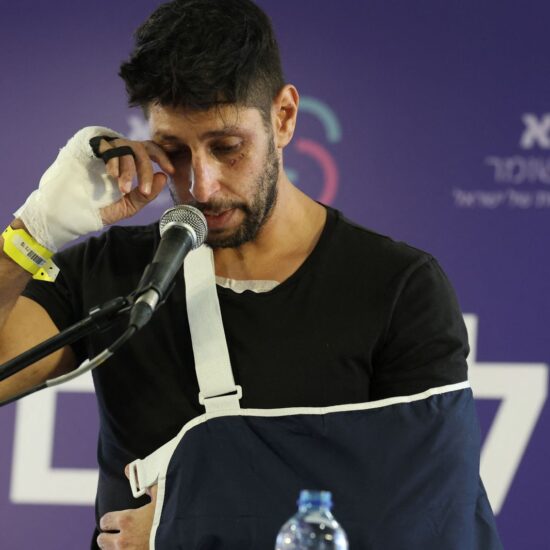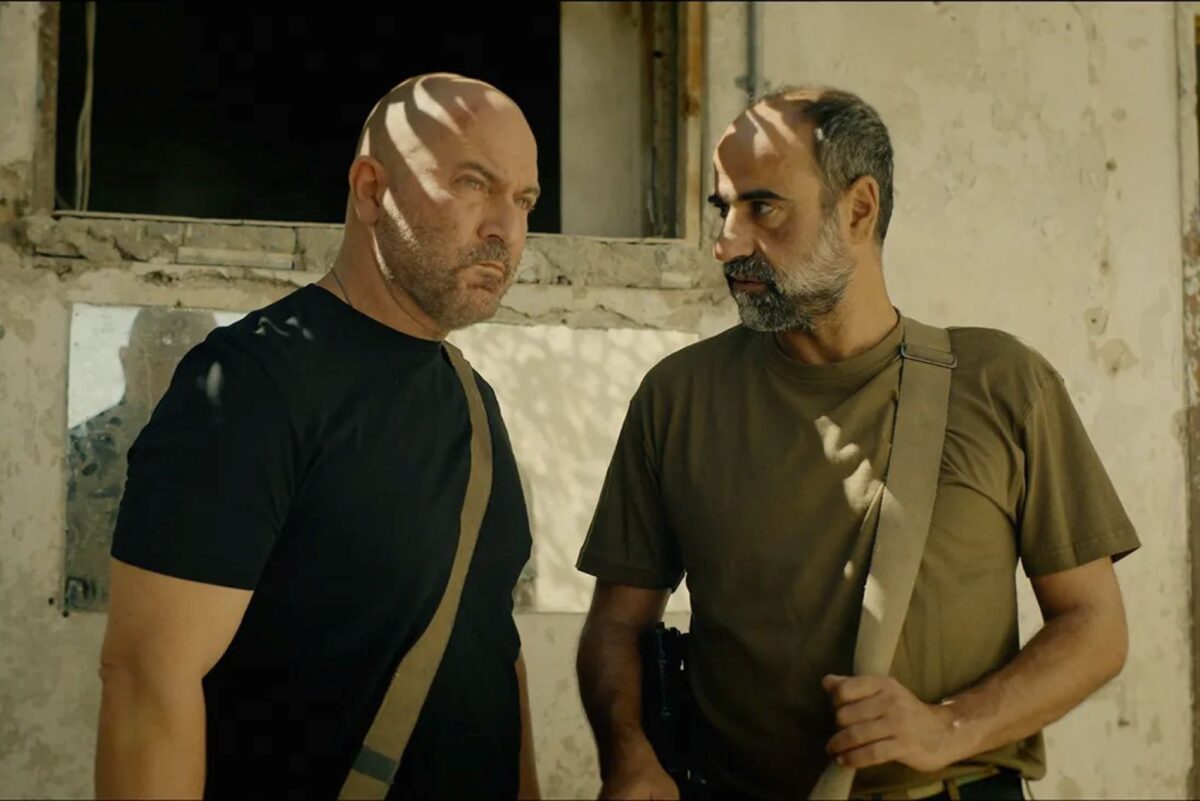
Lior Raz as Doron Kavillio and Yaakov Zada-Daniel as Eli in 'Fauda' season five. (Photo by The Hollywood Reporter)
The fifth season of the Israeli television series “Fauda” premiered worldwide on Netflix last week, to global anticipation. The show’s writers stated in an interview that they rewrote the season after the October 7th attack by Hamas to showcase the sense of pain, loss, and mourning that Israelis felt during that day. The season, while taking place in the shadow of October 7th and its aftermath, avoids Gaza almost entirely. In a testament to the series’ popularity, the show topped Netflix charts, surprisingly, in Lebanon. So why was a country which criminalizes contact with Israelis absorbed by this TV show?
It is important to keep in mind that open consumption of Israeli cultural products, specifically books and movies and television series, is taboo in Lebanon.
It is important to keep in mind that open consumption of Israeli cultural products, specifically books and movies and television series, is taboo in Lebanon. According to the 1955 Boycott Law, contact of any kind between Lebanese and Israelis could lead to jail time, and that naturally extends to academic and cultural exchange. A common slur used to demonize critics of Hezbollah in Lebanon is “zionist”, which marked its receiver as a traitor deserving of scorn, if not more. Even today, when the Lebanese state has crossed the line of diplomatic engagement, the subject remains sensitive, and for valid reasons.
Previous seasons of Fauda have sought to provide a psychologically thrilling window into the lives of Arabic-speaking Israeli soldiers. By creating characters that spoke Arabic fluently, the writers wanted to connect the characters to their immediate Palestinian environment in an attempt to create nuance, which served as an enticement for a wider Arab audience. The Arab viewer was more likely to connect with Israeli characters that spoke Arabic, danced to Arabic music, and interacted with Palestinian Arabs. This was a major factor in the show’s popularity in the Arab world, even as it portrayed these characters as killers of Arabs.
In this season, the focus is on two areas: the impact of the October 7th attacks on the characters, and the global turn in public opinion against Israel following its destructive and murderous war in Gaza. Two episodes featured the characters’ experience on October 7, especially the losses they suffered personally and psychologically. The depicted violence is aimed at a global audience to justify the resulting Israeli brutality in Gaza. The use of foreigners as volunteers in a terrorist plot against Israel is aimed at Westerners who no longer support Israel, portraying them as useful idiots in violence against Jews.
In Lebanon, this is reflective of a wider issue. There is profound ignorance about Israel, its politics, and its social makeup. Hebrew is almost never taught, with a few academics teaching biblical Hebrew in some universities. Nowhere in Lebanon is the average student taught about Israel in any great detail, and even in universities the few select courses on Israel only study it in the context of the Israeli-Palestinian conflict.
In Lebanon, this is reflective of a wider issue. There is profound ignorance about Israel, its politics, and its social makeup. Hebrew is almost never taught, with a few academics teaching biblical Hebrew in some universities. Nowhere in Lebanon is the average student taught about Israel in any great detail, and even in universities the few select courses on Israel only study it in the context of the Israeli-Palestinian conflict. While this is the primary position of Israel in the Lebanese psyche, there is much to learn about Israel and what drives its politics and its interaction with its surroundings.
This, in turn, has gradually stifled any national conversation about Israel vis-a-vis Lebanon. Whenever critical moments emerged in which Israel loomed large in everyday Lebanese politics, no nationwide forum existed in which debates on the nature of the Lebanese-Israeli relationship were had. For example, Hezbollah spent years agitating against Israel and hijacking the Lebanese conversation about Israel, only to sanction negotiations over the maritime border in 2022 because it wanted to. Hezbollah’s decision to initiate war with Israel in 2023 and again in 2026 has increased the sensitivity of this topic, especially as Israel killed thousands of Palestinians in Gaza. As a substitute, Lebanese citizens watch Fauda on Netflix and try to reconcile what they watch with what they see in the news about Israel. In this season, the October 7 episodes provided an unprecedented insight into the trauma of the October 7 attack on Israeli society. The events of October 7 have never received coverage in Arab, let alone Lebanese, media, and naturally the viewer would want to learn about the attack itself and its impact on Israel and Israelis. That Arab viewers don’t fully understand how the attack affected Israel is a reason the national conversation remains poor.
In Lebanon, the Overton window on Israel is changing, after decades of it being monopolized by one political party. At a critical time, in which Israel occupies Lebanese territory and the Lebanese government is negotiating with Israel, citizens need to be informed in order to push for a policy which realistically ensures the eviction of Israeli troops from Lebanon and the respect of Lebanese sovereignty. Clinging to flat and simplistic perspectives on a country which wields destructive power and looms large in our everyday lives will ensure continued misery and long-term Israeli occupation of South Lebanon, a recipe for bloodshed.
Mohammad el-Sahily is a student and activist. He tweets @moesahily.
The views in this story reflect those of the author alone and do not necessarily reflect the beliefs of NOW.