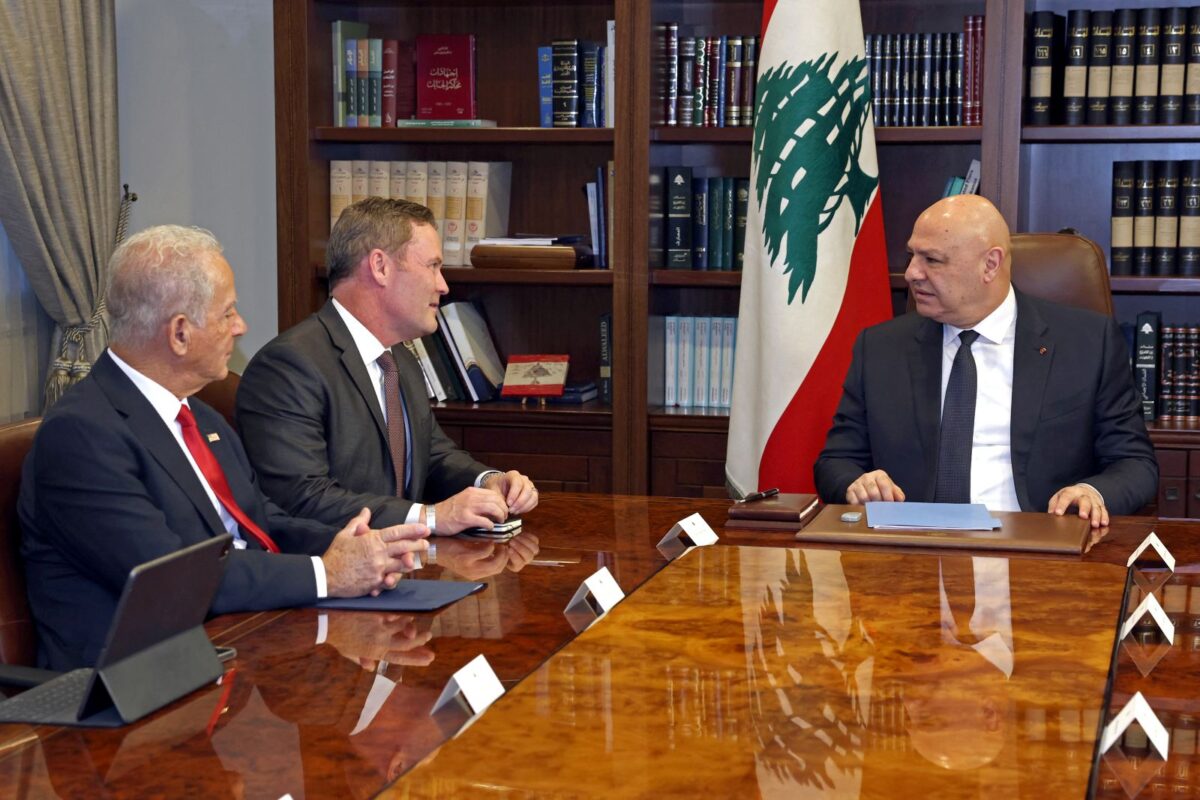
Baabda, Lebanon. Photo by- / LEBANESE PRESIDENCY PRESS OFFICE / AFP. This handout photograph released by the Lebanese Presidency Press Office on November 16, 2026 shows Lebanon's President Joseph Aoun (R) speaking with US envoy Mike Waltz (2L) as US Ambassador to Lebanon Michel Issa watches during their meeting at the presidential palace in Baabda, east of Beirut.
US Ambassador to the United Nations Mike Waltz arrived in Beirut on Sunday for meetings with senior Lebanese officials to discuss Washington’s support for implementing the framework agreement between Lebanon and Israel, including Hezbollah’s disarmament and the establishment of a sovereign Lebanese state free from Hezbollah and Iranian influence. His visit comes at a critical stage as the mandate of the United Nations Interim Force in Lebanon (UNIFIL) is set to expire on December 31, 2026, raising questions over the future of international security arrangements along the southern border.
Waltz is also expected to meet with United Nations representatives to discuss the conclusion of UNIFIL’s mandate and the transfer of security responsibilities to the Lebanese state. The discussions come amid continued disagreements over the mission’s future, with Washington opposing a further extension of its mandate, while Lebanese officials have stressed the importance of maintaining an international presence in the South to prevent a security vacuum.
The United States is also seeking tangible progress from Beirut on implementing its commitments under the Lebanon-Israel framework, particularly regarding Hezbollah’s weapons and the Lebanese Army’s deployment in southern areas. Waltz’s visit is therefore expected to bring renewed attention to the post-UNIFIL security framework and the extent of international support and monitoring that will be available once the peacekeeping mission concludes.
Salam and Saddi in Qatar to Advance Electricity Negotiations
Prime Minister Nawaf Salam arrived in Doha on Sunday, accompanied by Energy and Water Minister Joe Saddi, to continue negotiations over Qatar’s proposed support for Lebanon’s electricity sector. The visit comes amid ongoing efforts to secure investments and establish a long-term framework to address the country’s chronic electricity shortages.
Salam held a meeting with Qatari Prime Minister and Foreign Minister Sheikh Mohammed bin Abdulrahman bin Jassim Al-Thani, while Saddi was expected to hold separate discussions with Qatar’s Minister of State for Energy Affairs, Saad bin Sherida Al-Kaabi.
The discussions are focused on a proposed package of energy projects, including the construction of new power plants in Lebanon, the import of natural gas and electricity through Syria, and the establishment of a floating storage and regasification unit (FSRU) to receive liquefied natural gas (LNG). Negotiations also include a potential 20-year agreement for Qatar to supply LNG to Lebanon, alongside renewable energy projects.
The proposed agreement forms part of a wider effort to attract investment into Lebanon’s deteriorating electricity infrastructure and increase the supply of power to the national grid. The discussions could also open the door to greater regional energy cooperation, particularly through connections with Syria and existing gas infrastructure linking several countries in the region.
The Qatari proposal is particularly significant given Lebanon’s continued dependence on expensive private generators and the limited electricity supply provided by Électricité du Liban (EDL). The state utility has also faced mounting unpaid bills from public institutions, prompting temporary electricity cuts to some administrations earlier this month.
The negotiations follow a series of discussions between Lebanese and Qatari officials in recent weeks. The Lebanese government approved Saddi’s electricity sector plan during Friday’s Cabinet session, while Parliament approved an additional allocation equivalent to approximately $100 million to help settle part of the outstanding payments owed to EDL by public institutions.
Al-Hajjar Discusses Security Cooperation During Damascus Visit
Interior and Municipalities Minister Ahmad Al-Hajjar visited Damascus on Sunday, where he met Syrian Interior Minister Anas Khattab to discuss strengthening security cooperation and coordination between the two countries.
The meeting, held at the Syrian Interior Ministry headquarters, focused on bilateral relations, border security and mechanisms to improve cooperation between the respective security agencies. Both sides expressed their commitment to expanding coordination on matters of mutual interest and supporting regional stability.
Several sensitive judicial and security matters were also raised during the discussions, including the killing of former Iraqi MP Ahmad Al-Alwani, who was found dead inside an apartment in Beirut’s Tariq al-Jdideh neighbourhood earlier this month.
Lebanese authorities have requested Syrian cooperation in locating and handing over two Syrian nationals suspected of involvement in the killing. Preliminary findings indicated that Al-Alwani had been strangled, while Lebanese investigators continued to examine the circumstances surrounding the crime. A Lebanese national has also been arrested in connection with the investigation.
The discussions also addressed the presence in Lebanon of former Syrian regime military and security officials suspected of involvement in abuses and crimes during the previous government’s rule. The two sides discussed the importance of exchanging intelligence and establishing coordination mechanisms to pursue individuals wanted in connection with criminal offences and alleged war crimes.
In Lebanon
IMF says further reforms needed to restructure Lebanon’s banking sector
The International Monetary Fund has said that additional work is required before an agreement can be reached on restructuring Lebanon’s banking sector, a key condition for unlocking billions of dollars in potential international financial assistance. Following four days of meetings in Beirut, the IMF noted progress in discussions concerning banking reforms, the draft financial regulation law and deposit recovery, but stressed that further agreement is needed. Finance Minister Yassin Jaber said he hoped Lebanon could sign an IMF programme during the first quarter of 2027. The unresolved financial gap law and disagreements over how banking losses should be distributed continue to delay progress.
Bilal Erdogan calls for greater unity between Lebanon, Syria and Turkey
Bilal Erdogan, son of Turkish President Recep Tayyip Erdogan, visited Tripoli on Friday, where he met with religious, political and social figures. During a gathering at the Grand Mansouri Mosque, he called for stronger relations between Lebanon, Syria and Turkey, stressing the importance of internal unity in Lebanon and closer cooperation between neighbouring countries. He also conveyed greetings from the Turkish president to the people of Tripoli.
Lebanese Army seizes weapons depot in Beirut’s southern suburbs
The Lebanese Army announced that it had seized a large quantity of weapons and ammunition from a depot in the Msharrafieh area of Beirut’s southern suburbs following a security operation. The raid came after authorities monitored the transportation and trade of weapons in the area. One individual was arrested and placed under investigation. The army’s statement did not identify the ownership of the seized weapons.
Israeli forces destroy Hezbollah tunnel in southern Lebanon
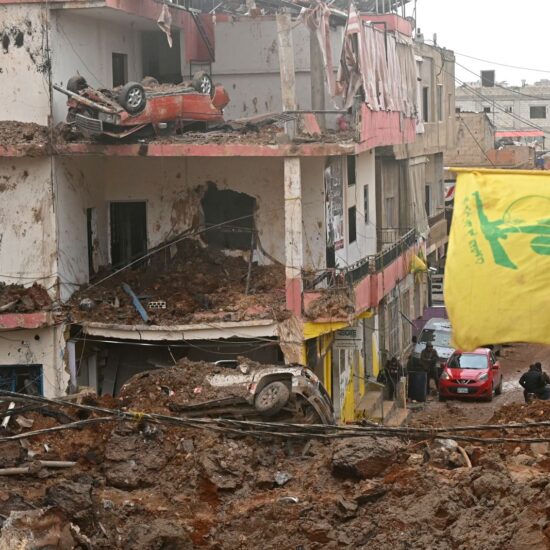
Israeli forces dismantled a 35-metre-long tunnel in the Majdal Zoun area of southern Lebanon, according to the Israeli military. The underground passage reportedly contained two living quarters and was discovered during ongoing Israeli military operations in the area. The operation involved the 300th Brigade and the military’s Yahalom combat engineering unit. Israel said its forces continue operating in what it describes as a security zone in southern Lebanon.
Fly Beirut prepares to launch low-cost flights from Lebanon
Lebanon’s aviation sector could see the introduction of a new low-cost airline, with Fly Beirut expected to begin operations from Beirut’s Rafic Hariri International Airport next June. The airline, a subsidiary of Middle East Airlines (MEA), is expected to operate at least five Airbus A320 aircraft. Tickets are expected to be cheaper than standard fares, although additional charges will apply for services such as baggage and seat selection.
Aoun reiterates importance of extending UNIFIL mandate
President Joseph Aoun reaffirmed that extending the mandate of the United Nations Interim Force in Lebanon (UNIFIL) remains a priority for Lebanon. The position was raised during his meeting with UN Deputy Secretary-General Amina Mohammed at Baabda Palace on Saturday, amid ongoing discussions over the future of the international peacekeeping mission and the security situation in southern Lebanon.
Five Hezbollah-linked suspects questioned over alleged security plans in northern Lebanon
The arrest of five individuals suspected of links to Hezbollah in a mountainous area between the Bsharri and Batroun districts has triggered a wider security investigation into alleged reconnaissance activities and organised movements across northern Lebanon. The five were intercepted by an Internal Security Forces patrol near the Tannourine highlands while travelling in a Honda CR-V. They reportedly attempted to flee and destroy documents in their possession, tearing up papers and hiding fragments inside the vehicle’s upholstery.
In The Region
Jordan sentences three men to death over deadly church attack
A Jordanian military court sentenced three men to death by hanging for carrying out an October 23 attack on a Greek Orthodox church in the southern Karak governorate, which killed nine people and wounded 25 others. The gunmen opened fire during a funeral gathering at St. George’s Church in the village of Hamoud. The three defendants, two brothers and their relative by marriage, were convicted of terrorist offences resulting in death, weapons-related crimes and promoting the ideology of a terrorist organisation. Two additional individuals were sentenced to six years in prison for supplying weapons to the attackers. The ruling comes as Jordan considers tightening its counterterrorism legislation following a series of security incidents.
Iraqi prime minister postpones operation against Kataib Hezbollah stronghold
Iraqi Prime Minister Ali al-Zaidi postponed a planned military operation targeting Jurf al-Sakhar, a stronghold of the Iran-backed Kataib Hezbollah, after details of the operation were allegedly leaked to leaders of the ruling Coordination Framework and the Popular Mobilization Forces. The planned operation was intended to investigate alleged oil smuggling through pipelines, unauthorised refineries and storage facilities in the area, which has remained largely inaccessible to state institutions for more than a decade. Iraqi security sources said political pressure following the leak forced the prime minister to call off the initial plan, allowing the armed group time to conceal evidence.
US forces intercept Iranian drones targeting Bahrain
The United States said its forces intercepted two Iranian attack drones heading towards Bahrain, denying Tehran’s claim that it had destroyed an American early-warning radar system in the kingdom. US Central Command said the drones were shot down without causing injuries or damage. Iran’s Revolutionary Guard had described the operation as retaliation for what it called hostile American actions.
Syria moves to reconnect divided areas in Aleppo countryside
Syrian authorities have launched a new phase of a project aimed at removing wartime barriers and reconnecting towns and villages across the Aleppo countryside after years of territorial division. Heavy machinery has been deployed to dismantle earthen barriers, fill trenches and clear remnants of war across an area stretching approximately 841 kilometres and covering 255 cities and villages. The latest phase focuses on Manbij and its surrounding countryside and is expected to last seven months, with efforts including landmine clearance, road rehabilitation and the restoration of access to agricultural land.
What we’re reading
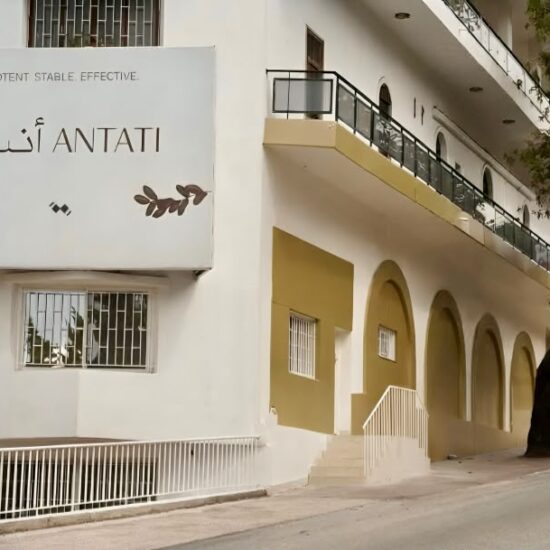
Made in Lebanon, Made to Compete – This feature piece by Rodayna Raydan examines Lebanese skincare brand Antati’s efforts to build a locally manufactured business capable of competing with established international brands. It highlights the company’s investment in its Aley production facility, its focus on the SWANA market, its expansion strategy and the challenges Lebanese manufacturers face, particularly bureaucracy, regulatory gaps and limited institutional support.
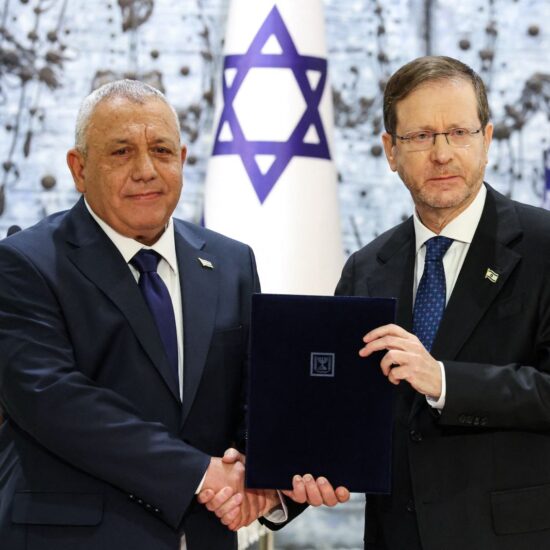
A Tale of Two Brothers: The Patriarch, the Deputy, and the Birth of Greater Lebanon – This article by Charles H. al-Hayek revisits the contrasting political visions of Maronite Patriarch Elias Hoayek and his brother Saadallah Hoayek, a largely overlooked secular politician. Drawing on the history of the Mount Lebanon Mutasarrifiyya and the events leading to the establishment of Greater Lebanon, it highlights an alternative, more civic and secular vision of the country’s foundations, and questions how that vision was marginalised in Lebanon’s national historical narrative.
Civil-military Imbalance – This opinion piece by Mohammad El Sahily examines the growing tension between Lebanon’s political leadership and the Lebanese Army over the implementation of government decisions, particularly Hezbollah’s disarmament. It highlights the constitutional risks of an army appearing to act independently of the executive branch, while arguing that Lebanon’s political system, sectarian power-sharing and lack of accountability leave the country vulnerable to authoritarianism and institutional breakdown.
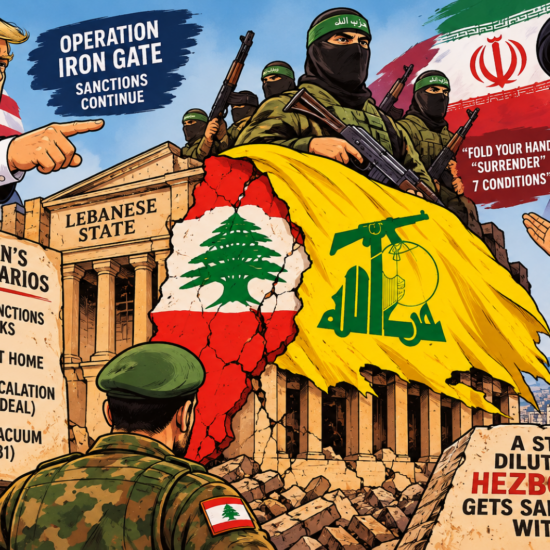
No Coup Needed: The State Is Dissolving Itself – Written by Elissa El Hackem, this article argues that Lebanon’s state institutions are increasingly accommodating Hezbollah rather than asserting their authority over the group. Focusing on the statements of Army Commander Rodolphe Haykal and Defence Minister Michel Menassa, it questions the army’s relationship with the government and examines the implications for Hezbollah’s disarmament, US sanctions and Lebanon’s sovereignty. It also raises concerns about the security vacuum that could follow UNIFIL’s departure.
Lebanon’s Appointment Mechanism and the Governor of Nabatieh – This piece by Khalil Gebara uses the controversy surrounding the appointment and subsequent withdrawal of Mohammad Hazimeh as governor of Nabatieh to examine the weaknesses of Lebanon’s public-sector appointment system. It argues that successive governments have introduced recruitment mechanisms without addressing the political interference and patronage that undermine them. The article highlights how merit-based procedures can become a façade for political appointments and proposes greater transparency, eligibility checks and accountability.